
About Marty Bergen
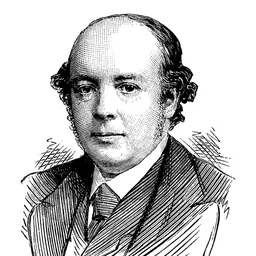
Lived 1871 – 1900 (aged 28). Marty Bergen was an American baseball player.
Martin Bergen (October 25, 1871 – January 19, 1900) was an American professional baseball player. From 1896 to 1899 he played in 344 games with the Boston Beaneaters of Major League Baseball (MLB), 337 of them as their catcher. Bergen helped the Beaneaters to National League pennants in 1897 and 1898, as well as a second-place finish in 1899.
Bergen appeared to have a mental illness. By 1899, he experienced hallucinations, had to be removed from a game due to odd behavior, and walked off from the team train during a trip to Boston. On January 19, 1900, he killed his wife and two children before dying by suicide.
A 2001 Sports Illustrated article described him as "a nimble fielder with a bullwhip arm who could snap the ball to second base without so much as moving his feet". In 1900, future Hall of Fame outfielder Jesse Burkett characterized Bergen as the best catcher in baseball history. He received a few Hall of Fame votes in 1937–1939, though not nearly enough to be elected.
Early life Martin Bergen was born to parents Michael and Ann on October 25, 1871, in North Brookfield, Massachusetts. His parents were Irish immigrants who had arrived in the United States just after the Civil War. Michael made an income for the family by making shoes at a local factory. Martin was the third of six children, all girls except for him and the youngest, Bill.
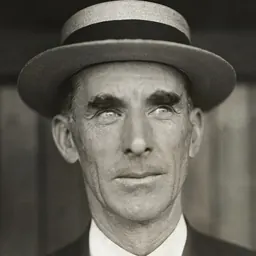
While still just a teenager, Marty was playing baseball for a local team, the Brookfields. One of his teammates was Connie Mack, who would later manage the Philadelphia Athletics for 50 years. Recognized as a great fielder, Bergen tended to obsess about minor problems and displayed an argumentative personality, traits that negatively affected his enjoyment of the game.
Minor league career (1892–1895) Bergen's professional baseball career started in 1892, when he served as the catcher for the Salem Witches of the New England League. He played 59 games for them, batting .247. Following their season, he returned to play some games for the Brookfields, a practice he would continue in subsequent years. He spent most of the 1893 season with a team in Northampton, though he also played three games for the Wilkes-Barre Coal Barons of the Eastern League. On July 11, still in the midst of the season, he married Hattie Gaines, who had moved to North Brookfield a year before to work at a flour mill. The couple had three children: Martin Jr., Florence, and Joseph. They kept their permanent residence in North Brookfield, purchasing real estate on Boynton Street, which they named Snowball Farm. Bergen made his first major league appearance on April 17 in a 7–3 loss to the Phillies at the Philadelphia Baker Bowl. His team finished fourth in the NL. Bergen batted .248 with 47 runs scored, 81 hits, two home runs, and 45 RBI.
The 1898 season saw Bergen set a number of career highs. He played in 125 games, catching 117 of them; backup George Yeager only caught 37. Bergen batted .280 with 62 runs scored, 125 hits, three home runs, and 60 RBI. Nichols credited Bergen with helping the team win: "Baltimore beat us the next three years, after we lost (catcher Charlie) Bennett. Then we got Marty Bergen from Kansas City and won the pennants again in 1897 and 1898." He batted .258 with 32 runs scored, 67 hits, one home run, and 34 RBI.
Defensive prowess Bergen's defensive skills helped him earn a reputation as one of, if not the best, catchers in the NL during his tenure. He exhibited a strong arm and quick reflexes, which helped him throw out baserunners. Mack said Bergen was the only catcher he ever saw remain on his knees to throw a player out at second.
Bergen's condition worsened in 1899, which led to internal turmoil for the Beaneaters. His January hip surgery took over four hours, and he seemed different mentally afterwards.
On July 20, 1899, Bergen silently walked off the team's train at the beginning of a road trip, returning to North Brookfield and leaving Boston with just a backup catcher (Clarke) during a heated pennant race. Boston Globe reporter Tim Murnane journeyed to North Brookfield to convince Bergen to come back; the catcher complained that his teammates were mistreating him, that Selee would not give him time off to be with his family, and that he was battling injuries that could only be dealt with by his local physician, Dr. Louis Dionne.
Death In January 1900, at his home in North Brookfield, Massachusetts, the 28-year-old Bergen was found dead in a murder–suicide. Neighbors expressed shock and said they saw no warning signs. Several had seen him before the tragedy unfolded, and recalled him as "unusually cheerful" and "pleasant" when conversing with them. The neighbors also told reporters how devoted he always seemed to his wife. The medical examiner reported that Bergen killed his wife and two children with an axe, then used a straight razor to forcefully cut his own throat. Bergen's father discovered the bodies. According to The New York Times:
In actuality, the razor cut likely would not have been able to sever enough ligaments to go deep enough to nearly sever Bergen's head, but it would have created a lot of blood from slicing the jugular vein and carotid artery, making it appear that the head had been nearly severed from the body. Baseball writer Bill James, commenting on why a few writers might have voted for Bergen, wrote, "He wasn't any kind of a player, really, and one supposes that a couple of writers had remembered him because of his headline-making exit and, lacking any kind of meaningful reference books, had romanticized his defensive play to spectacular proportions."
The death of Bergen prevented him from ever playing against his brother Bill, who was also a major league catcher for the Cincinnati Reds and the Brooklyn Superbas from 1901 to 1911. Several years after the murder–suicide, Bill reminisced to a reporter about his brother. "It was as if he was possessed. The demons got to him and never let him go."
Don’t just read it —
keep it.
Full-length biographies made to live with: read them, listen on the way to work, watch them tonight.
- E-book
- Audio
- Video
Instant download · yours to keep · every purchase keeps this site free
Important facts
People in Marty Bergen's life
Named in this biography and alive at the same time


Related people
Same field, nearest in time


Contemporaries
People whose lives overlapped Marty Bergen's



Frequently asked questions
Who was Marty Bergen?
American baseball player and murderer
When was Marty Bergen born?
Marty Bergen was born on 25 October 1871 in North Brookfield.
When did Marty Bergen die?
Marty Bergen died on 19 January 1900.
What was Marty Bergen's occupation?
Marty Bergen was a baseball player.
What nationality was Marty Bergen?
Marty Bergen was American.
Sources & further reading
· DBpedia: Marty Bergen (baseball)
Cite this page
APA: Biography.guide. (2026). Marty Bergen. https://biography.guide/marty-bergen-baseball-player/
MLA: "Marty Bergen." Biography.guide, https://biography.guide/marty-bergen-baseball-player/.
Chicago: "Marty Bergen." Biography.guide. https://biography.guide/marty-bergen-baseball-player/.
Data last updated: 2026-09-26 · Spot an error? Report a correction.
Page generated 2026-09-27 05:14 UTC