
About Martin W. Littleton
Lived 1872 – 1934 (aged 62). Martin W. Littleton was an American politician and lawyer.
Martin Wiley Littleton (January 12, 1872 – December 19, 1934) was an American attorney known for his involvement in a number of high-profile trials during the early 1900s, including serving as chief defense counsel for Harry Kendall Thaw at his second trial in 1908 for the murder of renowned architect Stanford White, and defending Harry Ford Sinclair, the head of Sinclair Oil, from criminal charges resulting from the Teapot Dome scandal. Littleton also served one term as United States Representative from New York from 1911 to 1913, and was borough president of Brooklyn.
Littleton initially supported himself through menial labor and was largely self-educated, never attending college or law school. He eventually became one of the richest lawyers in the world, and has been mentioned as an example of a "rags to riches" success story in motivational books and articles.
He was the father of attorney Martin W. Littleton, Jr., the district attorney of Nassau County, New York
Biography
Early life and career Born on January 12, 1872, near Kingston, Tennessee, to Thomas Jefferson Littleton and Hannah G. Ingram, Martin Littleton came from a long line of mountaineers. Littleton developed an insanity defense for the mentally unstable Thaw, and succeeded in obtaining a jury verdict of not guilty by reason of insanity.
During 1915 and 1916, Littleton represented producer-director D.W. Griffith in hearings in New York City and before the U.S. House of Representatives Committee on Education, concerning proposed bans or censorship of Griffith's film The Birth of a Nation, the content of which was being protested by the NAACP and other groups. Littleton contended, among other things, that a film shown in a private theater only to paying ticketholders should not be censored, because members of any group who might be offended could avoid seeing the film by simply choosing not to attend. He also argued that films in general should not be subject to federal censorship because they "mercilessly" analyzed public questions and social and religious controversies.
In 1928, Littleton successfully defended industrialist Harry Ford Sinclair on charges resulting from the Teapot Dome scandal. Sinclair was accused of bribing United States Secretary of the Interior Albert B. Fall to grant Sinclair's company, Sinclair Oil, an oil field lease to government land in Wyoming without competitive bidding. He was charged with criminal conspiracy to defraud the United States. Littleton managed to get Sinclair exonerated from the serious criminal conspiracy charges related to bribing Secretary Fall, although Fall was later convicted of accepting the bribe.
As a result of Littleton's success, his younger sister, Rachel Littleton, was able to enter into New York society and became the first wife of newspaper publisher Cornelius Vanderbilt IV in 1920. They divorced in 1927.
The Littletons lived in various locations in and around New York City, including Brooklyn, Plandome Manor, Port Washington (which included much of what is now Plandome Manor prior to that village's incorporation), and Mineola. In Plandome Manor, the family lived on a 12-acre estate including a 1700s historic house called the Nicoll Mansion, and a library built by Littleton's wife as a memorial to their late son, with architecture similar to buildings in Palestine and surrounded by a high concrete wall with painted scenes of Jerusalem.
Death and burial On December 19, 1934, Littleton died at Mineola of heart disease. He was interred in the Littleton family mausoleum at Woodlawn Cemetery in New York City.
Don’t just read it —
keep it.
Full-length biographies made to live with: read them, listen on the way to work, watch them tonight.
- E-book
- Audio
- Video
Instant download · yours to keep · every purchase keeps this site free
Important facts
People in Martin W. Littleton's life
Named in this biography and alive at the same time

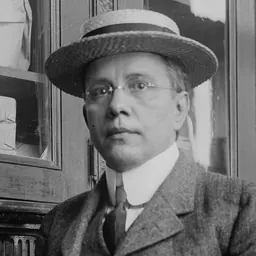

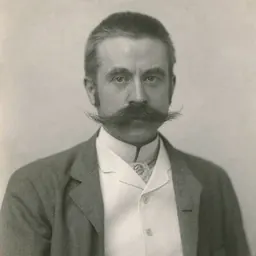
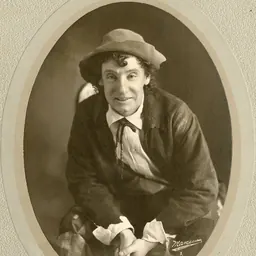
Related people
Same field, nearest in time



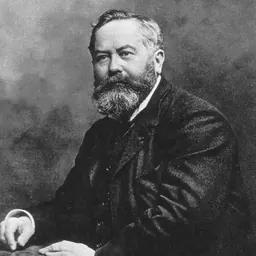

Contemporaries
People whose lives overlapped Martin W. Littleton's


Frequently asked questions
Who was Martin W. Littleton?
American politician (1872-1934)
When was Martin W. Littleton born?
Martin W. Littleton was born on 12 January 1872 in Kingston.
When did Martin W. Littleton die?
Martin W. Littleton died on 19 December 1934 in Mineola.
What was Martin W. Littleton's occupation?
Martin W. Littleton was a politician and lawyer.
What nationality was Martin W. Littleton?
Martin W. Littleton was American.
Sources & further reading
· Wikipedia: Martin W. Littleton
· DBpedia: Martin W. Littleton
Cite this page
APA: Biography.guide. (2026). Martin W. Littleton. https://biography.guide/martin-w-littleton/
MLA: "Martin W. Littleton." Biography.guide, https://biography.guide/martin-w-littleton/.
Chicago: "Martin W. Littleton." Biography.guide. https://biography.guide/martin-w-littleton/.
Data last updated: 2026-09-20 · Spot an error? Report a correction.
Page generated 2026-09-27 05:27 UTC