
About Martin Niemöller
Lived 1892 – 1984 (aged 92). Martin Niemöller was a German poet, submariner, resistance fighter, peace activist, lutheran pastor and priest.
Youth and World War I participation Niemöller was born in Lippstadt, the Prussian Province of Westphalia (now in North Rhine-Westphalia), on 14 January 1892 to the Lutheran pastor Heinrich Niemöller and his wife Pauline (née Müller), and grew up in a very conservative home. There the submarine fought on the Saloniki front, patrolled in the Strait of Otranto and from December 1916 onward, planted many mines in front of Port Said and was involved in commerce raiding. Flying a French flag as a ruse of war, the SM U-73 sailed past British warships and torpedoed two Allied troopships and a British man-of-war.
In January 1917, Niemöller was the navigator of . Later he returned to Kiel, and in August 1917, he became first officer on , which attacked numerous ships at Gibraltar, in the Bay of Biscay, and other places. During this time, the SM U-151 crew set a record by sinking 55,000 tons of Allied ships in 115 days at sea. In June 1918, he became commander of the . Under his command, UC-67 achieved a temporary closing of the French port of Marseille by sinking ships in the area, by torpedoes, and by the laying of mines. (20 July 1890 – 7 August 1961). That same year, he began working at a farm in Wersen near Osnabrück but gave up becoming a farmer as he could not afford to buy his own farm. He subsequently pursued his earlier idea of becoming a Lutheran pastor and studied Protestant theology at the Westphalian Wilhelm University in Münster from 1919 to 1923. His motivation was his ambition to give a disordered society meaning and order through the Gospel and church bodies.
During the Ruhr Uprising in 1920, he was battalion commander of the "III. Bataillon der Akademischen Wehr Münster" belonging to the paramilitary Freikorps.
Niemöller was ordained on 29 June 1924.
Role in Nazi Germany Like most Protestant pastors, Niemöller was a national conservative, and openly supported the conservative opponents of the Weimar Republic. He voted for Nazis in 1924, 1928, and 1933. He thus welcomed Hitler's accession to power in 1933, believing that it would bring a national revival. In his autobiography, From U-Boat to Pulpit published in the spring of 1933, he called the time of "the System" (a pejorative name for the Weimar Republic) the "years of darkness" and hailed Adolf Hitler for beginning a "national revival". Niemöller's autobiography received positive reviews in Nazi newspapers and was a bestseller. However, he decidedly opposed the Nazis' "Aryan Paragraph" to Jewish converts to Lutheranism. In 1933, Niemöller founded the Pfarrernotbund, an organization of pastors to "combat rising discrimination against Christians of Jewish background".
This has led to controversy regarding his attitude toward Jews and to accusations of anti-Judaism. The Holocaust historian Robert Michael argues that Niemöller's statements were a result of traditional antisemitism, and that Niemöller agreed with the Nazis' position on the "Jewish question" at that time. American sociologist Werner Cohn lived as a Jew in Nazi Germany, and he also reports on antisemitic statements by Niemöller. Niemöller said, "The crucial issue was not whether the USA or the USSR would win the next war. The big question rather was whether there would still be a white race in thirty or forty years." In her book Twisted Cross, Doris L. Bergen says, "Martin Niemöller explained how he, a self-professed antisemite, had come to oppose plans to exclude non-Aryans from the clergy. Even his personal antipathy toward Jews, Niemöller indicated, had not blinded him to the realization that acceptance of an Aryan clause in the church would effectively negate the teaching of baptism."
In 1936, he signed the petition of a group of Protestant churchmen which sharply criticized Nazi policies and declared the Aryan Paragraph incompatible with the Christian virtue of charity.
While in the concentration camp, he "wrote to a military commander whom he had known in World War I asking to be released from Sachsenhausen so he could serve in the German Wehrmacht." He volunteered in September 1939 to become a U-boat commander; his offer was rejected.
His former cellmate, Leo Stein, was released from Sachsenhausen to go to America, and he wrote an article about Niemöller for The National Jewish Monthly in 1941.
Later life and death In 1947, Niemöller was denied Nazi victim status. Niemöller himself acknowledged his guilt. In 1959, he was asked about his former attitude toward Jews by Alfred Wiener, a Jewish researcher into racism and war crimes committed by the Nazi regime. In a letter to Wiener, Niemöller stated that his eight-year imprisonment by the Nazis became the turning point in his life, after which he viewed things differently.
Niemöller was president of the Protestant Church in Hesse and Nassau from 1947 to 1961. He was one of the initiators of the Stuttgart Declaration of Guilt, signed by leading figures in the German Protestant churches. The document acknowledged that the churches had not done enough to resist the Nazis.
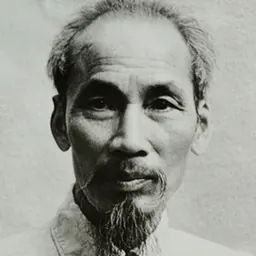
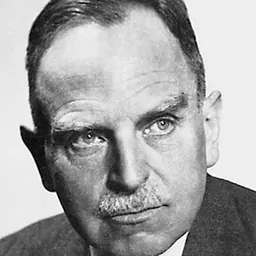
Under the impact of a meeting with Otto Hahn (referred to as the "father of nuclear chemistry") in July 1954, Niemöller became an ardent pacifist and campaigner for nuclear disarmament. His visit to North Vietnam's communist ruler Ho Chi Minh at the height of the Vietnam War caused an uproar. Niemöller also took active part in protests against the Vietnam War and the NATO Double-Track Decision.
He was one of the signatories of the agreement to convene a convention for drafting a world constitution. As a result, for the first time in human history, a World Constituent Assembly convened to draft and adopt a Constitution for the Federation of Earth.
In 1961, he became president of the World Council of Churches.
Niemöller died at Wiesbaden, West Germany, on 6 March 1984, at the age of 92.
Selected writings Gedanken über den Weg der christlichen Kirche, Gütersloh: Gütersloher Verlagshaus 2019 (edited by Alf Christophersen and Benjamin Ziemann). From U-boat to Pulpit, including an Appendix From Pulpit to Prison by Henry Smith Leiper (Chicago, New York: Willett, Clark, 1937). Here Stand I! with foreword by James Moffatt, translated by Jane Lymburn (Chicago, New York: Willett, Clark, 1937). The Gestapo Defied, Being the Last Twenty-eight Sermons by Martin Niemöller (London [etc.]: W. Hodge and Company, Limited, 1941). Of Guilt and Hope, translated by Renee Spodheim (New York: Philosophical Library, ). "What is the Church?" Princeton Seminary Bulletin, vol. 40, no. 4 (1947): 10–16. "The Word of God is Not Bound", Princeton Seminary Bulletin, vol. 41, no. 1 (1947): 18–23. Exile in the Fatherland: Martin Niemöller's Letters from Moabit Prison, translated by Ernst Kaemke, Kathy Elias, and Jacklyn Wilfred; edited by Hubert G. Locke (Grand Rapids, Mich.: W.B. Eerdmans Pub. Co., c1986). "Dachau Sermons", Martin Niemöller, translated by Robert H. Pfeiffer, Harvard Divinity School 1947 (published by Latimer House Limited, 33 Ludgate Hill, London EC4)
Don’t just read it —
keep it.
Full-length biographies made to live with: read them, listen on the way to work, watch them tonight.
- E-book
- Audio
- Video
Instant download · yours to keep · every purchase keeps this site free
Important facts
People in Martin Niemöller's life
Named in this biography and alive at the same time





Related people
Same field, nearest in time
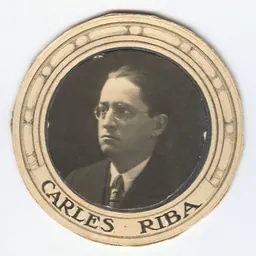

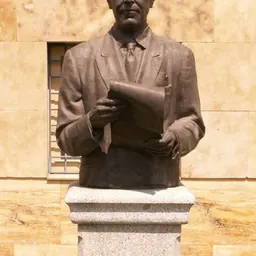
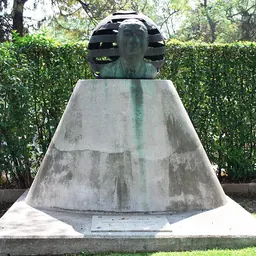
Contemporaries
People whose lives overlapped Martin Niemöller's
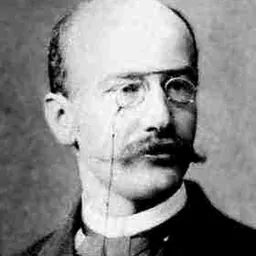




Frequently asked questions
Who was Martin Niemöller?
German theologian (1892–1984)
When was Martin Niemöller born?
Martin Niemöller was born on 14 January 1892 in Lippstadt.
When did Martin Niemöller die?
Martin Niemöller died on 6 March 1984 in Wiesbaden.
What was Martin Niemöller's occupation?
Martin Niemöller was a poet, submariner, resistance fighter, peace activist, lutheran pastor and priest.
What nationality was Martin Niemöller?
Martin Niemöller was German.
Sources & further reading
Cite this page
APA: Biography.guide. (2026). Martin Niemöller. https://biography.guide/martin-niemoller/
MLA: "Martin Niemöller." Biography.guide, https://biography.guide/martin-niemoller/.
Chicago: "Martin Niemöller." Biography.guide. https://biography.guide/martin-niemoller/.
Data last updated: 2026-09-20 · Spot an error? Report a correction.
Page generated 2026-09-27 05:20 UTC