
About Martin F. Semmelhack
Born 1941. Martin F. Semmelhack is a chemist.
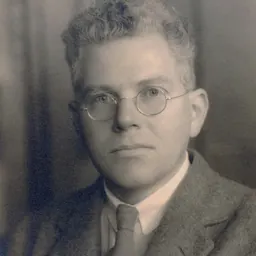
Martin F. Semmelhack (born November 19, 1941) is an American organic chemist and Professor of Chemistry at Princeton University. His research career focuses on the application of transition metal chemistry to organic synthesis, developing new organonickel- and palladium-catalyzed methodology, including the palladium-catalyzed cyclization known as the Semmelhack reaction. He has also researched reactions of arene- and diene-metal complexes. In the later part of his career his research turned toward chemical biology, particularly the study of bacterial quorum sensing in collaboration with Princeton molecular biologist Bonnie Bassler.
According to fellow Princeton chemist David MacMillan, Semmelhack is "an elder statesman” of organometallic chemistry, recognized for "pushing chemical synthesis into conceptually novel areas."
Early life and education
Semmelhack was born on November 19, 1941, in Appleton, Wisconsin, where he was raised. He served as associate chair of the chemistry department from 1993 to 1996.
From 1988 to 1990, Semmelhack spent two years in industry, serving first as acting department head of the metabolic diseases section and then as consulting director of chemistry at the American Cyanamid Medical Research Division. Since 2014, the chemistry department has held a lecture series, the Semmelhack Symposia, in his honor.
Research
Across his career, Semmelhack's research has been characterized by the search for new reactivity, particularly in transition-metal-mediated processes, and its application to the synthesis of structurally complex or biologically active molecules.
His early investigations at Cornell into the reactivity of zerovalent nickel complexes with aryl and vinyl halides described nickel-mediated coupling processes and provided early preparative routes to polyarene natural products, including alnusone. In the early 1980s, a benzannulation reaction of carbene–chromium complexes became a research focus, including its first intramolecular example, applied in a synthesis of the naphthoquinone antibiotic deoxyfrenolicin.
In 2013, Stephen L. Buchwald of MIT praised Semmelhack's early recognition of transition metals' synthetic potential, calling Semmelhack "someone who was ahead of his time."
TEMPO oxidation and electrocatalysis
Semmelhack developed TEMPO as a reagent for selective oxidation of primary alcohols to aldehydes. Subsequent work showed that TEMPO functions as a mediator for the electrooxidation of primary amines. By running this reaction under aqueous conditions, primary amines were converted to aldehydes, while under anhydrous conditions they were converted to nitriles. In related work, the selective TEMPO oxidation reaction was shown to work selectively with Cu(II) as a catalyst and oxygen as the stoichiometric oxidant. This process was refined and generalized by Shannon Stahl and is known as the Stahl Oxidation.
Semmelhack also developed electrochemical methods for organic synthesis, including protocols for selective protecting-group removal by electro-reduction.
Quorum sensing and chemical biology
In the later part of his career, in collaboration with Princeton molecular biologist Bonnie Bassler and others, his group has focused on the phenomenon of quorum sensing, a form of bacterial cell-to-cell communication mediated by diffusible small-molecule signaling compounds known as autoinducers. These molecules have been studied as potential anti-virulence therapeutics that act without directly killing the bacteria, an approach intended to reduce the selective pressure that drives antibiotic resistance.
Don’t just read it —
keep it.
Full-length biographies made to live with: read them, listen on the way to work, watch them tonight.
- E-book
- Audio
- Video
Instant download · yours to keep · every purchase keeps this site free
Important facts
People in Martin F. Semmelhack's life
Named in this biography and alive at the same time

Related people
Same field, nearest in time



Contemporaries
People whose lives overlapped Martin F. Semmelhack's



Frequently asked questions
Who is Martin F. Semmelhack?
American chemist
When was Martin F. Semmelhack born?
Martin F. Semmelhack was born on 19 November 1941.
What is Martin F. Semmelhack's occupation?
Martin F. Semmelhack is a chemist.
Sources & further reading
· Wikipedia: Martin F. Semmelhack
· DBpedia: Martin F. Semmelhack
Cite this page
APA: Biography.guide. (2026). Martin F. Semmelhack. https://biography.guide/martin-f-semmelhack/
MLA: "Martin F. Semmelhack." Biography.guide, https://biography.guide/martin-f-semmelhack/.
Chicago: "Martin F. Semmelhack." Biography.guide. https://biography.guide/martin-f-semmelhack/.
Data last updated: 2026-09-20 · Spot an error? Report a correction.
Page generated 2026-09-27 05:04 UTC