
Martin Carlin
French master cabinetmaker of German origin
About Martin Carlin
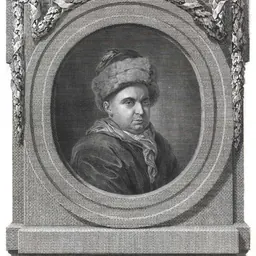
Lived 1730 – 1785 (aged 54–55). Martin Carlin was a French cabinetmaker, master craftsman and marqueteur.
Martin Carlin (c. 1730–1785) was a Parisian ébéniste (cabinet-maker), born at Freiburg, who was received as Master Ébéniste at Paris on 30 July 1766. Renowned for his "graceful furniture mounted with Sèvres porcelain", Carlin fed into the luxury market of eighteenth-century decorative arts, where porcelain-fitted furniture was considered among "the most exquisite furnishings" within the transitional and neoclassical styles. Carlin's furniture was popular amongst the main great dealers, including Poirier, Daguerre, and Darnault, who sold his furniture to Marie Antoinette and many amongst the social elite class. He died on 6 March 1785.
Work life Carlin worked at first in the shop of Jean-François Oeben, whose sister he married. The marriage contract reveals that "Carlin was still a day-worker living on the quai des Célestins". Yet soon after Oeben's death, Carlin started to sell furniture to the marchands-merciers when setting up independently in the Faubourg Saint-Antoine. This was however an unfashionable quarter of Paris, where few of his wealthy clientele would have penetrated. Therefore, Carlin found it necessary to sell his works exclusively to marchands-merciers such as Simon-Philippe Poirier and his partner Dominique Daguerre, who acted as decorative-designers. It was only through these entrepreneurs that Carlin could acquire the Sèvres porcelain plaques that decorated many of his pieces. His earliest such pieces can be dated by the marks on their porcelain to 1766; they followed designs supplied by the dealer Poirier. The great dealers also possessed an expansive network of the monarchy and much of the nobility, and thus sold Carlin's furniture to figures such as, Marie Antoinette, the Count of Provence, the Count of Artois, Louis XV's daughters, the mesdames de France, Madame du Barry, and the Duchess of Mazarin.
For 12 years after becoming Master Ebéniste, he made porcelain-mounted furniture for Poirier and after 1778, he fed into the popular taste for exotic, 'oriental' designs and materials, and therefore started to produce sumptuous pieces in Japanese lacquer.
Collection alt=Martin Carlin, Fall-front desk, c. 1775 at Waddesdon Manor Martin Carlin, Fall-front desk, c. 1775 at Waddesdon ManorAlthough Martin Carlin made some larger pieces— secrétaires à abattant (drop-front secretary desks), tables, and commodes— he is best known for refined small furnishings in the neoclassical taste, some of them veneered with cut up panels of Chinese lacquer, which he would also have received from the hands of the marchands-merciers.
Bonheur du jour (Table à gradin dite)
Bonheur du jour, 1765, Bowes Museum, UK Bonheur du jour, 1766, Musée Nissim de Camondo, France Bonheur du jour, 1768, Boughton House, UK Bonheur du jour, 1768, delivered to the Comtesse du Barry, Metropolitan Museum of Art, United States Bonheur du jour, 1769, Metropolitan Museum of Art, United States Bonheur du jour, 1770, Metropolitan Museum of Art, United States Bonheur du jour, 1770, Huntington Library, United States Bonheur du jour, 1771, Huntington Library, United States Bonheur du jour, 1774, Metropolitan Museum of Art, United States
Bureau plat (Writing table)
Bureau plat, 1778, delivered to the Grand Duchess Maria Feodorovna and Grand Duke Paul Petrovich of Russia for Pavlovsk Palace, Getty Museum, United States
Cabinet
Cabinet, c. 1783, Royal Collection, UK
Coffret à bijoux
Coffret à bijoux, 1770, delivered to Marie-Antoinette for the Petit Triannon, Palace of Versailles, France Coffret à bijoux, c. 1770, delivered to the Comtesse du Barry, Metropolitan Museum of Art, United States Coffret à bijoux, c. 1774, delivered to the Grand Duchess Maria Feodorovna and Grand Duke Paul Petrovich of Russia for the Palace of Pavlosk, Detroit Institute of Arts, United States Coffret à bijoux, c. 1775, Metropolitan Museum of Art, United States Coffret à bijoux, c. 1775, Metropolitan Museum of Art, United Statesthumb|Coffret à bijoux (Jewel case on stand) 1770 (Versailles)
Commode à vantaux (Commode with doors)
Commode à vantaux made in 1778 in ebony inset with precious pietra dura panels signed by Gian Ambrogio Giachetti. In the 18th century, this commode formed part of the collection of Pierre Victor, Baron de Besenval de Brunstatt who had it placed in his bedroom at his residence in Paris, the Hôtel de Besenval. It is one of Carlin's greatest examples and with no doubt, it was one of the baron’s finest and most valuable pieces of furniture. The commode was acquired in 1828 in Paris by King George IV through his confectioner François Benois. Today it is part of the Royal Collection and on display in the Green Drawing Room at Buckingham Palace.
Encoignure (Corner cabinet)
Pair of Encoignures, 1772, Wallace Collection, UK
Music-stand
Music-stand and writing table, c. 1775, Waddesdon Manor, UK Music-stand, 1770-75, Getty Museum, United States
Music-stand and writing-table
Music-stand and writing-table, 1786, given by Marie-Antoinette to Mrs William Eden (later Lady Auckland), V&A, UK
Reading stand
Reading stand, c. 1780, V&A, UK
Secrétaire
Secrétaire, 1775, Getty Museum, United States Secrétaire, 1776, Wallace Collection, UK Secrétaire, 1776-77, Getty Museum, United States
Secrétaire à abattant
Secrétaire à abattant, 1776, Waddesdon Manor, UK Secrétaire à abattant, 1770-80, V&A, UK
Table à ouvrage
Table à ouvrage, 1770. delivered to the Duchess of Mazarin in 1779 for her dressing room, Getty Museum, United States Table à ouvrage, 1773, Getty Museum, United States Table à ouvrage, 1775, V&A, UK Table à ouvrage, 1783-84, Wallace Collection, UK Table à ouvrage, 1786, given by Marie-Antoinette to Mrs William Eden (later Lady Auckland), V&A, UK
Don’t just read it —
keep it.
Full-length biographies made to live with: read them, listen on the way to work, watch them tonight.
- E-book
- Audio
- Video
Instant download · yours to keep · every purchase keeps this site free
Important facts
People in Martin Carlin's life
Named in this biography and alive at the same time
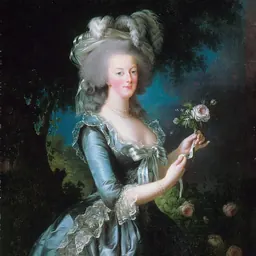

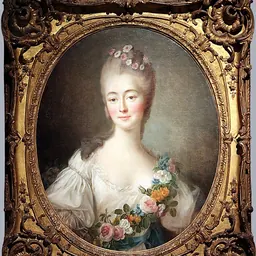


Related people
Same field, nearest in time
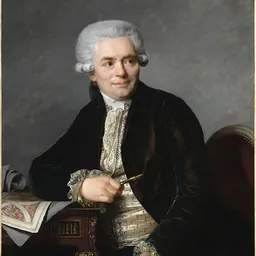


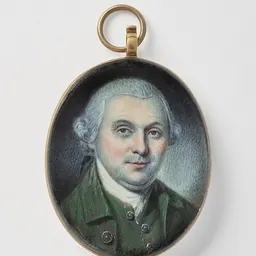
Contemporaries
People whose lives overlapped Martin Carlin's




Frequently asked questions
Who was Martin Carlin?
French master cabinetmaker of German origin (1730–1785)
When was Martin Carlin born?
Martin Carlin was born in 1730 in Freiburg im Breisgau.
When did Martin Carlin die?
Martin Carlin died on 6 March 1785 in Paris.
What was Martin Carlin's occupation?
Martin Carlin was a cabinetmaker, master craftsman and marqueteur.
What nationality was Martin Carlin?
Martin Carlin was French.
Sources & further reading
Cite this page
APA: Biography.guide. (2026). Martin Carlin. https://biography.guide/martin-carlin/
MLA: "Martin Carlin." Biography.guide, https://biography.guide/martin-carlin/.
Chicago: "Martin Carlin." Biography.guide. https://biography.guide/martin-carlin/.
Data last updated: 2026-09-20 · Spot an error? Report a correction.
Page generated 2026-09-27 05:24 UTC