
About Marshall McDonald
Lived 1835 – 1895 (aged 59). Marshall McDonald was an American engineer, metallurgist, geologist, zoologist, meteorological observer and ichthyologist.
Marshall McDonald (October 18, 1835 – September 1, 1895) was an American engineer, geologist, mineralogist, pisciculturist, and fisheries scientist. McDonald served as the commissioner of the United States Commission of Fish and Fisheries from 1888 until his death in 1895. He is best known for his inventions of a number of fish hatching apparatuses and a fish ladder that enabled salmon and other migrating fish species to ascend the rapids of watercourses resulting in an increased spawning ground. McDonald's administration of the U.S. Commission of Fish and Fisheries was notably free of scandal and furthered the "protection and culture" of fish species throughout the United States. McDonald was the sixth child and fourth son. He was named for the Marshall family, many of whom were friends of his father. The structure, currently known as the Davis History House, remains standing on its original site at the corner of Main and Bolton Streets and serves as a museum maintained by the Hampshire County Public Library. an academy that McDonald likely attended, and its successor institution, the Romney Classical Institute. Following the death of McDonald's mother Leacy Anne, his father sold the Naylor family's log dwelling in 1849 and moved to Hannibal, Missouri, in the 1850s only to return to Virginia a few years later upon marrying his second wife, Cornelia Peake. It is not known whether McDonald and his siblings accompanied their father on his temporary move to Missouri. McDonald entered the third class of the Virginia Military Institute in Lexington, Virginia, in 1855, where Thomas "Stonewall" Jackson was one of his professors. McDonald served as an assistant professor in chemistry under Jackson at the Virginia Military Institute from fall 1860 until the outbreak of the American Civil War in April 1861, and taught intermittently throughout the course of the war.
Military career in the American Civil War McDonald joined the Confederate States Army on April 27, 1861, and was commissioned as a lieutenant and engineer officer. During his tenure, McDonald established the institution's first museum. During the 1867–1868 academic year, McDonald's chair was further subdivided as new lecture halls were being completed within the restored barracks; he retained the subjects of mineralogy, geology, and metallurgy. His colleagues among the faculty included Superintendent Francis Henney Smith and professors Matthew Fontaine Maury, Scott Shipp, John Mercer Brooke, and George Washington Custis Lee. In 1877, Virginia commissioned McDonald to conduct a survey of mineral resources within the James River basin, and to report his findings to the Virginia General Assembly in 1879. Brown had been filling the position temporarily following Baird's death. McDonald believed the first step toward building "a comprehensive knowledge of the conditions of greatest productiveness" of American fisheries was to understand the primary food supply of fish, which he termed "aquatic pastorage".
Fish hatching innovations Throughout his tenure at the Fish Commission, McDonald designed and invented several innovative fish hatching apparatuses and appliances. In 1871, McDonald devised automatic hatching jars which revolutionized the field of fish farming and were widely utilized by the United States Fish Commission, several state commissions, and commissions in Europe and Japan. In 1880, he designed a cod box that produced the tidal motion necessary for the hatching of floating eggs.
Legacy In his Forest and Stream magazine following McDonald's death in 1895, Charles Hallock recounted "the record of [McDonald's] administration is an honorable one. By the death of Commissioner McDonald the country loses a public officer who has served faithfully honestly and well." daughter of Colonel Francis McCormick and his wife Rose Mortimer Ellzey, on December 17, 1867 at her family's estate "Frankford" near Berryville in Clarke County, Virginia. Mary was born on October 18, 1840, at "Weehaw" in Clarke County and was educated at Richmond Seminary. Nannie Frank McDonald (January 17, 1883, Washington, D.C. – April 10, 1886, Washington, D.C.)
Genealogy In 1890, McDonald applied for and acquired membership in the National Society of the Sons of the American Revolution through the organization's District of Columbia branch. He qualified for membership through his direct male-line great-grandfather, Colonel Angus McDonald, who served in the French and Indian War, Dunmore's War, and the American Revolutionary War after immigrating to the Thirteen Colonies from Inverness, Scotland, following his banishment after the Battle of Culloden. General George Washington appointed Colonel Angus McDonald to serve as a lieutenant colonel in command of Virginia revolutionary forces. He also served on various revolutionary committees throughout the war. McDonald also qualified for membership through his descent from his great-grandfather, William Sanford of Hampshire County, Virginia, and through his great-great-grandfather, William McGuire of Frederick County, Virginia, both of whom served as commissioned officers in Virginia revolutionary forces. He was formally elected to the society on January 27, 1890.
Publications
Don’t just read it —
keep it.
Full-length biographies made to live with: read them, listen on the way to work, watch them tonight.
- E-book
- Audio
- Video
Instant download · yours to keep · every purchase keeps this site free
Important facts
Family & relationships
People in Marshall McDonald's life
Named in this biography and alive at the same time


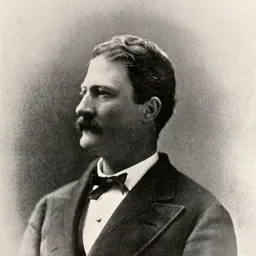





Related people
Same field, nearest in time
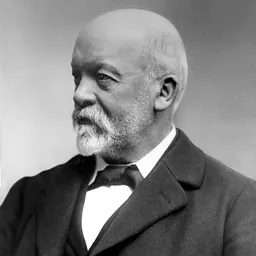
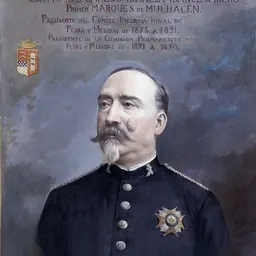
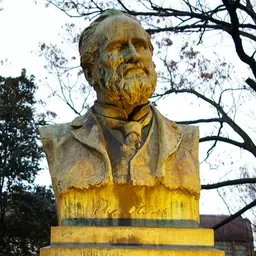
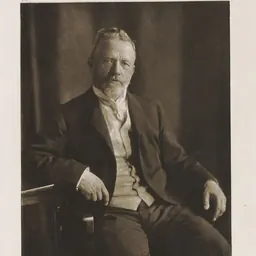
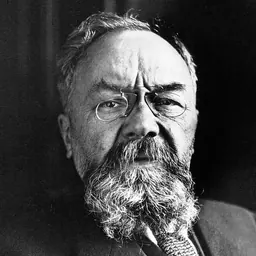
Contemporaries
People whose lives overlapped Marshall McDonald's



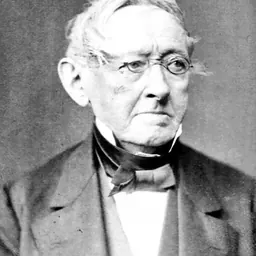

Frequently asked questions
Who was Marshall McDonald?
American engineer, professor, geologist, mineralogist, pisciculturist, and fisheries scientist
When was Marshall McDonald born?
Marshall McDonald was born on 18 October 1835 in Romney.
When did Marshall McDonald die?
Marshall McDonald died on 1 September 1895 in Washington, D.C..
What was Marshall McDonald's occupation?
Marshall McDonald was an engineer, metallurgist, geologist, zoologist, meteorological observer and ichthyologist.
What nationality was Marshall McDonald?
Marshall McDonald was American.
Sources & further reading
· Wikipedia: Marshall McDonald
Cite this page
APA: Biography.guide. (2026). Marshall McDonald. https://biography.guide/marshall-mcdonald/
MLA: "Marshall McDonald." Biography.guide, https://biography.guide/marshall-mcdonald/.
Chicago: "Marshall McDonald." Biography.guide. https://biography.guide/marshall-mcdonald/.
Data last updated: 2026-09-20 · Spot an error? Report a correction.
Page generated 2026-09-27 05:18 UTC