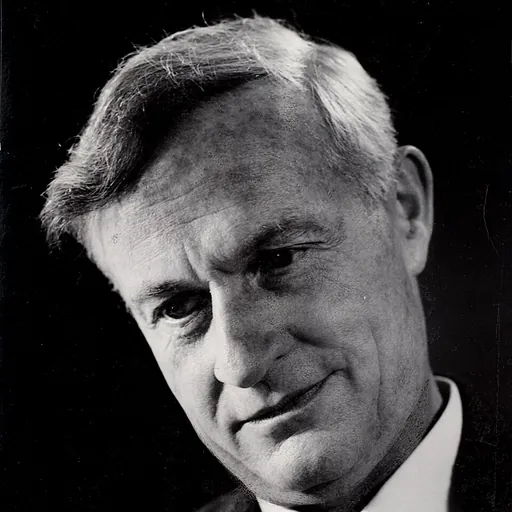
About Markus Fierz
Lived 1912 – 2006 (aged 94). Markus Fierz was a Swiss physicist and university teacher, known for Fierz identity, Massive gravity and Spin–statistics theorem.
Markus Eduard Fierz (20 June 1912 – 20 June 2006) was a Swiss physicist, particularly remembered for his formulation of spin–statistics theorem, and for his contributions to the development of quantum theory, particle physics, and statistical mechanics. He was awarded the Max Planck Medal in 1979 and the Albert Einstein Medal in 1989 for all his work.
Biography Fierz's father Hans Eduard Fierz was a chemist with Geigy and later a professor at ETH Zurich, his mother was Linda Fierz-David. Fierz studied at the Realgymnasium in Zurich. In 1931 he began his studies in Göttingen, where he listened to the lectures of prolific academics including Hermann Weyl. In 1933 he returned to Zurich and studied physics at ETH under Wolfgang Pauli and Gregor Wentzel. In 1936 he earned a doctoral degree with his thesis on the infrared catastrophe in quantum electrodynamics. Afterward he went to Werner Heisenberg in Leipzig and in 1936 became an assistant to Wolfgang Pauli in Zurich. For his habilitation degree in 1939 he treated in his thesis relativistic fields with arbitrary spins (with and without mass) and proved the spin-statistics theorem for free fields. For quantum electrodynamics the work was extended. The work on relativistic fields with arbitrary spins was later important in supergravity. In 1940 he became Privatdozent in Basel and 1943 assistant professor. From 1944 to 1959 he was a professor for theoretical physics in Basel. In 1950 he was at the Institute for Advanced Study in Princeton, where he met Res Jost. In 1959 he led the theoretical physics department at CERN in Geneva for one year and in 1960 he became the successor of his teacher Pauli at ETH. In 1977 he retired there as an emeritus professor. Fierz also worked on gravitational theory but published only one paper on the subject.
In 1940 he married Menga Biber; they became acquainted through making music (he played the violin). They had two sons.
Publications
M. Fierz, ’Spinors’, in Proceedings of the International Conference on Relativistic Theories of Gravitation, London, July 1965, H. Bondi ed., King's College, University of London, 1965
M. Fierz, ’Die unitären Darstellungen der homogenen Lorentzgruppe’, in Preludes in theoretical physics, in honor of V. F. Weisskopf, A. de-Shalit, H. Feshbach and L. van Hove (eds.), North Holland, Amsterdam, 1966; M. Fierz, Vorlesungen zur Entwicklungsgeschichte der Mechanik. Springer 1972;
Don’t just read it —
keep it.
Full-length biographies made to live with: read them, listen on the way to work, watch them tonight.
- E-book
- Audio
- Video
Instant download · yours to keep · every purchase keeps this site free
Important facts
People in Markus Fierz's life
Named in this biography and alive at the same time

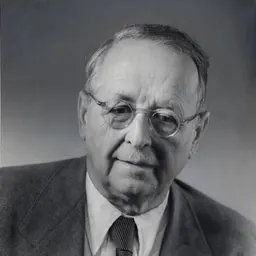


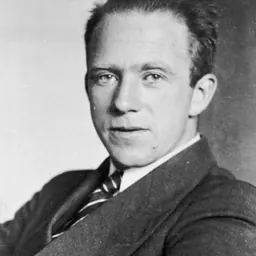


Related people
Same field, nearest in time
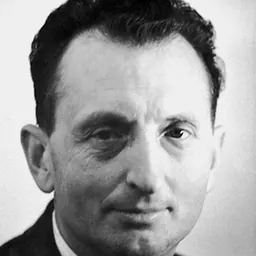


Contemporaries
People whose lives overlapped Markus Fierz's






Frequently asked questions
Who was Markus Fierz?
Swiss physicist (1912-2006)
When was Markus Fierz born?
Markus Fierz was born on 20 June 1912 in Basel.
When did Markus Fierz die?
Markus Fierz died on 20 June 2006 in Küsnacht.
What was Markus Fierz's occupation?
Markus Fierz was a physicist and university teacher.
What was Markus Fierz known for?
Markus Fierz was known for Fierz identity, Massive gravity and Spin–statistics theorem.
What nationality was Markus Fierz?
Markus Fierz was Swiss.
Sources & further reading
Cite this page
APA: Biography.guide. (2026). Markus Fierz. https://biography.guide/markus-fierz/
MLA: "Markus Fierz." Biography.guide, https://biography.guide/markus-fierz/.
Chicago: "Markus Fierz." Biography.guide. https://biography.guide/markus-fierz/.
Data last updated: 2026-09-23 · Spot an error? Report a correction.
Portrait: Wikimedia Commons · author & licence
Page generated 2026-09-27 05:07 UTC