
About Marko Vovchok
Lived 1833 – 1907 (aged 73). Marko Vovchok was a Russian and Ukrainian translator, writer, children's writer, editor and short story writer.
Marko Vovchok (, ; nee Mariia Vilinskа, surname by the first marriage: Markovych, surname by the second marriage: Lobach-Zhuchenko, ; 22 December 1833 – 10 August 1907) was a Ukrainian female writer of Russian descent. Her pen name, Marko Vovchok, was invented by Panteleimon Kulish. Her works had an anti-serfdom orientation and described the historical past of Ukraine. In the 1860s, Vovchok gained considerable literary fame in Ukraine after the publication in 1857 of a Ukrainian-language collection, Folk Tales.
In terms of literary fiction, Marko is considered to be one of the first influential modernist authors in Ukraine. Her works "shaped the development of the Ukrainian short story". ). The story Marusya, translated and adapted into French, became popular in Western Europe at the end of the 19th century.
After a scandal over the plagiarism of her translations into Russian in the 1870s, she almost ended her literary career. Later it was uncovered that she didn't do the translations in question, but hired underpaid ghostwriters. Until now, there are different opinions about the authorship of Ukrainian works by Marko Vovchok. Discussions about her magnum opus Folk Tales have been going on since the middle of the 19th century: many literary critics (including the editor of the collection Panteleimon Kulish) believe that it was co-authored with her first husband, ethnographer Opanas Markovych.
Biography
Mariya Vilinska was born in 1833 in the Oryol Governorate of the Russian Empire into the family of an army officer and a noblewoman. After she lost her father at the age of 7, she was raised at her aunt's estate and then sent off to study first to Kharkov (now Kharkiv, Ukraine) and then to Oryol. In 1851 she moved to Ukraine, having married Opanas Markovych, a folklorist and ethnographer who was a member of the Brotherhood of Saints Cyril and Methodius. From 1851 till 1858 she lived in Chernihiv, Kyiv and Nemyriv, assisting her husband with his ethnographic work, studying the Ukrainian culture and language. In 1857 Marko Vovchok wrote Narodni opovidannya (Folk Stories). It was met with immediate acclaim in Ukrainian literary circles, in particular from Taras Shevchenko and Panteleimon Kulish, and in Russia, after it had been translated into Russian and edited by Ivan Turgenev as Ukrainskie narodnye rasskazy (Ukrainian Folk Tales, 1859).
After a short stay in Saint Petersburg in 1859, Marko Vovchok moved to Central Europe, where she resided in Germany, France, Italy and Switzerland. From 1867 to 1878, she again lived in Saint Petersburg, where due to the prohibition against the Ukrainian language she wrote and translated for Russian magazines. Vovchok wrote in Russian Zhivaya dusha (The living soul, 1868), Zapiski prichyotnika (Notes of a junior deacon, 1870), V glushi (In the backwoods, 1875), and several other novels.
After gaining considerable publicity for her plagiarism, when she attributed other people's Russian translations to herself, and the collapse of the Translations of the Best Foreign Writers magazine, Vovchok left St. Petersburg in 1872 and settled on the estate of her acquaintances in the Tver province. Living in the "province", she continued to write in Russian. In particular, at this time her novels and short stories "Warm Nest" (Ukr. Teple Gnezdechko, 1873), "In the Wilderness" (Ukr. In the game, 1875), "Rest in the village" (Ukr. Rest in the village, 1876—1899), etc.
From 1878, after marrying the much younger Mikhail Lobach-Zhuchenko, she lived in her husband's places of service in various parts of the Russian Empire: in the Northern Caucasus (Stavropol), and 1885–1893 in the Kiev Governorate (Boguslav, from 1887 - Khokhitva), where she proceeded with her work on Ukrainian folklore and a dictionary. At the beginning of the 1900s Mariya Vilinska restored her contact with Ukrainian publishers. Later, the Lobach-Zhuchenko family settled in the Russian city of Nalchik, Terek region, living there until Maria's death on 10 August 1907.
Family Vilinska was the wife of Ukrainian ethnographer Opanas Markovych and of Russian officer Mikhail Lobach-Zhuchenko, the mother of Russian publicist Bohdan Markovych, the cousin of Russian literary critic Dmitry Pisarev, the older sister of Russian writer Dmitry Vilinsky, and the aunt of Ukrainian diplomat Oleksandr Vilinskyi.
Vovchok's Folk Stories Vovchok published several collections of short stories over her career. Vovchok published her first collection in 1858 in St. Petersburg entitled Narodni opovidannia (Folk Stories). This collection was published by P. Kulish, who had published two of her stories the year prior. Five of the stories in her first volume were about serfdom and contained anti-serfdom sentiment. In 1859, in Russian, she published a collection of folk storied called Stories from the Folk Life of Russia. and in French as Une Dame Instruite It is the story of a Ukrainian serf maidservant to a cruel mistress who came back home from a finishing school.
Plot "Instytutka" follows Ustyna, an orphan serf, who serves on the estate of an older woman. When the lady's granddaughter returns from studying in Kyiv, she is taken on as a personal servant for the young woman. The new addition to the household has even more hatred for the servants than her grandmother, ordering them around and punishing them for any perceived slight. Referred to throughout the story as "the young lady," she sees her education as useless and is focused on marrying a wealthy gentleman with a large estate. Despite her many suitors, she ends up falling in love with a local doctor with only a small estate. Although she is distressed by the doctor's lack of wealth, she agrees to marry him. Her grandmother promises that she will give her estate to her granddaughter and stay back to take care of it while the young lady goes away to her husband's small estate. Ustyna, the servant girl, is taken with them. While the husband has some compassion for serfs, he is ultimately overpowered by his wife and is not willing or able to shield them from her cruelties. At the new estate, Ustyna encounters other members of the household: Granny, the old housekeeper; Nazar, the driver; and Katrya, the cook and Nazar's wife. Ustyna eventually courts and falls in love with Prokip, another serf on the estate. Katrya is forced to try to earn the mistress' favor during the day and take care of her sick baby at night, eventually working herself so hard that her baby dies. Distraught by this, she is no longer useful to the mistress in the house and is sent out to the fields where she dies. A new cook is brought onto the estate from Moscow who caters to the young lady's whims. The young woman's grandmother dies. The young masters are expecting a child and in the middle of their announcement celebration, Prokip takes Ustyna to the young man and asks for permission to marry her. He agrees as does the young woman after she is encouraged by her party guests. The young woman is even crueler to Ustyna after she and Prokip are married. One day, when Ustyna, Prokip, and Granny are picking apples, Granny gives some to some children. The young woman catches her and accuses her of stealing. She starts pushing and hitting Granny, and Prokip grabs her wrist to stop her. She then accuses Prokip of attacking her and forces him into conscription. Ustyna takes this opportunity to leave the estate with Prokip, and they are able to rent a house in another town. There, they live in relative freedom, having occasional contact with Nazar and news of Granny. Eventually, the military must march out. Ustyna lived in the town for the next seven years, waiting for Prokip to come back, but she never hears from him again. Vovchok's own story, "Instytutka," which she wrote in 1859, was dedicated to Shevchenko and contained some of her most powerful anti-serfdom sentiment. Shevchenko compared her writing to that of George Sand. Although many of her contemporaries in Russia received her work positively, there were criticisms from those who viewed her work as too sensational. Some critics thought that she was putting too much emphasis on the dark tones of her stories and that she was deliberately attempting to sway to audience into a particular view about serfdom. The influential Russian critic Nikolay Dobrolyubov criticized Vovchok for her attempts at establishing a literary culture in the Ukrainian language while also using her stories in his own writings as examples of the fortitude of peasants. This designation of the Ukrainian language as a "peasant dialect" was echoed in many other critiques of the time. Vovchok, M. 1982. The Cossack Girl. Translated by Mary Skrypnik. Moscow: Progress Publishers. pp 15–34.
Don’t just read it —
keep it.
Full-length biographies made to live with: read them, listen on the way to work, watch them tonight.
- E-book
- Audio
- Video
Instant download · yours to keep · every purchase keeps this site free
Important facts
more
Mariia Aleksandrovna Markovich, Mariia Aleksandrovna Lobach-ZhuchenkoPeople in Marko Vovchok's life
Named in this biography and alive at the same time


Related people
Same field, nearest in time
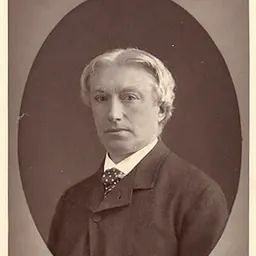
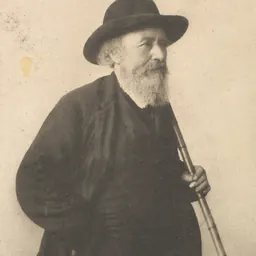


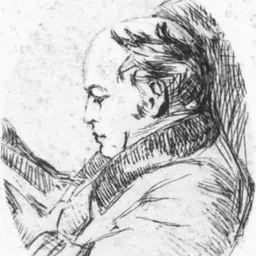
Contemporaries
People whose lives overlapped Marko Vovchok's
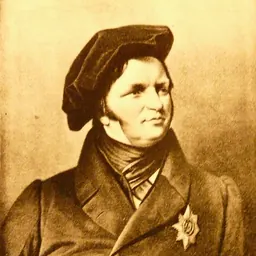



Frequently asked questions
Who was Marko Vovchok?
Ukrainian writer (1833–1907)
When was Marko Vovchok born?
Marko Vovchok was born on 10 December 1833 in Yekaterininskoye.
When did Marko Vovchok die?
Marko Vovchok died on 28 July 1907 in Nalchik.
What was Marko Vovchok's occupation?
Marko Vovchok was a translator, writer, children's writer, editor and short story writer.
What nationality was Marko Vovchok?
Marko Vovchok was Russian and Ukrainian.
Sources & further reading
Cite this page
APA: Biography.guide. (2026). Marko Vovchok. https://biography.guide/marko-vovchok/
MLA: "Marko Vovchok." Biography.guide, https://biography.guide/marko-vovchok/.
Chicago: "Marko Vovchok." Biography.guide. https://biography.guide/marko-vovchok/.
Data last updated: 2026-09-20 · Spot an error? Report a correction.
Page generated 2026-09-27 05:18 UTC