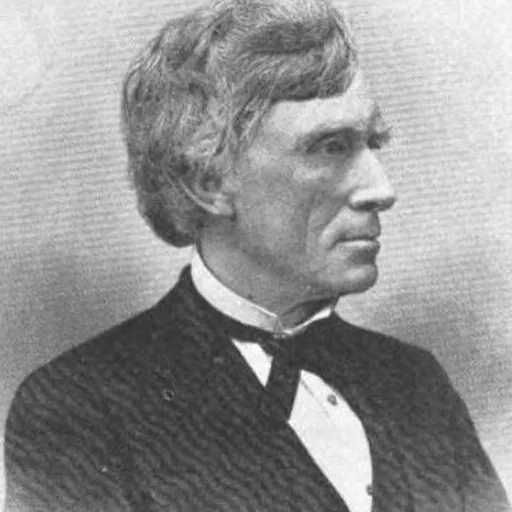
About Mark Skinner
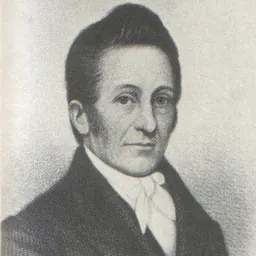
Lived 1813 – 1887 (aged 74). Mark Skinner was an American politician and judge.
Mark T. Skinner (September 13, 1813 – September 16, 1887) was an American politician, attorney, and philanthropist from Vermont. The son of a Vermont politician and judge, Skinner decided to follow his father into the legal profession. He moved west to Chicago, Illinois, and was named City Attorney for Chicago and United States Attorney for the Illinois District. In 1846, Skinner was elected to a term in the Illinois House of Representatives. During the Civil War, during which he lost his only son, Skinner served on the United States Sanitary Commission and oversaw a similar organization in Chicago. After retiring from law and politics, he managed real estate and focused on charitable endeavors.
Biography Mark T. Skinner was born in Manchester, Vermont, on September 13, 1813. His father was Richard Skinner, at the time a member of the United States House of Representatives and the future Governor of Vermont. Skinner attended the Pittsfield Academy, studying under Chester Dewey. He was accepted to the University of Vermont in 1830 and graduated three years later.
Skinner followed his father's profession and studied law in Saratoga Springs, New York, under Esek Cowen and Nicholas Hill. He also attended the New Haven Law School for a year, studying under David Daggett and Samuel J. Hitchcock. Although he considered joining Hill as a partner, Skinner instead headed west to Chicago, Illinois. He was immediately admitted to the bar and started a practice, partnering with George A. O. Beaumont. In 1839, Skinner was elected City Attorney for Chicago.
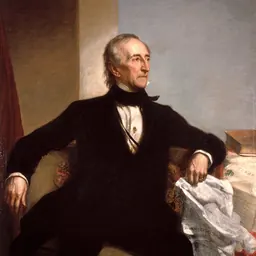
In 1844 President John Tyler nominated Skinner to be United States Attorney for the District of Illinois. Tyler reappointed Skinner in February 1845. When James K. Polk succeeded Tyler in March, Isaac N. Arnold challenged Skinner for the appointment. After extended debate, Arnold and Skinner agreed to defer to a third candidate, David L. Gregg.
In 1846, Skinner was elected to the Illinois House of Representatives as a Democrat, serving one two-year term. Skinner formed a law partnership with Thomas Hoyne in 1847 that operated until 1851, when Skinner was elected Judge of the Cook County Court of Common Pleas. After his term expired, Skinner spent the rest of his life managing real estate.
Upon its founding, Skinner was named President of the Northwestern Sanitary Commission, which provided relief for sick and wounded soldiers of the Civil War. He held the position until 1864. In 1862, Skinner was also named to the United States Sanitary Commission and served until it was disbanded in 1866.
Skinner married Elizabeth Magill Williams on May 21, 1841. Their son Richard was killed during the Civil War at the Battle of Jerusalem Plank Road. They also had four daughters. Skinner served on the Chicago Board of School Inspectors, and Chicago's Skinner West and Skinner North schools were named in his honor.
Skinner also helped to organize the Young Men's Association of Chicago, which later became the Chicago Library Association. He was a co-founder and first President of the Board of Directors of the Chicago Reform School. He also donated to Manchester, Vermont the Mark Skinner Library, which operated until 2013, when a larger, more modern community library was opened and the Skinner library building was sold to a private developer. There are also two Chicago Public Schools which use his name (Skinner North and Skinner West.)
He served at times on the board of directors of the Chicago, Burlington & Quincy and Galena and Chicago Union Railroads. He was one of the original trustees of the Cook County Hospital and was a trustee of the Illinois Charitable Eye & Ear Infirmary. Skinner was a charter member of the Second Presbyterian Church and served on its board of trustees.
Skinner died on September 16, 1887, while visiting Manchester, Vermont and was buried at Manchester's Dellwood Cemetery.
Don’t just read it —
keep it.
Full-length biographies made to live with: read them, listen on the way to work, watch them tonight.
- E-book
- Audio
- Video
Instant download · yours to keep · every purchase keeps this site free
Important facts
People in Mark Skinner's life
Named in this biography and alive at the same time


Related people
Same field, nearest in time






Contemporaries
People whose lives overlapped Mark Skinner's





Frequently asked questions
Who was Mark Skinner?
American politician (1813–1887)
When was Mark Skinner born?
Mark Skinner was born on 13 September 1813 in Manchester.
When did Mark Skinner die?
Mark Skinner died on 16 September 1887 in Manchester.
What was Mark Skinner's occupation?
Mark Skinner was a politician and judge.
What nationality was Mark Skinner?
Mark Skinner was American.
Sources & further reading
Cite this page
APA: Biography.guide. (2026). Mark Skinner. https://biography.guide/mark-skinner/
MLA: "Mark Skinner." Biography.guide, https://biography.guide/mark-skinner/.
Chicago: "Mark Skinner." Biography.guide. https://biography.guide/mark-skinner/.
Data last updated: 2026-09-24 · Spot an error? Report a correction.
Portrait: Wikimedia Commons · author & licence
Page generated 2026-09-27 05:08 UTC