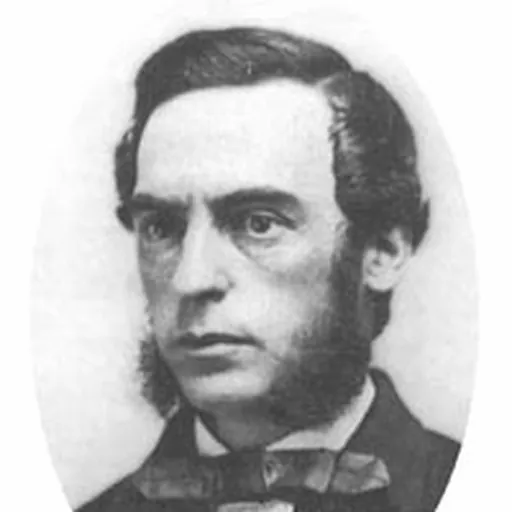
About Mark Kellogg
Lived 1831 – 1876 (aged 45). Mark Kellogg was an American journalist.
Marcus Henry Kellogg (early 1830s – June 25, 1876) was a newspaper reporter killed at the Battle of the Little Bighorn. Born in Canada, Kellogg moved with his family to the United States. In 1851, the Kelloggs settled in La Crosse, Wisconsin, where Kellogg was employed as a telegrapher. In 1862, during the American Civil War, he began working for the La Crosse Democrat, a local paper. In 1867, he lost an election for the office of city clerk, and his wife died the next month. Leaving La Crosse, Kellogg was an editor for a paper in Council Bluffs, Iowa, in 1868. By the time the paper failed later that year, Kellogg was no longer associated with it.
Beginning in 1871, Kellogg was a correspondent for the St. Paul Pioneer, during the early 1870s, he resided primarily in Brainerd, Minnesota, and Bismarck, North Dakota. For a time in 1873, Kellogg was employed by Clement Lounsberry's paper the Bismarck Tribune. In 1876, Kellogg accompanied Lieutenant Colonel George Armstrong Custer and the 7th Cavalry Regiment on an expedition against Native Americans, possibly as a replacement for Lounsberry. Kellogg's reports were written for Lounsberry and the Bismarck Tribune, but they were picked up in papers across the country. Kellogg was accompanying Custer's wing of the 7th Cavalry on June 25, 1876, when it was annihilated at Little Bighorn. He is considered the first correspondent for the Associated Press to die in the line of duty.
Life Born in Brighton, on Lake Ontario, in Canada, Marcus Henry Kellogg was the third of ten children. Kellogg had previously learned to operate a telegraph while living with his family in Waukegan, Illinois, and went to work for both the Northwestern Telegraph Company and the Atlantic and Pacific Telegraph Company after the move to La Crosse. He supported Abraham Lincoln in the 1860 United States presidential election.
In April 1867, he unsuccessfully ran for the office of city clerk of La Crosse; the next month his wife died. Kellogg was likely not predicting his own death or Custer's defeat, but was instead using a poetic expression derived from foxhunting.
Lieutenant Colonel Custer's command, the 7th Cavalry Regiment, was part of a larger force commanded by Alfred Terry, which cooperated with two other prongs of the United States Army's campaign against the Native Americans. On June 25, the 7th Cavalry encountered a Native American village, and Custer split his regiment into two groups to assail the village. said he found Kellogg's body by itself on June 29 in a ravine near a ford across the Little Bighorn River; his body had been missed by an earlier burial detail. While some observers thought they recognized Kellogg's body on Custer Ridge, others provided testimony that Kellogg's body was near the river. One lieutenant stated that Kellogg's body was "some distance from the field of battle". The archaeologist Richard Allan Fox believes that the reports that Kellogg fell near the river are correct. Kellogg's body was scalped and missing an ear; he was identified by the boots he wore. Some of Kellogg's diary and notes survived the battle and these, along with his news accounts, are one of the primary historical sources for information on the days preceding the battle. His notes are now in the possession of the State Historical Society of North Dakota.
Don’t just read it —
keep it.
Full-length biographies made to live with: read them, listen on the way to work, watch them tonight.
- E-book
- Audio
- Video
Instant download · yours to keep · every purchase keeps this site free
Important facts
People in Mark Kellogg's life
Named in this biography and alive at the same time

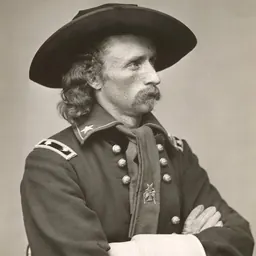
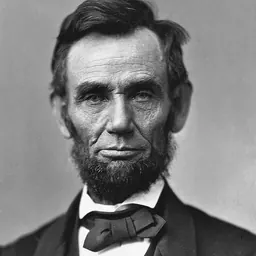

Related people
Same field, nearest in time
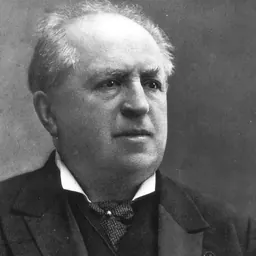

Contemporaries
People whose lives overlapped Mark Kellogg's




Frequently asked questions
Who was Mark Kellogg?
American newspaper reporter (1831–1876)
When was Mark Kellogg born?
Mark Kellogg was born on 31 March 1831 in Brighton.
When did Mark Kellogg die?
Mark Kellogg died on 25 June 1876 in Big Horn County.
What was Mark Kellogg's occupation?
Mark Kellogg was a journalist.
What nationality was Mark Kellogg?
Mark Kellogg was American.
Sources & further reading
· DBpedia: Mark Kellogg (reporter)
Cite this page
APA: Biography.guide. (2026). Mark Kellogg. https://biography.guide/mark-kellogg/
MLA: "Mark Kellogg." Biography.guide, https://biography.guide/mark-kellogg/.
Chicago: "Mark Kellogg." Biography.guide. https://biography.guide/mark-kellogg/.
Data last updated: 2026-09-22 · Spot an error? Report a correction.
Portrait: Wikimedia Commons · author & licence
Page generated 2026-09-27 05:01 UTC