
About Mario Castelnuovo-Tedesco
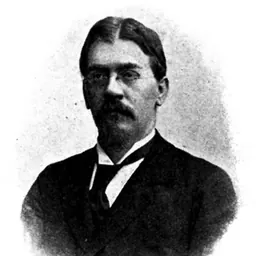
Lived 1895 – 1968 (aged 72). Mario Castelnuovo-Tedesco was an American and Italian composer, pianist, film score composer and guitarist.
Mario Castelnuovo-Tedesco (3 April 1895 – 16 March 1968) was an Italian composer, pianist and writer. He was known as one of the foremost guitar composers in the twentieth century with almost one hundred compositions for that instrument. In 1939 he emigrated to the United States and became a film composer for Metro-Goldwyn-Mayer for some 200 Hollywood movies for the next fifteen years. He also wrote concertos for Jascha Heifetz and Gregor Piatigorsky.
Biography Born in Florence, he was descended from a prominent banking family that had lived in Tuscany, specifically in Siena, until the latter half of the 19th century. His father was Amedeo and his elder brothers Ugo (born in 1890, lawyer) and Guido (born in 1891, engineer). Castelnuovo-Tedesco was first introduced to the piano by his mother, Noemi Senigaglia, and he composed his first pieces when he was just nine years old. After completing a degree in piano in 1914 under Edgardo Del Valle de Paz (1861–1920), well-known composer and pianist pupil of Beniamino Cesi, he began studying composition under renowned Italian composer Ildebrando Pizzetti, and received a diploma in composition in 1918. He soon came to the attention of composer and pianist Alfredo Casella, who included the young Castelnuovo-Tedesco's work in his repertoire. Casella also ensured that Castelnuovo's works would be included in the repertoires of the Società Italiana di Musica Moderna (later the Corporazione delle Nuove Musiche), granting him exposure throughout Europe as one of Italy's up-and-coming young composers. Works by him were included in the first festival of the International Society of Contemporary Music, held in Salzburg, Austria, in 1922.
In 1926, Castelnuovo-Tedesco premiered his first opera La Mandragola, based on a play by Niccolò Machiavelli. It was the first of his many works inspired by great literature, and which included interpretations of works by Aeschylus, Virgil, John Keats, William Wordsworth, Walt Whitman, Miguel de Cervantes, Federico García Lorca, and especially William Shakespeare. Another major source of inspiration for him was his Jewish heritage, most notably the Bible and Jewish liturgy. His Violin Concerto No. 2 (1931), written at the request of Jascha Heifetz, was also an expression of his pride in his Jewish origins, or as he described it, the "splendor of past days", in the face of rising anti-Semitism that was sweeping across much of Europe.
At the 1932 festival of the International Society of Contemporary Music, held in Venice, Castelnuovo-Tedesco first met the Spanish guitarist Andrés Segovia. The meeting inspired Castelnuovo-Tedesco to write for the guitar, beginning with his Variazioni attraverso i secoli (Variations à travers les siècles) (Variations through the ages), Op. 71 (1932), and later his Guitar Concerto No. 1 (1939). All in all, he wrote almost one hundred compositions for this instrument, which earned him a reputation as one of the foremost composers for the guitar in the twentieth century. Some of them were written and dedicated to Segovia, who was an enthusiast of his style (Segovia called him an "incorruptible servant of artistic truth" ).
Even before the Italian government promulgated the Italian racial laws in late 1938, Castelnuovo-Tedesco was banned from the radio and performances of his work were cancelled. The new racial laws, however, convinced him that he should leave Italy. He wrote to Arturo Toscanini, the former musical director of La Scala, and violinist Jascha Heifetz, explaining his plight, and both responded with support. As an American citizen, Heifetz began paperwork to sponsor Castelnuovo-Tedesco as an immigrant in the United States. Castelnuovo-Tedesco left Italy in 1939, shortly before the outbreak of World War II, and settled in Larchmont, Westchester County, New York.
He wrote his Cello Concerto in G minor, Op. 72, for Gregor Piatigorsky. It was premiered with the dedicatee under Arturo Toscanini in New York in 1935. For Piatigorsky he also wrote a Toccata (1935), and a piece called Greeting Card, Op. 170/3, based on the spelling of Piatigorsky's name.
Like many artists who fled fascism, Castelnuovo-Tedesco ended up in Hollywood, where, with the help of Jascha Heifetz, he landed a contract with Metro-Goldwyn-Mayer as a film composer. Over the next fifteen years, he worked on scores for some 200 films there and at the other major film studios. Rita Hayworth hired him to write the music for The Loves of Carmen (1948), produced by Hayworth for her Beckworth Productions and released by Columbia Pictures.
As a teacher, Castelnuovo-Tedesco had a significant influence on other major film composers, including Henry Mancini, Nelson Riddle, Herman Stein and André Previn. Jerry Goldsmith, Marty Paich and John Williams were all his pupils, as was Scott Bradley, who studied privately with him while both were on staff at MGM. He also maintained close contact with composer Robert Strassburg. His relationship to Hollywood was ambiguous: later in life he downplayed the influence that it had on his own work, but he also believed that it was an essentially American artform, much as opera was European.
In 1946 he became a U.S. citizen, but he remained very close to Italy, which he frequently visited. In 1958 he won the Concorso Campari with the opera The Merchant of Venice, which was first performed in 1961 at the Maggio Musicale Fiorentino under the baton of Gianandrea Gavazzeni.
His oldest son was the psychiatrist Pietro Castelnuovo-Tedesco. His younger son was the architect Lorenzo Castelnuovo-Tedesco of Los Angeles.
Works
Castelnuovo-Tedesco's autobiography, A life in music: a book of memories, written shortly before his death, was published decades later: Una vita di musica: un libro di ricordi (in Italian), James Westby (ed.), with an introduction by Mila De Sanctis, Fiesole: Cadmo, 2005.
Other writings by the composer have been catalogued.
In 2018 a collection of contemporary guitar music in homage to Castelnuovo-Tedesco was published, edited by Piero Bonaguri. It includes works by composers Filippo Ferruggiara, Daniele Mandonico, Marco Reghezza, Marco Simoni, Alessandro Spazzoli, and Paolo Ugoletti. the Jury Award at the Borrego Springs Film Festival in 2019, and the Youth Film Award at the Rhode Island International Film Festival in 2018. Xander Berkeley also received "Best Actor" awards at the 2017 Oaxaca Film Festival and the 2018 Albuquerque Film & Music Experience.
Don’t just read it —
keep it.
Full-length biographies made to live with: read them, listen on the way to work, watch them tonight.
- E-book
- Audio
- Video
Instant download · yours to keep · every purchase keeps this site free
Important facts
People in Mario Castelnuovo-Tedesco's life
Named in this biography and alive at the same time




Related people
Same field, nearest in time



Contemporaries
People whose lives overlapped Mario Castelnuovo-Tedesco's
Frequently asked questions
Who was Mario Castelnuovo-Tedesco?
Italian composer (1895–1968)
When was Mario Castelnuovo-Tedesco born?
Mario Castelnuovo-Tedesco was born on 3 April 1895 in Florence.
When did Mario Castelnuovo-Tedesco die?
Mario Castelnuovo-Tedesco died on 16 March 1968 in Beverly Hills, Los Angeles.
What was Mario Castelnuovo-Tedesco's occupation?
Mario Castelnuovo-Tedesco was a composer, pianist, film score composer and guitarist.
What nationality was Mario Castelnuovo-Tedesco?
Mario Castelnuovo-Tedesco was American and Italian.
Sources & further reading
· Wikipedia: Mario Castelnuovo-Tedesco
· DBpedia: Mario Castelnuovo-Tedesco
Cite this page
APA: Biography.guide. (2026). Mario Castelnuovo-Tedesco. https://biography.guide/mario-castelnuovo-tedesco/
MLA: "Mario Castelnuovo-Tedesco." Biography.guide, https://biography.guide/mario-castelnuovo-tedesco/.
Chicago: "Mario Castelnuovo-Tedesco." Biography.guide. https://biography.guide/mario-castelnuovo-tedesco/.
Data last updated: 2026-09-20 · Spot an error? Report a correction.
Page generated 2026-09-27 05:28 UTC