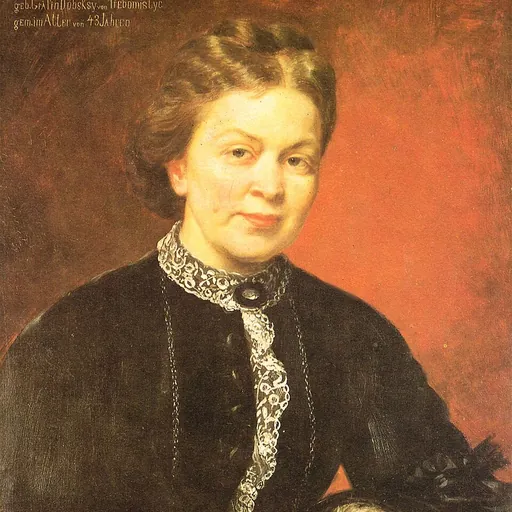
About Marie von Ebner-Eschenbach
Lived 1830 – 1916 (aged 85). Marie von Ebner-Eschenbach was an Austrian writer, playwright, prose writer, novelist and short story writer.
Baroness Marie von Ebner-Eschenbach née Countess Dubsky (, ; 13 September 1830 – 12 March 1916) was an Austrian writer and a noblewoman. Noted for her psychological novels, she is regarded as one of the most important German-language writers of the latter portion of the 19th century.
Biography
Early life and family She was born at the castle of the Dubský of Třebomyslice family in Zdislawitz near Kroměříž in Moravia (present Zdislavice in the Czech Republic), the daughter of Baron (from 1843: Count) Franz Joseph Dubský of Třebomyslice, a nobleman whose family roots are deeply Catholic and Bohemian, and his wife Maria Rosalia Therese, née Baroness von Vockel, who came from a noble Protestant-Saxon background.
Marie lost her mother in early infancy, but received a careful intellectual training from two stepmothers, first Baroness Eugenie von Bartenstein, and then her second step-mother, Countess Xaverine von Kolowrat-Krakowsky, who often contributed to her inspiration by taking her to the Burgtheater in Vienna periodically. Despite being part of a noble family, and having access to her family's vast libraries, she was never actually formally schooled. However, because of her curiosity, access to information, and educated family, she became auto-didact at a young age, and was taught fluent French, German, and Czech.
In 1848 she married her cousin, Moritz von Ebner-Eschenbach, a physics and chemistry professor at a Viennese engineering academy. Later on, he would become an Austrian captain, and promoted to lieutenant field marshal on his retirement. The couple resided first in Vienna, then, from 1850, at village Louka (Klosterbruck) near Znojmo (now part of the town), as the engineering academy had been relocated there, and after 1860 again in Vienna. The marriage was childless to disappointment of both of them. Marie grappled with the domestic tasks. She kept a journal and wrote letters explaining how she felt unsatisfied. It has been speculated that Marie may have suffered from "hysteria" including debilitating headaches and excessive nervousness.
Career and success
Marie von Ebner-Eschenbach with husband Moritz von Ebner-Eschenbach, c. 1865 Marie began devoting herself to literary work. In her endeavours she received assistance and encouragement from Franz Grillparzer and Freiherr von Münch-Bellinghausen. Her first publicized work was the drama Maria Stuart in Scotland , which Philipp Eduard Devrient produced at the Karlsruhe theatre in 1860. Then came a tragedy in five acts, Marie Roland, with several one-act dramas: Doktor Ritter, Violets , and The Disconsolate One. Though she was encouraged to keep writing, her relative failure in the field of playwriting had actually become somewhat of a point of an embarrassment to her family.
After these limited successes in the field of drama, she turned to narrative. Commencing with Die Prinzessin von Banalien (1872), she graphically depicts in Božena (Stuttgart, 1876, 4th ed. 1899) and Das Gemeindekind (Berlin, 1887, 4th ed. 1900) the surroundings of her Moravian home, and in Lotti, die Uhrmacherin (Berlin, 1883, 4th ed. 1900), Zwei Comtessen (Berlin, 1885, 5th ed. 1898), Unsühnbar (1890, 5th ed. 1900) and Glaubenslos? (1893) the life of the Austrian aristocracy in town and country.
Much of Ebner-Eschenbach's more mainstream success is accredited to Julius Rodenberg due to his publishing Ebner-Eschenbach's work in his popular periodical, Die Deutsche Rundschau. In 1875, her half-sister, composer Julie Waldburg-Wurzach, used her social contacts at Cotta Verlag (today Klett-Cotta Verlag) to market some of Ebner-Eschenbach's work. Ebner-Eschenbach also published Neue Erzählungen (Berlin, 1881, 3rd ed. 1894), Aphorismen (Berlin, 1880, 4th ed. 1895) and Parabeln, Märchen und Gedichte (2nd ed., Berlin, 1892). Von Ebner-Eschenbach's elegance of style, her incisive wit and masterly depiction of character give her a foremost place among the German women writers of her time. On the occasion of her 70th birthday the University of Vienna conferred upon her the degree of doctor of philosophy, honoris causa. An edition of Marie von Ebner-Eschenbach's Gesammelte Schriften (Collected Works) began to appear in 1893 (Berlin).
Throughout her life, she had never created literature or plays for monetary reasons, and so, in her will, she left, as to aid other writers in their own endeavors, the compensation she had received. She died in Vienna, Austria-Hungary.
The Marie Ebner-Eschenbach park in Währing, Vienna, is named after her.
Works
Aus Franzensbad. 6 Episteln von keinem Propheten (6 epistles from no prophet). Leipzig: Lorck, 1858 Maria Stuart in Schottland. Drama in five acts. Vienna: Ludwig Mayer, 1860 Das Veilchen (The Violet). Comedy in one act. Vienna: Wallishausser, 1861 Marie Roland. Tragedy in five acts. Vienna: Wallishausser, 1867 Doktor Ritter. Dramatic poem in one act. Vienna: Jasper, 1869 Die Prinzessin von Banalien. A fairy tale. Vienna: Rosner, 1872 Das Waldfräulein (Maid of the woods), 1873 Božena. A story. Stuttgart: Cotta, 1876 Die Freiherren von Gemperlein, 1878 Lotti, die Uhrmacherin (Lotti, the clock maker), in: Deutsche Rundschau, 1880 Aphorismen. Berlin: Franz Ebhardt, 1880 Dorf- und Schloßgeschichten (Village and castle stories), 1883 (containing Der Kreisphysikus, Jacob Szela, Krambambuli, Die Resel, Die Poesie des Unbewußten) Zwei Comtessen (Two countesses). A story. Berlin: Franz Ebhardt, 1885 Neue Dorf- und Schloßgeschichten (New village and castle stories). Stories. Berlin: Paetel, 1886 (containing Die Unverstandene auf dem Dorfe, Er laßt die Hand küssen, Der gute Mond) Das Gemeindekind (Child of the neighborhood) Novel. 1887 Unsühnbar. A story. Berlin: Paetel, 1890 Drei Novellen (Three novellas). 1892 (containing Oversberg) Glaubenslos? A story. Berlin: Paetel, 1893 Das Schädliche. Die Totenwacht. Two stories. Berlin: Paetel, 1894 Rittmeister Brand. Bertram Vogelweid. Two stories. Berlin: Paetel, 1896 Alte Schule (Old school) A story. Berlin: Paetel, 1897 (containing Ein Verbot, Der Fink, Eine Vision, Schattenleben, Verschollen) Am Ende. Scene in one act. Berlin: Bloch, 1897 Aus Spätherbsttagen. Stories. Berlin: Paetel, 1901 (containing Der Vorzugsschüler, Maslans Frau, Fräulein Susannens Weihnachtsabend, Uneröffnet zu verbrennen, Die Reisegefährten, Die Spitzin, In letzter Stunde, Ein Original, Die Visite) Agave. Novel. Berlin: Paetel, 1903 Die unbesiegbare Macht. Two stories. Berlin: Paetel, 1905 Meine Kinderjahre (My childhood years). Autobiographical sketches. Berlin: Paetel, 1906 Altweibersommer. Berlin: Paetel, 1909
Don’t just read it —
keep it.
Full-length biographies made to live with: read them, listen on the way to work, watch them tonight.
- E-book
- Audio
- Video
Instant download · yours to keep · every purchase keeps this site free
Important facts
People in Marie von Ebner-Eschenbach's life
Named in this biography and alive at the same time



Related people
Same field, nearest in time

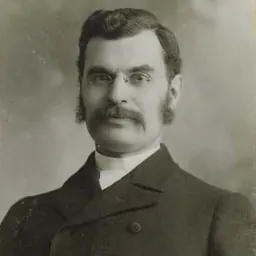
Contemporaries
People whose lives overlapped Marie von Ebner-Eschenbach's




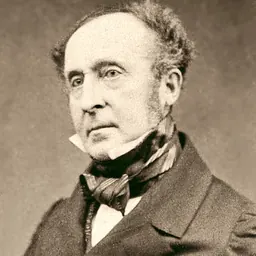
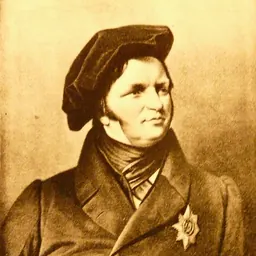
Frequently asked questions
Who was Marie von Ebner-Eschenbach?
Austrian writer (1830–1916)
When was Marie von Ebner-Eschenbach born?
Marie von Ebner-Eschenbach was born on 13 September 1830 in Schloss Zdislawitz, Troubky-Zdislavice.
When did Marie von Ebner-Eschenbach die?
Marie von Ebner-Eschenbach died on 12 March 1916 in Vienna.
What was Marie von Ebner-Eschenbach's occupation?
Marie von Ebner-Eschenbach was a writer, playwright, prose writer, novelist and short story writer.
What nationality was Marie von Ebner-Eschenbach?
Marie von Ebner-Eschenbach was Austrian.
Sources & further reading
· Wikipedia: Marie von Ebner-Eschenbach
· DBpedia: Marie von Ebner-Eschenbach
Cite this page
APA: Biography.guide. (2026). Marie von Ebner-Eschenbach. https://biography.guide/marie-von-ebner-eschenbach/
MLA: "Marie von Ebner-Eschenbach." Biography.guide, https://biography.guide/marie-von-ebner-eschenbach/.
Chicago: "Marie von Ebner-Eschenbach." Biography.guide. https://biography.guide/marie-von-ebner-eschenbach/.
Data last updated: 2026-09-23 · Spot an error? Report a correction.
Portrait: Wikimedia Commons · author & licence
Page generated 2026-09-27 05:05 UTC