
Marie-François Goron
French police officer and crime writer
About Marie-François Goron
Lived 1847 – 1933 (aged 85). Marie-François Goron was a French crime fiction writer, civil servant, writer and police officer.
Marie-François Goron (2 March 1847 — 4 February 1933), was a French police official and best-selling author. A number of developments in the French police force took place under his direction.
After joining the army between 1865-1875, he then rapidly rose through the ranks of the French police, becoming Chief of the , the French criminal spy police, in 1887. Goron held this position for seven years, until 1894.
While at the head of the Sûreté and as the first occupant of 36, quai des Orfèvres, Goron was a key figure in a series of judicial and political affairs. For instance, he was responsible for the arrest of Clément Duval and Vittorio Pini, considered foundational figures of illegalism. He also solved his most renowned case, the Gouffé Case, where his relentless investigation led to its resolution. A few years later, he played a central role and was a significant witness in the Clichy Affair, followed by the Ère des attentats (1892-1894), during which he was tasked with stopping anarchist bombings. Notably, he arrested Jean-Pierre François.
Following accusations of corruption, Goron was demoted and subsequently left his position to open a private firm in 1895. He then transitioned into a successful career as an author, publishing numerous works. His Memoirs, released in four volumes in 1897, serve as a significant, albeit biased, source of information about the period.
Biography Youth and education Marie-François Goron was born in Rennes on 2 March 1847. He was a 'bad' student and only completed his schooling up to the equivalent of the tenth grade. When Goron's team went to arrest Duval at his home, Duval fled. He was eventually apprehended by Brigadier Rossignol, whom he seriously injured, and then placed under arrest.
In 1888, Goron was involved in the arrest of Vittorio Pini, another founder of illegalism, much like Duval. his most famous investigation, after heavily committing to the inquiry and refusing to give up on it. Despite numerous difficulties, the Sûreté managed to find the culprit and the motive behind the crime. He was awarded the Légion d'Honneur in November 1889. The anarchists were severely beaten and left without medical attention. He supported the abolition of the death penalty, being careful not to create new martyrs. He also mentioned his own experiences with raids, stating that "all the anarchist hunts I have witnessed have had the most pitiable results".
Retirement and writings In 1894, Goron was demoted to a simple commissaire, likely due to corruption allegations where he was accused of using departmental funds for personal expenses.
Granted retirement in 1895, he opened a private detective agency under his own name, becoming a notable example of a police officer transitioning to the private sector. He also began writing his memoirs, achieving considerable success, and later ventured into writing detective novels. In 1914, at the outbreak of war, he volunteered for service and was assigned to the Deuxième Bureau (French military intelligence).
Works Les mémoires de M. Goron (1897), including, on anarchism and anarchists: L'anarchiste Duval, discussing illegalism, Clément Duval and other related subjects La police et les anarchistes, discussing Vittorio Pini, the Clichy Affair and start of the Ère des attentats Les assassins anarchistes, discussing his opinion on 'anarchist assassins', a particular type of anarchist that would exist, according to him Les faux-monnayeurs et l'anarchie, discussing illegalist and more broadly anarchist methods to organize La répression de l'anarchie, arguing that repression is not the good way to deal with anarchists
Don’t just read it —
keep it.
Full-length biographies made to live with: read them, listen on the way to work, watch them tonight.
- E-book
- Audio
- Video
Instant download · yours to keep · every purchase keeps this site free
Important facts
People in Marie-François Goron's life
Named in this biography and alive at the same time
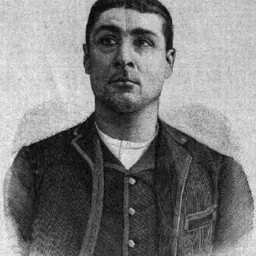

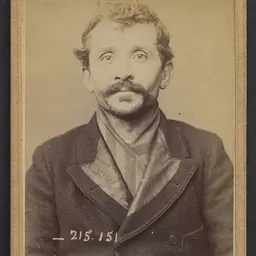
Related people
Same field, nearest in time
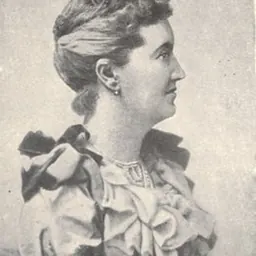

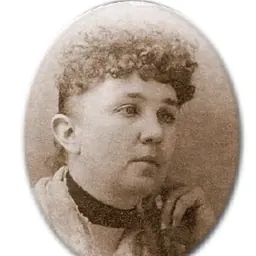


Contemporaries
People whose lives overlapped Marie-François Goron's



Frequently asked questions
Who was Marie-François Goron?
French police officer and crime writer (1847–1933)
When was Marie-François Goron born?
Marie-François Goron was born on 2 March 1847 in Rennes.
When did Marie-François Goron die?
Marie-François Goron died on 4 February 1933 in Sannois.
What was Marie-François Goron's occupation?
Marie-François Goron was a crime fiction writer, civil servant, writer and police officer.
What nationality was Marie-François Goron?
Marie-François Goron was French.
Sources & further reading
· Wikipedia: Marie-François Goron
· DBpedia: Marie-François Goron
Cite this page
APA: Biography.guide. (2026). Marie-François Goron. https://biography.guide/marie-francois-goron/
MLA: "Marie-François Goron." Biography.guide, https://biography.guide/marie-francois-goron/.
Chicago: "Marie-François Goron." Biography.guide. https://biography.guide/marie-francois-goron/.
Data last updated: 2026-09-20 · Spot an error? Report a correction.
Page generated 2026-09-27 05:31 UTC