
About Mariano d'Ayala
Lived 1808 – 1877 (aged 68). Mariano d'Ayala was an Italian politician and writer.
Mariano d'Ayala (14 June 1808 – 26 March 1877) was a Sicilian-born soldier, writer and, after 1848, an activist-politician and member of parliament.
Biography Provenance and early years Mariano d'Ayala was born at Messina at the height of the Napoleonic Wars, and only 25 years after the earthquake which had destroyed the city. Lt. Col. Raimondo d'Ayala, his father, was an Artillery Officer, originally from Spain, who served the Bourbon army loyally. His mother, born Rosaria Ragusi, was from a Sicilian family. He grew up in Messina, where his father became commander at the fort, but was only nine when his father died. He and his mother were both keen that he should follow his father into a military career, and he was still not yet a teenager when his mother took him to Naples and enrolled him at the prestigious Nunziatella Military School. As the orphaned son of a “worthy officer”, he was able to enrol without payment being required.
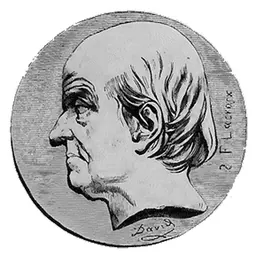
Military academy He graduated in 1828 with the rank of an ensign/ensign and was sent to join a regiment a short distance up the coast at Gaeta. There were no significant wars to be fought in the immediate term, and d'Ayala was given the opportunity to travel in Italy and further abroad, and to build some important friendships, within and beyond the military community, notably with Francesco Ricciardi, Florestano Pepe and Carlo Troya. He was recalled to Naples, where alongside his military duties he accepted a teaching position back at the Nunziatella as a “teacher of artillery”. In 1836 he was appointed to teach Ballistics and Descriptive geometry. To support his teaching he produced translations of works on physics and on analytical and physical geometry by Jean-Baptiste Biot and Charles-François-Antoine Leroy, but the college authorities rejected his use of these, insisting that he should instead teach using the traditional and well respected texts of another French scholar, Sylvestre François Lacroix. A couple of years later he was the only representative from the south to take part in the preparatory work for the Congress of Italian Scientists held under the presidency of Ranieri Gerbi in 1839 and Pisa (Tuscany). At the congress he was entrusted with oversight of the physical sciences and mathematics sections. That was also apparent, by 1840, from the company he kept. In addition to those already mentioned above, his Naples friends included his bride’s father, Gaetano Costa, Alessandro Begani, and Emanuele Taddei.
During the early 1840s d'Ayala raised his public profile in Naples with the publication of some of his written work, including a “Military Franco-Italian Dictionary” (1841), a “Lexicon of Artillery” (subsequently reworked and republished in 1854 as a 450-page “Bibliography of Artillery”) and a “Proposal for a College for Artillery Mechanics and Constructors” (‘’” Disegno di una scuola per macchinisti e costruttori per l'artiglieria”’’, 1841). On account of the company he kept and, perhaps, some of his overheard comments, d'Ayala was already coming under government suspicion: there was a concern that he might be turning into a liberal. The king, despite having been viewed as a potential champion of constitutional liberalism during the early years of his reign, was by the 1840s inclined to see liberalism, as threatening to his own position (Liberalism was increasingly becoming intertwined, for a new generation of influential and mainly northern risorgimento nationalists such as Giuseppe Mazzini, with the dream of a united Italy). An article of d'Ayala’s was published during 1843 in a compilation volume, inspired by an inspection visit he had undertaken to a metal-based manufactory in Calabria. He had taken the opportunity to visit places associated with the former king, Murat, who had been executed for treason in 1815 following abrupt regime change. Murat was feted in Italy during his lifetime, and even more so after his execution, as a champion of liberal and nationalist ideals. Through his wife, d'Ayala already had family connections with Murat’s final army, and the eulogistic tone of his article on Murat’s final journey to military defeat and execution on the orders of the king’s father was, at best, tactless. During 1843 d'Ayala was obliged to resign his army commission and leave his post at the Nunziatella Military School. Suspected and on occasion accused of “plotting against the state” he found himself subjected to sometimes intrusive police surveillance. He was arrested on at least two occasions. During 1844, in the aftermath of major riots at Cosenza which greatly alarmed the government, he was imprisoned for several months. In 1846, returning from an academic conference in Genoa, he was stopped and searched by police, who found that he was carrying publications by d'Azeglio, Balbo and Gioberti, men who might be viewed as moderate progressives in Turin, but they were men from the north, and their ideas alarmed the authorities in Naples. D’Ayala was back in prison in September 1847, following serious rioting in Messina and Reggio. On his release three months later, it was apparent that further incarceration had not tamed his political opinions. Indeed, throughout the middle 1840s, when not in prison, d'Ayala continued to share his insights and beliefs with friends and, on occasion, in print: he did not trouble to conceal his risorgimento aspirations.
Following the promulgation of the constitution there followed three months during which the king ruled – at least in theory – subject to a democratic constitution. Three presidents of the council of ministers (i.e. prime ministers) served in quick succession. The third of these, and probably the most effective, was the historian-politician Carlo Troya, a medievalist with a strong personal commitment to the cause of Italian unification. Troya led the government for seven weeks between 3 April 1848 and 15 May 1848. It was Troya who sent d'Ayala to Aquila as "Intendant" (loosely "regional governor") for the province of Abruzzo Ultra ("Further Abruzzi"), in the far north of the kingdom. This kept him far away from Naples and the continuing political ferment there, an arrangement which evidently suited his temperament well enough. His governance was reportedly both wise and firm. He devised and enforced an end to a long-standing dispute between the Jesuits and the school authorities in Aquila, thereby ensuring that a locally important secondary school could re-open. But his governorship was short-lived.
Unification War The Unification War of 1860/61 drew d'Ayala back to political engagement and public service, though this time round his involvement was generally restricted to background roles. On 23 July 1860 he returned to the political chaos of Naples, taking advantage of a general amnesty proclaimed by the new king there. He had acquired from his experiences in 1848 the conviction that the key to achieving liberation from monarchical despotism for the south (and Austrian despotism in the north) lay in winning round members of the armies engaged. He tried to encourage contacts in the military to abandon the discredited Bourbon monarchs and throw in their lot with Garibaldi's still growing volunteer army approaching across Sicily. D'Ayala had already issued a pamphlet from Florence before his arrival in the south, robustly addressing the same pro-Garibaldi message to members of the Neapolitan army. Garibaldi arrived in the city with his large volunteer army on 6 September 1860 and d'Ayala was appointed to the position commander of the National Guard. However, he was very soon relieved of this commend by ”Pro-dictator” Giorgio Pallavicino. There are some indications that following his return to Naples in 1860, d'Ayala encountered dome difficulty in gaining the confidence of fellow risorgimento believers. During his long exile between 1848 and 1860 he had not sustained contacts with fellow exiles, and there was uncertainty over precisely where his true loyalties might lie in the rapidly shifting political and military context of 1860/61.
Parliament: upper house (Senate) By 1874 d'Ayala's army career was also over. Appointed “General of the Volunteers” ("… Corpo dei volontari italiani") in July 1861 he had been welcomed into the king's army in March 1862, with his rank of a Major general, which he had held since 15 October 1860 (five months before the completion of the Liberation War and the Proclamation of the Kingdom) confirmed. A succession of further leadership roles within the army followed till his retirement from it, at his own request, with effect from 13 August 1867. Like most of the Risorgimento true believers, Mariano d'Ayala was a freemason and in the aftermath of unification following his return from Turin he became well networked in Naples. Whether through brother masons at the “Bandiera e Moro” lodge, or some combination of his army and political contacts, he was drawn into local politics, serving as a Naples city councillor between June 1861 and 1876. He even served a term as deputy mayor of the city in 1868.
On 15 May 1876 Mariano d'Ayala was nominated to membership of the senate (upper house of the bicameral Italian parliament). Appointment to the senate came from the king, who would receive appropriate advice from his ministers. In addition, there were various sets of criteria that had to be considered before a nomination could progress. D'Ayala was eligible for nomination both because he had served three terms as a member of the Chamber of Deputies and because he had served at least six years in the army. His nomination was validated by the senate on 6 June 1876 and he was sworn in on 19 June 1876.
After ten months as a senator, Mariano d'Ayala died at Naples on 26 March 1877.
Recognition (selection)
Published output (selection)
Memorie storico-militari dal 1734 al 1815, Napoli: tip. di F. Fernandes, 1835 Le vite de più celebri capitani e soldati napoletani dalla giornata di Bitonto fino a' dì nostri, di Mariano d'Ayala. Napoli: Stamperia dell'Iride, 1843 (Google libri) Napoli militare, Napoli: Stamperia dell'Iride, 1847 (Google libri) Biografia di Giuseppe barone Rosaroll, maresciallo di campo napolitano, Napoli: Tipografia G. Cannavacciuoli, 1848 Degli eserciti nazionali, Firenze: Tipografia Italiana, 1850 I piemontesi in Crimea, Firenze: Società editrice (Firenze: Barbera, Bianchi e C.), 1858 Vite degl italiani benemeriti della libertà e della patria, Firenze: Coi tipi di M. Cellini, 1868. Edizione postuma a cura dei figli: Vite degl italiani benemeriti della libertà e della patria, uccisi dal carnefice, Roma ecc.: Fratelli Bocca, 1883 I Liberi Muratori di Napoli nel secolo XVIII, in Archivio storico per le Provincie napoletane, XXIII, 1898, pp. 84 e succ..
Reference was also made, following his death, to a large body of written work by d'Ayala which at that time remained unpublished.
Don’t just read it —
keep it.
Full-length biographies made to live with: read them, listen on the way to work, watch them tonight.
- E-book
- Audio
- Video
Instant download · yours to keep · every purchase keeps this site free
Important facts
People in Mariano d'Ayala's life
Named in this biography and alive at the same time



Related people
Same field, nearest in time




Contemporaries
People whose lives overlapped Mariano d'Ayala's





Frequently asked questions
Who was Mariano d'Ayala?
Italian politician and writer (1808-1877)
When was Mariano d'Ayala born?
Mariano d'Ayala was born on 14 June 1808 in Messina.
When did Mariano d'Ayala die?
Mariano d'Ayala died on 26 March 1877 in Naples.
What was Mariano d'Ayala's occupation?
Mariano d'Ayala was a politician and writer.
What nationality was Mariano d'Ayala?
Mariano d'Ayala was Italian.
Sources & further reading
Cite this page
APA: Biography.guide. (2026). Mariano d'Ayala. https://biography.guide/mariano-d-ayala/
MLA: "Mariano d'Ayala." Biography.guide, https://biography.guide/mariano-d-ayala/.
Chicago: "Mariano d'Ayala." Biography.guide. https://biography.guide/mariano-d-ayala/.
Data last updated: 2026-09-22 · Spot an error? Report a correction.
Page generated 2026-09-27 05:31 UTC