
About Marian Stamp Dawkins
Born 1945. Marian Stamp Dawkins is a British biologist, ethologist and university teacher, known for Animal welfare science.
Infobox scientist name = Marian Dawkins honorific_suffix = image = Professor Marian Dawkins CBE FRS headshot.jpg birth_name = Marian Ellina Stamp image_size = caption = Dawkins in 2014 birth_date = birth_place = Hereford, England death_date = death_place = doctoral_advisor = Niko Tinbergen is a British biologist and professor of ethology at the University of Oxford. Her research interests include vision in birds, animal signalling, behavioural synchrony, animal consciousness and animal welfare.
Education Dawkins was educated at Queen's College, London
Career and research Dawkins was appointed a lecturer in zoology in 1977 and in 1998 was made professor of animal behaviour. She is currently (2014) Head of the Animal Behaviour Research Group. Dawkins promoted the argument that animal welfare is about the feelings of animals. This approach indicates the belief that animals should be considered as sentient beings. Dawkins wrote, "Let us not mince words: Animal welfare involves the subjective feelings of animals.
In 1990, she contributed to a paper in which she developed her ideas regarding how to assess animal welfare by asking questions of animals. She proposed using preference tests and consumer demand studies to ask what animals prefer (e.g. space, social contact) and how highly motivated they are for these. She argued that animals were more likely to suffer if they were not provided with resources for which they are highly motivated.
Central to her most recent (2012) view on animal welfare is scepticism about whether science can establish that animals have consciousness and therefore its role in definition and measurement of animal welfare and suffering. Instead, her view is that good animal welfare rests on determining the needs and wants of animals, which do not require that they are conscious. These theses are presented in her book Why Animals Matter: Animal Consciousness, Animal Welfare, and Human Well-being (2012). Her views on animal consciousness have been criticised by evolutionary biologist Marc Bekoff, who argues that she too readily rejects anthropomorphic research on animals. She responded to the criticism by stating her position as "wrongly interpreted", and says that "my concern is to make the case for animal emotions as watertight as possible and thereby to strengthen it. That is the way science progresses and always has."
Selected publications Animal Suffering: The Science of Animal Welfare. Chapman and Hall. 1980. Unravelling Animal Behaviour. Longman. 1986. The Tinbergen legacy. Edited by Marian Stamp Dawkins, Tim R. Halliday and Richard Dawkins. London: Chapman & Hall. 1991. Through Our Eyes Only?: The Search for Animal Consciousness. Oxford: Oxford University Press. 1993. Living with the Selfish Gene. One of the collected essays in Richard Dawkins: How a Scientist Changed the Way We Think. Editors: Alan Grafen, Mark Ridley. Oxford University Press. 2006. The scientific basis for assessing suffering in animals. PDF Version Chapter in Peter Singer: In Defense of Animals: The Second Wave. Malden, MA: Blackwell. 2006. Observing Animal Behaviour: Design and Analysis of Quantitative Data. Oxford: Oxford University Press. 2007. The Future of Animal Farming: Renewing the Ancient Contract. Edited by Marian Stamp Dawkins and Roland Bonney. Malden, MA: Blackwell. 2008. An Introduction to Animal Behaviour. With Aubrey Manning. Cambridge: Cambridge University Press. 2012. Why Animals Matter: Animal Consciousness, Animal Welfare, and Human Well-being. Oxford: Oxford University Press. 2012.
Awards and honours Dawkins was awarded the RSPCA/British Society for Animal Protection prize in 1991, Association for the Study of Animal Behaviour's Niko Tinbergen Medal in 2009, and the World Poultry Science Association Robert Fraser Gordon Medal in 2011.
Dawkins was appointed Commander of the Order of the British Empire (CBE) in the 2014 New Year Honours for services to animal welfare. In 2014, she was elected a Fellow of the Royal Society (FRS) for “substantial contributions to the improvement of natural knowledge”.
Personal life She was born in Hereford to Arthur Maxwell Stamp and (Alice) Mary Stamp (née Richards).
On 19 August 1967, she married fellow ethologist Richard Dawkins in the Protestant church in Annestown, County Waterford, Ireland. They divorced in 1984. She remains known as Marian Stamp Dawkins.
Don’t just read it —
keep it.
Full-length biographies made to live with: read them, listen on the way to work, watch them tonight.
- E-book
- Audio
- Video
Instant download · yours to keep · every purchase keeps this site free
Important facts
Family & relationships
People in Marian Stamp Dawkins's life
Named in this biography and alive at the same time





Related people
Same field, nearest in time
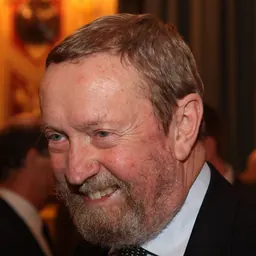
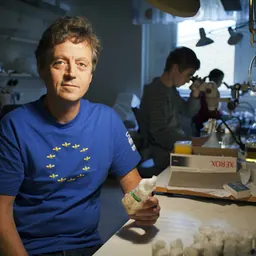
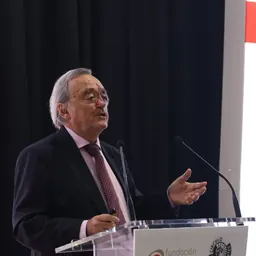
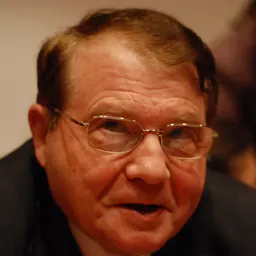
Contemporaries
People whose lives overlapped Marian Stamp Dawkins's


Frequently asked questions
Who is Marian Stamp Dawkins?
British biologist
When was Marian Stamp Dawkins born?
Marian Stamp Dawkins was born on 13 February 1945 in Hereford.
What is Marian Stamp Dawkins's occupation?
Marian Stamp Dawkins is a biologist, ethologist and university teacher.
What is Marian Stamp Dawkins known for?
Marian Stamp Dawkins is known for Animal welfare science.
What nationality is Marian Stamp Dawkins?
Marian Stamp Dawkins is British.
Sources & further reading
· Wikipedia: Marian Stamp Dawkins
Cite this page
APA: Biography.guide. (2026). Marian Stamp Dawkins. https://biography.guide/marian-stamp-dawkins/
MLA: "Marian Stamp Dawkins." Biography.guide, https://biography.guide/marian-stamp-dawkins/.
Chicago: "Marian Stamp Dawkins." Biography.guide. https://biography.guide/marian-stamp-dawkins/.
Data last updated: 2026-09-20 · Spot an error? Report a correction.
Page generated 2026-09-27 05:31 UTC