
Maria Wilhelmine of Thun und Hohenstein
Viennese patron of classical music
About Maria Wilhelmine of Thun und Hohenstein
Lived 1744 – 1800 (aged 55). Maria Wilhelmine of Thun und Hohenstein was an Austrian composer, salonnière and patron of the arts.
Maria Wilhelmine von Thun und Hohenstein, born Uhlfeldt (Vienna 13 June 1744 – Vienna 18 May 1800) was a Viennese countess. She is remembered as the sponsor of a musically and intellectually outstanding salon and for her patronage of music, notably that of Mozart and Beethoven.
Biography Maria Wilhelmina Ulfeldt was the daughter of Imperial Count Anton Corfiz Ulfeldt (also spelled Uhlfeldt; 1699–1770), who "held several high political and court appointments" and his second wife, Princess Maria Elisabeth von Lobkowitz (1726–1786).
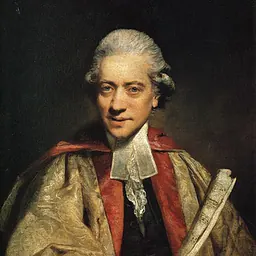
In the 1750s, the young Countess Uhlfeld studied keyboard with imperial court organist Wenzel Raimund Birck (1718–1763), a respected teacher and composer. A manuscript book of simple keyboard pieces and exercises that he prepared for her survives. Whether, as has been suggested, she also studied with Joseph Haydn is difficult to determine, since the source indicating this only gives the title "Countess Thun;" this name was also held by other women over time. The Countess evidently became a very skilled musician. The visiting English musicologist Charles Burney praised her harpsichord playing in print, saying that she "possesses as great skill in music as any person of distinction [i.e., aristocrat] I ever knew."
The salon that developed in her home is described by Clive as "a focal point of the musical and social life of the Viennese aristocracy." and was a patron of both Mozart and Beethoven. Maria Elisabeth (25 April 1764 – 1806) married Prince Andrei Kyrillovich Razumovsky, member of the Razumovsky family, who became Russian ambassador in Vienna (1793–1799) and was a patron of Beethoven. Maria Christiane Josepha (25 July 1765 – 1841) Maria Carolina Anna, or Caroline, Countess Thun (19 May 1769 – 1800) The marriage caused a rift with her husband's protestant Irish Ascendancy family. She "excelled as a singer and guitarist". They had issue, one son Richard Charles Francis Christian Meade, 3rd Earl of Clanwilliam, and two daughters Caroline, Countess Széchenyi de Sárvár-Felsővidék (1794–1820) and Selina, Countess von Clam-Martinic (1797–1872) who married back into the Austrian aristocracy.
Relations with Mozart and Beethoven It is possible that Countess Thun first met Mozart in 1762, when she was 18 and he was seven; this was during an early concert tour of the Mozart family, carried out to display their children as musical prodigies; the young Mozart performed in her father's home. Mozart wrote of her to his father Leopold (24 March 1781), "[she is] the most charming and lovable lady I have ever met; and I am very high in her favor." He frequently performed in her home, and she lent him her excellent Stein piano when Mozart performed before the Emperor in competition with Muzio Clementi on 24 December 1781. and not long thereafter gave his agreement to the plans to commission Mozart for the opera Die Entführung aus dem Serail, which turned out (1782) to be his first great success in Vienna. As Mozart composed the work, Countess Thun listened with encouragement to each of three acts of the opera, performed on the piano by Mozart in her home, as he completed them. After Mozart's death in 1791, it is believed that she helped financially with the schooling of his two surviving sons.
She was the dedicatee of Beethoven's Piano Trio in B flat, Opus 11.
Don’t just read it —
keep it.
Full-length biographies made to live with: read them, listen on the way to work, watch them tonight.
- E-book
- Audio
- Video
Instant download · yours to keep · every purchase keeps this site free
Important facts
People in Maria Wilhelmine of Thun und Hohenstein's life
Named in this biography and alive at the same time


Related people
Same field, nearest in time
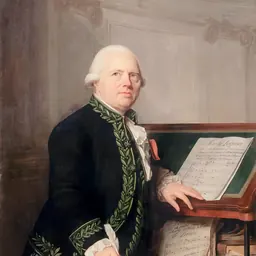

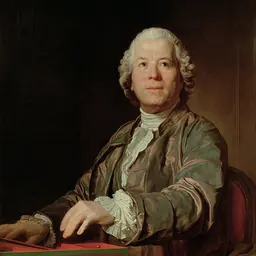

Contemporaries
People whose lives overlapped Maria Wilhelmine of Thun und Hohenstein's






Frequently asked questions
Who was Maria Wilhelmine of Thun und Hohenstein?
Viennese patron of classical music
When was Maria Wilhelmine of Thun und Hohenstein born?
Maria Wilhelmine of Thun und Hohenstein was born on 13 June 1744 in Vienna.
When did Maria Wilhelmine of Thun und Hohenstein die?
Maria Wilhelmine of Thun und Hohenstein died on 18 May 1800 in Vienna.
What was Maria Wilhelmine of Thun und Hohenstein's occupation?
Maria Wilhelmine of Thun und Hohenstein was a composer, salonnière and patron of the arts.
What nationality was Maria Wilhelmine of Thun und Hohenstein?
Maria Wilhelmine of Thun und Hohenstein was Austrian.
Sources & further reading
· Wikipedia: Maria Wilhelmine of Thun und Hohenstein
· DBpedia: Maria Wilhelmine von Thun und Hohenstein
Cite this page
APA: Biography.guide. (2026). Maria Wilhelmine of Thun und Hohenstein. https://biography.guide/maria-wilhelmine-of-thun-und-hohenstein/
MLA: "Maria Wilhelmine of Thun und Hohenstein." Biography.guide, https://biography.guide/maria-wilhelmine-of-thun-und-hohenstein/.
Chicago: "Maria Wilhelmine of Thun und Hohenstein." Biography.guide. https://biography.guide/maria-wilhelmine-of-thun-und-hohenstein/.
Data last updated: 2026-09-27 · Spot an error? Report a correction.
Page generated 2026-09-27 05:17 UTC