
About Maria Thomas
Lived 1941 – 1989 (aged 47–48). Maria Thomas was a writer.
Roberta Worrick (born Roberta Thomas; July 6, 1941 – August 7, 1989), better known by her pen name Maria Thomas, was an American writer who published a novel, short stories, and essays. Much of her writing was set in, or was about, various countries in Africa, where she lived and worked for most of her professional life. Her writing earned numerous awards and widespread critical praise. Her death at age 48,The birth date in the author bio in African Visas
Life and work in African countries (mostly), 1971-1989 Worrick and her husband applied to the Peace Corps because jobs in the United States were unavailable in his field at that time. They hoped to be assigned to Latin America since they spoke Spanish, having learned it while living in New Mexico and traveling to Mexico. Instead they were sent to Africa, which became their home and professional focus for most of the rest of their lives. They served as Peace Corps Volunteers in Ethiopia from 1971 to 1973, moving there with their four-year-old son. (They served as a family with a child, something not possible before or since then, under a short-lived Peace Corps program that recruited married couples with children.) Roberta Worrick's Peace Corps job was, she said, to be "a technical writer for the dairy development agency in Addis Ababa," seeking to modernize Ethiopia's dairy industry. She worked on a textbook for agricultural extension agents and farmers. (Her son says that she taught English; she could have done both.)
After Peace Corps, Tom Worrick began work with USAID as an agricultural economist. Between then and 1989, he was posted to, and the family lived in, Nigeria, Tanzania, Pakistan (from which the family was evacuated to Washington after the November 1979 attack on the U.S. Embassy in Islamabad ), Kenya, Liberia, and Ethiopia, as well as Washington, D.C. between some overseas postings. (She also was awarded a 1986-87 Stegner Fellowship, which requires recipients to live near the Stanford campus for its two-year duration.) In their last posting, in Ethiopia, Roberta worked in relief and development, including as a "contract Emergency Food Program monitor for USAID Ethiopia," traveling through the country "supervising emergency relief and refugee assistance," and utilizing her fluency in Amharic, one of several African languages that she spoke.
Richard Lipez aptly described Maria Thomas' literary career as "late-blooming," since she did not publish a book until she was about 45 years old.
Antonia Saw the Oryx First In 1987, Maria Thomas published a novel set in Tanzania, Antonia Saw the Oryx First, (she disliked that title, and wanted the book to be called African Visas) which received widespread critical acclaim. Margaret Atwood called it "a complex, deeply written and finely wrought double portrait of two women, one black, one white, picking their way through the debris of a shattered colonialism, discovering unexpected treasures buried in the rubble." USA Today called it "the year's best novel." Richard Eder, in the L.A. Times, described it as "a beautiful, sometimes difficult first novel about the deepening affinity between a white woman doctor and a black woman 'healer' in East Africa" and "a work of astonishing energy and vision." Michael Gorra, reviewing it for The New York Times Book Review, wrote, "Ms. Thomas's story of the relationship between the women provides a complex account of the one between Africa and the West. She is a fine painter of scenes." Kirkus Reviews called it an "unfailingly intelligent first novel about the enigma that is modern Africa." It also received highly positive reviews in other newspapers including the Fort Worth Star-Telegram, the Philadelphia Inquirer, and the Cleveland Plain Dealer.
Come to Africa and Save Your Marriage Later in 1987, Maria Thomas published a book of short stories, Come to Africa and Save Your Marriage, and Other Stories. Describing her reason for writing these stories, many of them about Americans in Africa who experience cross-cultural misunderstandings, she told a New York Times interviewer, "I realized that there were a lot of stories about Americans living in Africa that were not being told," and that her stories convey how "there really are a bunch of us out here, doing of all kinds of different things. There's still a Peace Corps, there are technocrats, there are embassy employees, there are teachers." Publishers Weekly called it "a collection of enormous emotional impact." Barbara Thompson, in The New York Times Book Review, wrote that the book "in its best stories is not about a failure of communication between cultures or about crises in the modern African state, but about the loss of contact with our own souls." Susan Heeger wrote in the Los Angeles Times that Thomas "believes in the power of narrative to reconcile contradictions and make mysteries comprehensible. Her 14 stories make a luminous case for her position." Alix Madrigal wrote in The San Francisco Chronicle, "Thomas' writing is so dazzling that it all but obscures the flaws." Come to Africa and Save Your Marriage received positive reviews in other outlets including the Hartford Courant, the Baltimore Sun, Newsday, and the (Raleigh) News and Observer.
Those two books would be the only ones published during her lifetime.
Death Roberta Worrick was one of 16 (Some sources give the number killed in the crash as 10 but those saying 16 seem more authoritative.) Some of the difference is explained by a New York Times story that says there were nine Americans onboard, and the plane's manifest listed five Ethiopians but later reports indicated that seven Ethiopians were onboard.
Posthumous assessments, commemoration, and publication
After her death, many commentators recognized her exceptional talent and the loss to literature. For example, Patricia Holt wrote in the San Francisco Chronicle, "Maria Thomas was a rare and extraordinary talent whose art will continue to inform and open up the world. . . . One great tragedy of Thomas' death is the loss of her promise. Her most accomplished and mature writing was still to come."
African Visas In 1991, Soho Press published a posthumous collection of Maria Thomas' work under the title that she wanted to use for her previous novel: African Visas. It contained a novella, "The Jiru Road," which she had sent to her agent in 1981 but her agent had been unable to publish, and six stories, mostly from manuscripts found in her papers. The thumbnail sketch of African Visas in the New York Times Book Review's list of notable books of 1991 described it as "Funny, poignant, incisive, sexy, polished and enlightening fiction that makes wise use of its author's life in Africa." Reviewing it in the New York Times Book Review, Marianne Wiggins ranked Thomas "in many ways as brilliant as" Isak Dinesen, Rebecca West, Gertrude Stein, Edith Wharton, and Ernest Hemingway. Richard Lipez in the Washington Post, by contrast, while offering high praise for her literary talent, criticized the collection of stories as not up to that level of talent, calling it "an odd mixed bag" and saying "It's hard to know if Thomas ever meant for the unpublished work here to see the light of day, and her publisher offers no clue."
Future publication Paul West wrote in December 1989 that he would like to see her letters posthumously published, quoting several of her letters to him: "The best eulogy in the world, enmeshing her in the future even more firmly, would be to have her sparkling letters collected up, together with any unpublished fiction." National Magazine Award for Fiction, 1981, to the North American Review for three stories by three writers, including "Summer Opportunity" Stegner Fellowship at Stanford, 1986-87 Overseas Press Awards for 1987, Class 10, The Hallie and Whit Burnett Award for Best Magazine Article on Foreign Affairs, Citation [like runner-up], for "A State of Permanent Revolution: Ethiopia Bleeds Red," in Harper's
Publications Books Antonia Saw the Oryx First (novel, Soho Press, 1987, reprinted 2007 with introduction by George Packer) Come to Africa and Save Your Marriage, and Other Stories (stories, Soho Press, 1987, reprinted 2003) African Visas (novella and stories, Soho Press, 1991, reprinted 2007)
Stories and articles (partial list) "Carolyn's House," Chicago Review, vol. 27, no. 1 (Summer 1975). "Slipping Out of Her Body," Chicago Review, vol. 30, no. 2 (Autumn 1978). "Trying to Hide," Antioch Review, vol. 37, no. 4 (Autumn 1979). "The Girl Who Is Living with Carl," Chelsea 38 (November 1979) "Missing Dates: Islamabad Remembered," The North American Review, Vol. 265, No. 1 (Spring 1980). "Summer Opportunity," The North American Review, Vol. 265, No. 4 (Dec. 1980). "Creatures of the Deep," Redbook (February 1982). "Silver Sugar from Bombay," The North American Review, Vol. 268, No. 1 (March 1983). "Charlie Speed," Antioch Review, vol. 44, no. 1 (Winter 1986). "On-Foot," The North American Review, Vol. 271, No. 4 (December 1986). “A State of Permanent Revolution: Ethiopia Bleeds Red,” Harper's Magazine (January 1987). "How They Play the Game in Jubba" (book review), The New York Times Book Review (July 3, 1988). "It Brought Out the Worst in Everyone" (book review), The New York Times Book Review (Dec. 25, 1988). "Back Bay to the Bundu," The New Yorker (April 22, 1991). "Makonde Carvers," Story Magazine (Autumn 1991). "Why Is the Sky So Far Away," StoryQuarterly "A Thief in My House," StoryQuarterly "The Texan," StoryQuarterly "She Hears, Falling, the Seed," Arrival
Don’t just read it —
keep it.
Full-length biographies made to live with: read them, listen on the way to work, watch them tonight.
- E-book
- Audio
- Video
Instant download · yours to keep · every purchase keeps this site free
Important facts
People in Maria Thomas's life
Named in this biography and alive at the same time



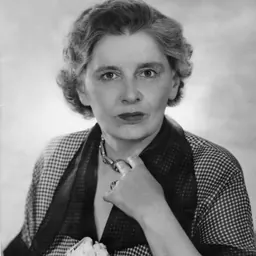

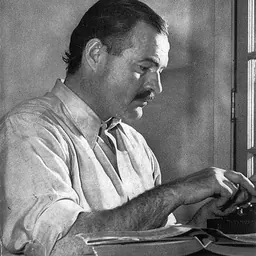

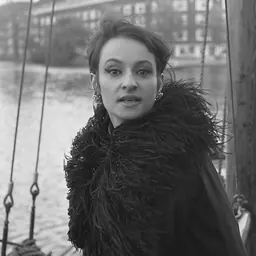
Related people
Same field, nearest in time

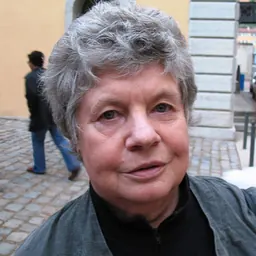

Contemporaries
People whose lives overlapped Maria Thomas's

Frequently asked questions
Who was Maria Thomas?
American writer
When was Maria Thomas born?
Maria Thomas was born on 6 July 1941.
When did Maria Thomas die?
Maria Thomas died in 1989.
What was Maria Thomas's occupation?
Maria Thomas was a writer.
Sources & further reading
Cite this page
APA: Biography.guide. (2026). Maria Thomas. https://biography.guide/maria-thomas/
MLA: "Maria Thomas." Biography.guide, https://biography.guide/maria-thomas/.
Chicago: "Maria Thomas." Biography.guide. https://biography.guide/maria-thomas/.
Data last updated: 2026-09-20 · Spot an error? Report a correction.
Page generated 2026-09-27 05:16 UTC