
About Maria Luisa of Parma
Lived 1751 – 1819 (aged 67). Maria Luisa of Parma was a Spanish politician and aristocrat.
Maria Luisa of Parma (Luisa Maria Teresa Anna; 9 December 1751 – 2 January 1819) was, by marriage to King Charles IV of Spain, Queen of Spain from 1788 to 1808 leading up to the Peninsular War. Her relationship with Manuel Godoy and influence over the King made her unpopular among the people and aristocrats. She was rivals with the Duchess of Alba and the Duchess of Osuna. The death of her daughter-in-law Princess Maria Antonia of Naples and Sicily, whom she disliked, was said to be the result of poisoning by the Queen.
Life Early life
She was the youngest daughter of Philip, Duke of Parma, the fourth son of Philip V of Spain, and Elizabeth Farnese. Born in Parma, she was christened Luisa María Teresa Anna, but is known to history by the short Spanish form of this name: María Luisa while Luisa was the name she used in private.
Her parents had been the Duke and Duchess of Parma since 1749, when the Treaty of Aix-la-Chapelle (1748) awarded the duchy to the Bourbons.
Maria Luisa, her brother Ferdinand and her sister Isabella are traditionally said to have been educated by Étienne Bonnot de Condillac, a well-known French philosopher. However, Condillac did in fact not arrive in Parma until 1768. Maria Luisa dominated Charles IV and thus the government, but was in turn reputed to be dominated by prime minister Manuel de Godoy.
María Luisa was reputed to have had many love affairs. The most infamous of them was with the prime minister Manuel de Godoy, whom contemporary gossip singled out as a long-time lover; in 1784 a member of the guard, he was promoted through several ranks when Charles and Maria Luisa succeeded to the throne, and was appointed prime minister in 1792. Godoy was also rumored to be the natural father of several of Luisa's children. In 1791, minister Floridablanca lost his office after accusing Godoy of being the lover of the Queen. Several other men have been pointed out as her lovers, among them her courtier Mallo.
Several contemporaries, such as the French ambassador Alquier, reported on these rumors, and they appeared in the diplomatic correspondence of the time. The veracity of that testimony, however, remains disputed. Volavérunt 1999 Stefania Sandrelli Goya's Ghosts 2006 Blanca Portillo
Issue
Maria Luisa married her first cousin Carlos IV in 1765. She had 24 pregnancies of which she had 10 miscarriages and 14 children were born, seven of whom survived into adulthood.
Carlos ClementeInfante of Spain
| 19 September 1771 – 7 March 1774 | Born and died at El Escorial; baptized on the same day he was born, with Charles III representing "the Holy Father" at the christening. Pope Clement XIV celebrated Carlos' birth and sent the infant consecrated swaddling clothes. Carlota JoaquinaQueen of Portugal and the Algarves
| 25 April 1775 – 7 January 1830 | Born at the Royal Palace of Aranjuez, she married John VI of Portugal in 1785 and became Queen consort of Portugal in 1816. Had issue, including the future Pedro I of Brazil. She died at Queluz National Palace. Maria LuisaInfanta of Spain
| 11 September 1777 – 2 July 1782 | Born and died at the Royal Palace of La Granja de San Ildefonso. María AmaliaInfanta of Spain
| 9 January 1779 – 22 July 1798 | Born at the Royal Palace of El Pardo, she married her uncle Infante Antonio Pascual of Spain in 1795. She gave birth to a stillborn son in 1798 and died shortly thereafter. Carlos DomingoInfante of Spain
| 5 March 1780 – 11 June 1783 | Born at the Royal Palace of El Pardo and died at the Royal Palace of Aranjuez. Maria LuisaQueen of EtruriaDuchess of Lucca
| 6 July 1782 – 13 March 1824 | Born at the Royal Palace of La Granja de San Ildefonso, she married Louis I of Etruria in 1795 and had issue, including Charles II, Duke of Parma. Became Duchess of Lucca in her own right in 1817 and died in Rome in 1824 of cancer. Carlos Francisco de PaulaInfante of Spain
| 5 September 1783 – 11 November 1784 Twins, born and died at the Royal Palace of La Granja de San Ildefonso. Their birth was an important event for the people of Spain and provided security for the succession, a security which was truncated with the early deaths of Carlos and Felipe. Felipe Francisco de PaulaInfante of Spain | 5 September 1783 – 18 October 1784 Fernando (VII)King of Spain
| 14 October 1784 – 29 September 1833 | Born and died at El Escorial, he succeeded his father as King in 1808, but was deposed by Joseph Bonaparte one month later. Married Princess Maria Antonia of Naples and Sicily in 1802, no issue. Re-instated as King in 1813. Married Maria Isabel of Portugal in 1816, had issue. Married Maria Josepha Amalia of Saxony in 1819, no issue. Married Maria Christina of the Two Sicilies in 1829 and had issue, including the future Isabella II of Spain. Died in 1833. Carlos María Isidro BenitoCount of Molina
| 29 March 1788 – 10 March 1855 | Born at the Royal Palace of Aranjuez. Married Infanta Maria Francisca of Portugal in 1816 and had issue. Married Maria Teresa, Princess of Beira in 1838, no issue. First Carlist pretender to the throne of Spain as "Carlos V". Use the title "Count of Molina" between 1845 and his death in 1855. María IsabelQueen of the Two Sicilies
| 6 July 1789 – 13 September 1848 | Born at the Royal Palace of Madrid, she married Francis I of the Two Sicilies in 1802 and had issue, including the future Ferdinand II of the Two Sicilies. Queen consort between 1825 and 1830, her husband's death. Died at the Palace of Portici in 1848. Maria TeresaInfanta of Spain
| 16 February 1791 – 2 November 1794 | Born at the Royal Palace of Aranjuez and died at El Escorial of smallpox. Felipe MariaInfante of Spain
| 28 March 1792 – 1 March 1794 | Born at the Royal Palace of Aranjuez and died at the Royal Palace of Madrid.
A miscarriage of a daughter in the 4th month of pregnancy (19 December 1775). A miscarriage of a daughter in the 6th month of pregnancy (16 August 1776). A miscarriage in the 1st month of pregnancy (22 January 1778). A miscarriage of a son in the 4th and a half month of pregnancy (17 January 1781). A miscarriage in the 1st month of pregnancy (4 December 1789). A miscarriage in the 1st month of pregnancy (30 January 1790). A miscarriage in the 1st month of pregnancy (30 March 1790). A miscarriage of a son in the 5th and a half month of pregnancy (11 January 1793). A miscarriage of a son in the 4th and a half month of pregnancy (20 March 1796). A miscarriage in 1799.
Ancestry
Don’t just read it —
keep it.
Full-length biographies made to live with: read them, listen on the way to work, watch them tonight.
- E-book
- Audio
- Video
Instant download · yours to keep · every purchase keeps this site free
Important facts
more
S. M. Doña María Luisa de Parma, Reina de España Maria Luisa, María Luisa Teresa de Parma Reina de España, María Luisa de Parma Reina de España, Luisa María Teresa AnaFamily & relationships
People in Maria Luisa of Parma's life
Named in this biography and alive at the same time

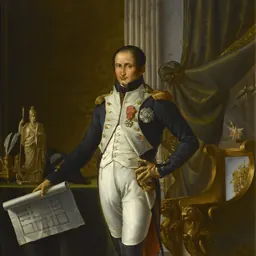

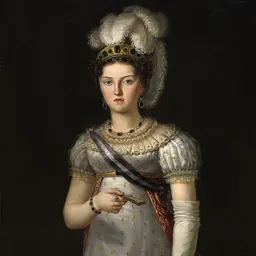
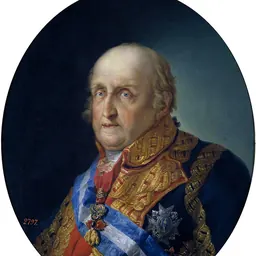
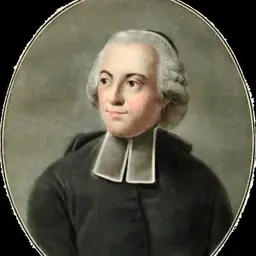
Related people
Same field, nearest in time



Contemporaries
People whose lives overlapped Maria Luisa of Parma's





Frequently asked questions
Who was Maria Luisa of Parma?
Queen consort of Spain (1751-1819)
When was Maria Luisa of Parma born?
Maria Luisa of Parma was born on 9 December 1751 in Parma.
When did Maria Luisa of Parma die?
Maria Luisa of Parma died on 2 January 1819 in Rome.
What was Maria Luisa of Parma's occupation?
Maria Luisa of Parma was a politician and aristocrat.
What nationality was Maria Luisa of Parma?
Maria Luisa of Parma was Spanish.
Sources & further reading
· Wikipedia: Maria Luisa of Parma
· DBpedia: Maria Luisa of Parma
Cite this page
APA: Biography.guide. (2026). Maria Luisa of Parma. https://biography.guide/maria-luisa-of-parma/
MLA: "Maria Luisa of Parma." Biography.guide, https://biography.guide/maria-luisa-of-parma/.
Chicago: "Maria Luisa of Parma." Biography.guide. https://biography.guide/maria-luisa-of-parma/.
Data last updated: 2026-09-20 · Spot an error? Report a correction.
Page generated 2026-09-27 05:33 UTC