
About Maria Fitzherbert
Lived 1756 – 1837 (aged 80). Maria Fitzherbert was a British mistress and politician.
Maria Anne Fitzherbert (, previously Weld; 26 July 1756 – 27 March 1837) was a longtime companion of George, Prince of Wales (later King George IV of the United Kingdom). In 1785, they married secretly in a ceremony that was invalid under English civil law because his father, King George III, had not consented to it. Fitzherbert was a Catholic, and the law at the time forbade Catholics or spouses of Catholics to become monarch, so had the marriage been approved and valid, the Prince of Wales would have lost his place in the line of succession. Before marrying George, Fitzherbert had been twice widowed. Her nephew from her first marriage, Cardinal Weld, persuaded Pope Pius VII to declare the marriage sacramentally valid.
Early life Fitzherbert was born at Tong Castle in Shropshire. She was the eldest child of Walter Smythe (c. 1721–1788) of Brambridge, Hampshire, younger son of Sir John Smythe, 3rd Baronet, of Acton Burnell, Shropshire. Her mother was Mary Ann Errington of Beaufront, Northumberland, maternal half-sister of Charles William Molyneux, 1st Earl of Sefton. Fitzherbert was educated in Paris at a French convent.
Marriages
At eighteen, Maria married Edward Weld, 16 years her senior, a rich Catholic widower and landowner of Lulworth Castle in July 1775. Weld died just three months later, after a fall from his horse; having failed to sign his new will, his estate went to his younger brother Thomas, the father of fifteen children, including the future Cardinal Weld. His widow was left effectively destitute, had little or no financial support from the Weld family, and was obliged to remarry as soon as she was able.
Three years later, in 1778, she married Thomas Fitzherbert of Swynnerton Hall, Staffordshire. He was ten years her senior. They had a son who died young. She was widowed again on 7 May 1781. He left her an annuity of £1,000 (£ in ), and a town house in Park Street, Mayfair. Secretly, and – as both parties were well aware – against the law, they went through a form of marriage on 15 December 1785, in the drawing room of her house in Park Street, London. Her uncle, Henry Errington, and her brother, John Smythe, were the witnesses. The marriage ceremony was performed by one of the prince's Chaplains in Ordinary, the Reverend Robert Burt, whose debts of £500 (£ in ) were paid by the prince to release him from Fleet Prison.
The marriage was not valid under English law because it had not received the prior approval of King George III and the Privy Council as required by the Royal Marriages Act 1772. Had approval been sought, it might not have been granted for many reasons, including, for example, Fitzherbert's Catholic religion. Had consent been given and the marriage been legal, the Prince of Wales would have been automatically removed from the succession to the British throne under the provisions of the Bill of Rights and the Act of Settlement 1701 and replaced as heir-apparent by his brother, the Duke of York.
On 23 June 1794, Fitzherbert was informed by letter that her relationship with the Prince was over. George told his younger brother, the Duke of York, that he and Fitzherbert were "parted, but parted amicably", conveying his intention to marry their first cousin, Duchess Caroline of Brunswick.
During the first few years of his reign as King George IV, he turned violently against Fitzherbert and several former associates.
Following the death of George IV on 26 June 1830, it was discovered that he had kept all of Fitzherbert's letters, and steps were taken to destroy them. Fitzherbert told George IV's brother, King William IV, about their marriage and showed him the document in her possession. He "begged her to accept the title of Duchess, but she refused, asking only permission to wear widow's weeds and to dress her servants in royal livery".
Death
Architect William Porden designed Steine House, on the west side of Old Steine in Brighton, for Fitzherbert. She lived there from 1804 until she died in 1837. She was buried at St John the Baptist's Church, Brighton, a church built largely with her funds. The memorial sculpture in the nave shows her wearing three wedding rings. Indeed, during her early days in Brighton with the Prince of Wales, his uncle, the Duke of Gloucester, and other friends believed Mrs. Fitzherbert to be pregnant.
One suggested child of the Prince and his longtime paramour was James Ord (born 1786), whose curious history of assisted relocations and encouragement has been chronicled.
In addition to James Ord, the long-term relationship between Fitzherbert and George, as prince and king, appears to have led to more than a dozen claims of children conceived out of wedlock. These join the many additional catalogued cases of George's liaisons, In a letter to Edward VII, Harris claimed that Thomas also had a brother and sister who lived for a time with their mother in Dublin.
Their married names were Mary Ann Stafford-Jerningham and Mary Georgina Emma Dawson-Damer. of Princess Charlotte without surviving children, should the Ord link be substantiated, the line descended through them would join a large number of claimed surviving descendants of King George IV.
Appearance Fitzherbert was described as having an aquiline nose and loose teeth. She had hazel eyes, silky blonde hair, and a flawless complexion.
On screen Maria is portrayed by: Nora Swinburne in the 1943 film The Man in Grey Joyce Howard in the 1947 film Mrs. Fitzherbert Rosemary Harris in the 1954 film Beau Brummell Jeanette Sterke in the 1957 BBC Sunday-Night Theatre teleplay The Lass of Richmond Hill Sorcha Cusack in the 1975 BBC television series Private Affairs Susannah York in the 1979 television series Prince Regent Caroline Harker in the 1994 film The Madness of King George
Don’t just read it —
keep it.
Full-length biographies made to live with: read them, listen on the way to work, watch them tonight.
- E-book
- Audio
- Video
Instant download · yours to keep · every purchase keeps this site free
Important facts
Family & relationships
People in Maria Fitzherbert's life
Named in this biography and alive at the same time
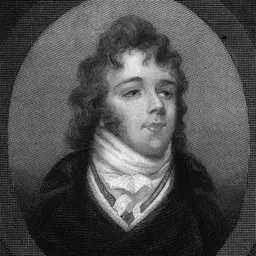


Related people
Same field, nearest in time

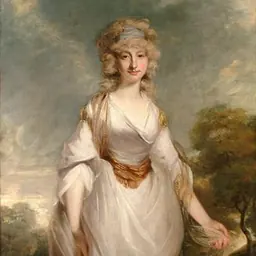



Contemporaries
People whose lives overlapped Maria Fitzherbert's




Frequently asked questions
Who was Maria Fitzherbert?
Mistress of British king (1756-1837)
When was Maria Fitzherbert born?
Maria Fitzherbert was born on 26 July 1756 in Tong.
When did Maria Fitzherbert die?
Maria Fitzherbert died on 27 March 1837 in Brighton.
What was Maria Fitzherbert's occupation?
Maria Fitzherbert was a mistress and politician.
What nationality was Maria Fitzherbert?
Maria Fitzherbert was British.
Sources & further reading
· Wikipedia: Maria Fitzherbert
Cite this page
APA: Biography.guide. (2026). Maria Fitzherbert. https://biography.guide/maria-fitzherbert/
MLA: "Maria Fitzherbert." Biography.guide, https://biography.guide/maria-fitzherbert/.
Chicago: "Maria Fitzherbert." Biography.guide. https://biography.guide/maria-fitzherbert/.
Data last updated: 2026-09-20 · Spot an error? Report a correction.
Page generated 2026-09-27 05:33 UTC