
About Maria Carmela Lico
Lived 1927 – 1985 (aged 57–58). Maria Carmela Lico was a Brazilian physiologist and physiology.
Maria Carmela Lico or Licco (1927–1985) spent most of her research life as a physiologist studying the neural mechanisms of pain at the Department of Physiology of the Faculdade de Medicina de Ribeirão Preto (Brazil). During her childhood in Italy, Lico fell ill with an infectious disease that would later "weaken her immune system" In 1970, Lico made a short visit to Yale University, in the laboratory of professor José Manuel Rodriguez Delgado, where she studied the behavior of primates, applying telemetry techniques to infer physiology-behavior relationships. In 1981, Lico applied for full professorship at Ribeirão Preto, a position she held until she died of cancer in 1985.
Research topics Maria Carmela Lico was interested in behavioral neuroscience since her undergraduate studies. – soon she joined Miguel Rolando Covian in the field of neurophysiology. As most researchers under the guidance of Covian, Lico was interested in a wide variety of topics, and it has been said that her personal library – composed mainly of fiction and art books – attests this observation. During these experiments with anesthetized animals, Lico began to observe that, as the anesthetic plane became more superficial, guinea pigs started to vocalize and move, which she considered objective signs of nociception. Lico observed that these signs were abolished by septal stimulation. Based on those observations, she conceived an experiment in which a noxious stimulus that was applied to the dental pulp did not produce nocifensive behavior when preceded by the electrical stimulation of the septal nuclei. A year before her first findings were presented at the annual congress of the Latin American Association for Physiological Sciences, Reynolds published his paper on the antinociceptive effects of periaqueductal gray electrical stimulation in rats. These findings would pave the discovery of the endogenous analgesic system. However, while most posterior researchers focused on the role of the limbic opioid system in the modulation of pain, Lico studied the role of monoamines in other regions, including the area postrema, the caudate and the medial forebrain bundle. They were unable to identify the analgesic substance; by 1975, when Hughes and Kosterlitz described the potent analgesic effects of endorphins, Lico and Garcia-Leme were convinced that the substance generated by electroacupuncture was an endorphin. At the end of the 1970s, Lico advised Renato Sabbatini and Isaías Pessotti, both of whom would become important behavioral scientists in Brazil.
Don’t just read it —
keep it.
Full-length biographies made to live with: read them, listen on the way to work, watch them tonight.
- E-book
- Audio
- Video
Instant download · yours to keep · every purchase keeps this site free
Important facts
People in Maria Carmela Lico's life
Named in this biography and alive at the same time




Related people
Same field, nearest in time



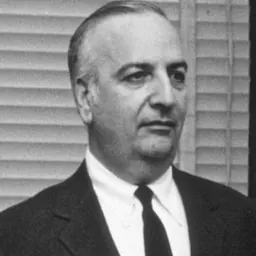
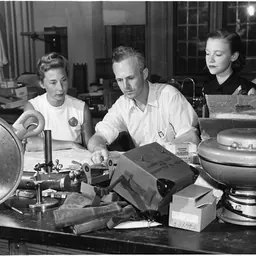
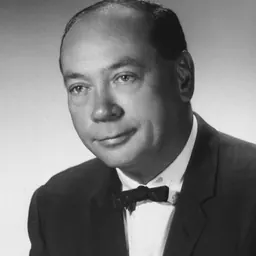
Contemporaries
People whose lives overlapped Maria Carmela Lico's
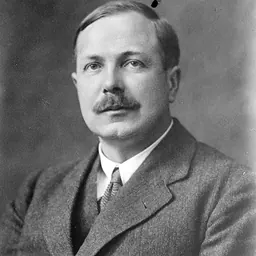


Frequently asked questions
Who was Maria Carmela Lico?
Italian-Brazilian physiologist
When was Maria Carmela Lico born?
Maria Carmela Lico was born in 1927 in Italy.
When did Maria Carmela Lico die?
Maria Carmela Lico died in 1985 in Brazil.
What was Maria Carmela Lico's occupation?
Maria Carmela Lico was a physiologist and physiology.
What nationality was Maria Carmela Lico?
Maria Carmela Lico was Brazilian.
Sources & further reading
· Wikipedia: Maria Carmela Lico
Cite this page
APA: Biography.guide. (2026). Maria Carmela Lico. https://biography.guide/maria-carmela-lico/
MLA: "Maria Carmela Lico." Biography.guide, https://biography.guide/maria-carmela-lico/.
Chicago: "Maria Carmela Lico." Biography.guide. https://biography.guide/maria-carmela-lico/.
Data last updated: 2026-09-22 · Spot an error? Report a correction.
Page generated 2026-09-27 05:30 UTC