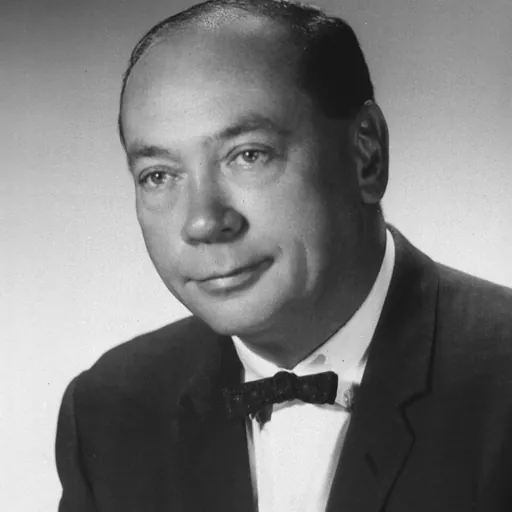
About Earl Wilbur Sutherland, Jr.
Lived 1915 – 1974 (aged 58). Earl Wilbur Sutherland, Jr. was an American physiologist, chemist, biochemist, physician, pharmacist and pharmacologist, known for Cyclic AMP and Epinephrine.
Earl Wilbur Sutherland Jr. (November 19, 1915 – March 9, 1974) was an American pharmacologist and biochemist born in Burlingame, Kansas. Sutherland won a Nobel Prize in Physiology or Medicine in 1971 "for his discoveries concerning the mechanisms of the action of hormones", especially epinephrine, via second messengers, namely cyclic adenosine monophosphate, or cyclic AMP.
Early life and education Sutherland was born on November 19, 1915, in Burlingame, Kansas. The second youngest of six children, he was raised by his mother, Edith M. Hartshorn, and his father, Earl W. Sutherland. Though his father, who was originally from Wisconsin, had attended Grinnell College for two years, he ultimately led an agrarian lifestyle that took him to both New Mexico and Oklahoma before settling down in Burlingame to raise a family. Edith, a Missouri native, had some training in nursing at what was called a "ladies college". To provide for the family, Sutherland's father ran a dry goods store, where he gave each of his children working jobs. Sutherland began fishing at the age of five, and this became a pastime that he enjoyed for most of his life.
As a high school student, Sutherland played and excelled in several sports, including tennis, basketball, and football.
In 1933, at the age of 17, Sutherland enrolled in Washburn College in Topeka, Kansas and began the pursuit of a Bachelor of Science degree. Under Cori's guidance, Sutherland conducted research on the effects of the hormones epinephrine and glucagon on the breakdown of glycogen to glucose.
After receiving his medical degree from Washington University in 1942, Sutherland served as a World War II army physician. He returned to Washington University in St. Louis in 1945, where he continued to do research in Cori's Laboratory. Sutherland accredits his decision to pursue a research career, as opposed to entering the medical profession, to his mentor Cori.
Discovery of cyclic AMP While working in Cori's laboratory, Sutherland, with the help of his co-workers, made several discoveries concerning the mechanism of glycogen metabolism that, years later, led him to his discovery of the biological activity of cyclic AMP. Cori's laboratory had previously established the basic mechanism of glycogen metabolism, for which they were awarded the Nobel Prize in Physiology or Medicine. These four papers document the purification of LP and the analysis of several of its properties. First, it was determined that the enzymatic activity of LP depends on the addition or removal of a phosphate group, a process called phosphorylation.
Even though the discovery of cyclic AMP and the idea of second messengers were of great importance to the world of medicine, Sutherland's findings were actually achieved through strenuous trial and error. First of all, Sutherland and Ted Rall were convinced that a sucrose homogenate of liver cells was absolutely necessary in order to keep their cells healthy and proliferating. This inference was made by Rall from his experience studying mitochondria, which responded well to these sucrose homogenates; however, it had nothing to do with what was being studied at the time. It turned out that this sucrose was not necessary for the homogenate and once they set up the experiment without sucrose they were able to see more effective results. Secondly, Sutherland initially believed that there was something vital about the intact cell, and that disrupting its structure would not produce any hormonal effect. He had two sons and a daughter with Mildred Rice.
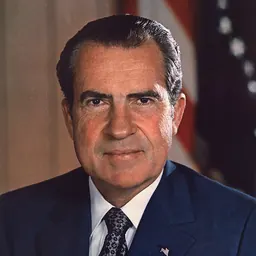
In 1962, Sutherland divorced his first wife. A year later, when he became professor of physiology at Vanderbilt University, Sutherland married Claudia Sebeste Smith, the assistant dean at the university, and they were together for the remainder of Sutherland's life. 1973 – National Medal of Science awarded by Richard Nixon. Vanderbilt honored Sutherland in 1997 by starting a Sutherland lecture, and again in 2001 in the creation of the Sutherland Chair of Pharmacology. Heidi E. Hamm, a member of the Vanderbilt faculty, was appointed to this position upon its establishment and still maintains this title.
Don’t just read it —
keep it.
Full-length biographies made to live with: read them, listen on the way to work, watch them tonight.
- E-book
- Audio
- Video
Instant download · yours to keep · every purchase keeps this site free
Important facts
People in Earl Wilbur Sutherland, Jr.'s life
Named in this biography and alive at the same time
Related people
Same field, nearest in time



Contemporaries
People whose lives overlapped Earl Wilbur Sutherland, Jr.'s




Frequently asked questions
Who was Earl Wilbur Sutherland, Jr.?
American pharmacologist (1915–1974)
When was Earl Wilbur Sutherland, Jr. born?
Earl Wilbur Sutherland, Jr. was born on 19 November 1915 in Burlingame.
When did Earl Wilbur Sutherland, Jr. die?
Earl Wilbur Sutherland, Jr. died on 9 March 1974 in Miami.
What was Earl Wilbur Sutherland, Jr.'s occupation?
Earl Wilbur Sutherland, Jr. was a physiologist, chemist, biochemist, physician, pharmacist and pharmacologist.
What was Earl Wilbur Sutherland, Jr. known for?
Earl Wilbur Sutherland, Jr. was known for Cyclic AMP and Epinephrine.
What nationality was Earl Wilbur Sutherland, Jr.?
Earl Wilbur Sutherland, Jr. was American.
Sources & further reading
· Wikipedia: Earl Wilbur Sutherland, Jr.
· DBpedia: Earl Wilbur Sutherland Jr.
Cite this page
APA: Biography.guide. (2026). Earl Wilbur Sutherland, Jr.. https://biography.guide/earl-wilbur-sutherland-jr/
MLA: "Earl Wilbur Sutherland, Jr.." Biography.guide, https://biography.guide/earl-wilbur-sutherland-jr/.
Chicago: "Earl Wilbur Sutherland, Jr.." Biography.guide. https://biography.guide/earl-wilbur-sutherland-jr/.
Data last updated: 2026-09-23 · Spot an error? Report a correction.
Portrait: Wikimedia Commons · author & licence
Page generated 2026-09-27 05:05 UTC