
About Maria Bochkareva
Lived 1889 – 1920 (aged 30). Maria Bochkareva was a Russian military personnel.
María Leontievna Bochkareva (July 1889 – 16 May 1920; , née Frolkova (Фролко́ва), nicknamed Yashka) was a Russian soldier who fought in World War I and formed the Women's Battalion. She was the first Russian woman to command a military unit.
Early life Maria Frolkova was born to a peasant family in the village of Nikolskoye in July 1889. Her father was a sergeant in the imperial army who fought in the Russo-Turkish War. She left home at sixteen to marry They moved her to Sretensk where Maria began a relationship with a local Jewish man named Yakov (or Yankel) Buk. When she obtained his approval, she underwent three months' training and was sent to front-line duty with the 5th Corps, 28th Regiment of the Second Army, stationed at Polotsk. She was decorated for rescuing fifty wounded soldiers from the field. Eventually, she became exhausted from her physical injuries and lost interest in her military post. She was discharged in the spring of 1917. This was the first women's battalion to be organised in Russia. Bochkareva's 1st Russian Women's Battalion of Death initially attracted around 2,000 women volunteers, but the commander's strict discipline drove all but around 300 out of the unit. Bochkareva herself was wounded in the battle and sent back to Petrograd to recuperate.
Bochkareva was only marginally involved in the creation of other women's combat units formed in Russia during the spring and summer of 1917. Her unit was at the front at the time of the October Revolution and did not participate in the defence of the Winter Palace—another women's unit did, the 1st Petrograd Women's Battalion. Bochkareva's unit disbanded after facing increasing hostility from the remaining male troops at the front. Bochkareva returned to Petrograd where she was briefly detained by the Bolsheviks. She secured permission to rejoin her family in Tomsk but returned to Petrograd again in early 1918. She claims to have then received a telegram asking her to take a message to General Lavr Kornilov, who was commanding a White Army in the Caucasus. After leaving Kornilov's headquarters, she was again detained by the Bolsheviks and, after they learned of her connection with the Whites, was scheduled to be executed. She was rescued, however, by a soldier who had served with her in the Imperial Army in 1915 and who convinced the Bolsheviks to stay her execution. She was granted an external passport and allowed to leave the country. Bochkareva then made her way to Vladivostok, where she left for the United States on the U.S. Army Transport Sheridan on 18 April 1918.
United States and Britain Sponsored by socialite Florence Harriman, Bochkareva arrived in San Francisco and made her way to New York City and Washington, D.C. She was granted a meeting with President Woodrow Wilson on July 10, 1918, during which she begged the president to intervene in Russia. Wilson was apparently so moved by her emotional appeal that he responded with tears in his eyes and promised to do what he could.
While in New York, Bochkareva dictated her memoirs, Yashka: My Life As Peasant, Exile, and Soldier, to a Russian emigre journalist named Isaac Don Levine. After leaving the United States, she traveled to Great Britain where she was granted an audience with King George V. The British War Office gave her 500 rubles of funding to return to Russia.
Return to Russia and execution Bochkareva arrived in Arkhangelsk in August 1918 and attempted to organise another unit, but failed.
In April 1919, she returned to Tomsk and attempted to form a women's medical detachment under White Army Admiral Aleksandr Kolchak, but before she could complete this task she was recaptured by the Bolsheviks. She was sent to Krasnoyarsk where she was interrogated for four months. Ultimately, she was sentenced to death and executed as an "enemy of the working class". She was shot by the Cheka on May 16, 1920.
Legacy Maria Bochkareva is one of the heroines of the Russian film Battalion directed by Dmitriy Meskhiev and released to cinemas in February 2015.
In 2018 the New York Times published a belated obituary for her.
Don’t just read it —
keep it.
Full-length biographies made to live with: read them, listen on the way to work, watch them tonight.
- E-book
- Audio
- Video
Instant download · yours to keep · every purchase keeps this site free
Important facts
People in Maria Bochkareva's life
Named in this biography and alive at the same time

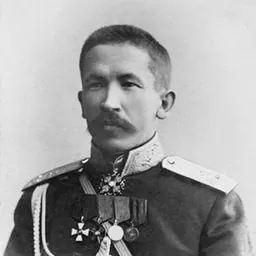

Related people
Same field, nearest in time



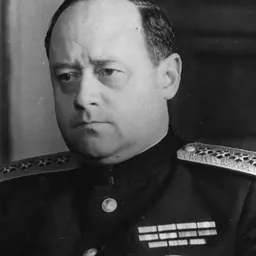


Contemporaries
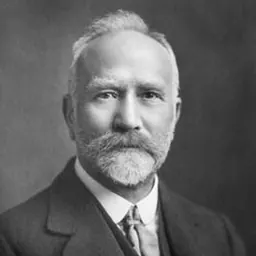
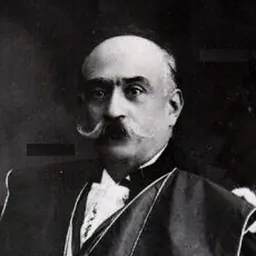
People whose lives overlapped Maria Bochkareva's

Frequently asked questions
Who was Maria Bochkareva?
Russian counter revolutionary (1889–1920)
When was Maria Bochkareva born?
Maria Bochkareva was born on 1 July 1889 in Novgorod Governorate.
When did Maria Bochkareva die?
Maria Bochkareva died on 16 May 1920 in Krasnoyarsk.
What was Maria Bochkareva's occupation?
Maria Bochkareva was a military personnel.
What nationality was Maria Bochkareva?
Maria Bochkareva was Russian.
Sources & further reading
Cite this page
APA: Biography.guide. (2026). Maria Bochkareva. https://biography.guide/maria-bochkareva/
MLA: "Maria Bochkareva." Biography.guide, https://biography.guide/maria-bochkareva/.
Chicago: "Maria Bochkareva." Biography.guide. https://biography.guide/maria-bochkareva/.
Data last updated: 2026-09-27 · Spot an error? Report a correction.
Page generated 2026-09-27 05:17 UTC