
Marguerite Thibert
French activist and ILO senior official
About Marguerite Thibert
Lived 1886 – 1982 (aged 96). Marguerite Thibert was a French activist, official, women's rights activist, economist, historian and feminist.
Paule Lucie Marguerite Javouhey, better known as Marguerite Thibert, (1886–1982) was a French academic, advocate for women's rights and an international civil servant. Thibert worked for the International Labour Organization (ILO), from 1926 onwards, engaged with numerous women's organizations, including the French Association for University Women (Association Française des Femmes Diplômées des Universités) and the Correspondence Committee on Women's Work and published many works on women's issues.
Personal life Marguerite Thibert was born on 31 January 1886. She was born at home, in Chalon-sur-Saône, France, into a religious family which, in 1806, established the congregation of the Sisters of St. Joseph of Cluny Abbey located in Saône-et-Loire, France. However, she later distanced herself from the church. She was the second of four siblings, born after Elise and before Marie and Pierre. Thibert did not like sharing many details about her private and personal life; many of the things historians know today are thanks to letters Thibert exchanged with friends, family and acquaintances. Thibert lived another 67 years before she died in 1982 at the age of 96.
Thibert spoke five languages (French, German, Italian, English and Spanish) which allowed her to actively engage with international key figures at the time, including the American Secretary of Labour Frances Perkins, Eleanor Roosevelt, Mexico's first female ambassador Palma Guillén and Sun Yat-sen's widow. Despite the vast amount of travel Thibert embarked on, she maintained close connections with her sister Marie and the rest of her family throughout her life.
Education Thibert was part of the first generation of women to attend university in France. She was a student at Sorbonne University where she earned her PhD with her thesis titled "Le féminisme dans le socialisme français de 1830 à 1850" (Feminism within French Socialism from 1830 to 1850). Thibert was the 12th woman to receive a PhD in humanities in France. In her own words, going to Mexico at the time was important because it was a country "where women's work is growing, and where, two years ago, a special organism within the Ministry of Labour was created, and seems to be very active to deal with the problems related to the work of women and minors."
After her first trip, Thibert returned to Mexico in 1941 to continue her work. She was in Mexico during a time of plausible prosperity. From her observations, she published two works: "El aprendizaje en Mexico y su reglamentación eventual" (Learning in Mexico and its Eventual Regulation), where she reported on the conditions minors faced, such as low salary. She also published "Pequeños comerciantes y pequeños trabajadores callejeros" (Young Merchants and Young Street Workers).
Feminism Thibert lived through an era of significant change for women. New work opportunities started to emerge for women in international institutions after 1919. This overlapped with Thibert's search for a career promotion. She managed to get employment at the ILO despite the lack of women's rights and opportunities of employment for women in France at the time.
Her activism continued after her retirement from the ILO throughout the 1960s, 70s and 80s.
During the late 1930s, Thibert contributed to the organization by ensuring that vast collections of documents did not disappear in the face of the rise of fascism in Europe at the time. This included her own articles and reports, letters that she had received, copies of letters she had sent and archival treasures. These documents highlighted significant issues that otherwise could have been lost in the face of fascist ideology.
In light of societal changes in Europe during the late 1930s, Thibert's views also evolved from pacifism to anti-fascism. She was a popular woman at the time amongst the Jewish and Social Democratic women on the committee as she devoted herself to providing aid and assistance to victims of fascism in Europe. These included Emmy Freundlich, Käthe Leichter and Fanni Blatny. Thibert successfully managed to help Emmy Freundlich and Fanni Blatny to safety, but despite her efforts, Käthe Leichter was executed in the Ravensbrück concentration camp in 1942.
Other engagements Thibert became a member of the Women's International League for Peace and Freedom (WILPF) right after the end of World War II. She was also supported by other international women's organizations including the International Council of Women, the International Alliance of Women and the International Federation of University Women. These institutions were essential in helping Thibert to Montreal despite her director's threat to suspend her contract.
French Association of University Women Thibert joined the French Association of University Women (Association Française des Femmes Diplômées des Universités) in 1923 and she remained loyal to the organization throughout the rest of her life. The association became a crucial part in helping Thibert achieve a professional research career that would fulfill her personal goals and ambitions. However, despite this, Thibert did not hold back on the critique of the organization as she worked for a more aggressive activist approach. One example of her work is an article entitled "The Economic Depression and the Employment of Women: I" in which she examines issues of female unemployment from a global perspective.
Thibert also authored an article in the French pacifist review "Peace by Law" (La Paix par le Droit) entitled "Emigration and International Peace" (L'émigration et la paix internationale). The goal of this paper was to create awareness around the issue of social protection of immigrants in France.
Don’t just read it —
keep it.
Full-length biographies made to live with: read them, listen on the way to work, watch them tonight.
- E-book
- Audio
- Video
Instant download · yours to keep · every purchase keeps this site free
Important facts
People in Marguerite Thibert's life
Named in this biography and alive at the same time
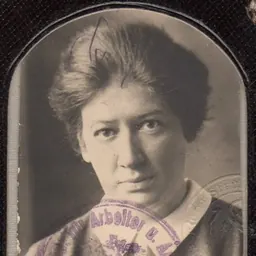

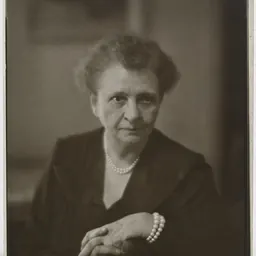


Related people
Same field, nearest in time


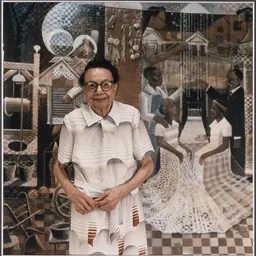
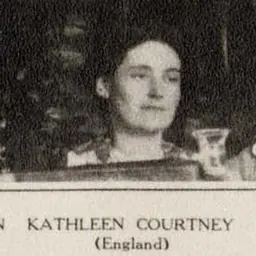
Contemporaries
People whose lives overlapped Marguerite Thibert's


Frequently asked questions
Who was Marguerite Thibert?
French activist and ILO senior official (1886–1982)
When was Marguerite Thibert born?
Marguerite Thibert was born on 31 January 1886 in Chalon-sur-Saône.
When did Marguerite Thibert die?
Marguerite Thibert died on 14 November 1982 in 13th arrondissement of Paris.
What was Marguerite Thibert's occupation?
Marguerite Thibert was an activist, official, women's rights activist, economist, historian and feminist.
What nationality was Marguerite Thibert?
Marguerite Thibert was French.
Sources & further reading
· Wikipedia: Marguerite Thibert
Cite this page
APA: Biography.guide. (2026). Marguerite Thibert. https://biography.guide/marguerite-thibert/
MLA: "Marguerite Thibert." Biography.guide, https://biography.guide/marguerite-thibert/.
Chicago: "Marguerite Thibert." Biography.guide. https://biography.guide/marguerite-thibert/.
Data last updated: 2026-09-20 · Spot an error? Report a correction.
Page generated 2026-09-27 05:12 UTC