
About Marguerite Duras
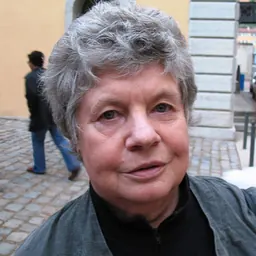
Lived 1914 – 1996 (aged 81). Marguerite Duras was a French writer, film director, screenwriter, novelist, playwright and autobiographer.
Marguerite Germaine Marie Donnadieu (, 4 April 1914 – 3 March 1996), known as Marguerite Duras , was a French novelist, playwright, screenwriter, essayist, and experimental filmmaker. Her script for the film Hiroshima mon amour earned her a nomination for Best Original Screenplay at the Academy Awards.
Early life and education Duras was born Marguerite Donnadieu on 4 April 1914, in Gia Định, Cochinchina, French Indochina (now Vietnam). Her parents, Marie (née Legrand, 1877–1956) and Henri Donnadieu (1872–1921), were teachers from France who likely had met at Gia Định High School. They both had previous marriages. Marguerite had two brothers: Pierre, the older, and the younger Paul.
Duras' father fell ill and he returned to France, where he died in 1921, when Duras was seven years old. Between 1922 and 1924, the family lived in France while her mother was on administrative leave. They then moved back to French Indochina when she was posted to Phnom Penh followed by Vĩnh Long and Sa Đéc. The family struggled financially, and her mother made a bad investment in an isolated property and area of rice farmland in Prey Nob, After finishing her studies in 1937, she found employment with the French government at the Ministry of the Colonies. In 1939, she married the writer Robert Antelme, whom she had met during her studies. for his involvement in the Resistance, and barely survived the experience (weighing on his release, according to Duras, just 38 kg, or 84 pounds). She nursed him back to health, but they divorced once he recovered.
In 1943, when publishing her first novel, she began to use the surname Duras, after the town that her father came from, Duras, Lot-et-Garonne.
In 1950, her mother returned to France from Indochina, wealthy from property investments and from the boarding school she had run. The story of her adolescence also appears in three other books: The Sea Wall, Eden Cinema and The North China Lover. A film version of The Lover, produced by Claude Berri and directed by Jean-Jacques Annaud, was released in 1992. Duras's novel The Sea Wall was first adapted into the 1958 film This Angry Age by René Clément, and again in 2008 by Cambodian director Rithy Panh as The Sea Wall.
Other major works include Moderato Cantabile (1958), which was the basis of the 1960 film Seven Days... Seven Nights; Le Ravissement de Lol V. Stein (1964); and her play India Song, which Duras herself later directed as a film in 1975. She was also the screenwriter of the 1959 French film Hiroshima mon amour, which was directed by Alain Resnais. Duras's early novels were fairly conventional in form, and were criticized for their "romanticism" by fellow writer Raymond Queneau; however, with Moderato Cantabile, she became more experimental, paring down her texts to give ever-increasing importance to what was not said. She was associated with the nouveau roman French literary movement, although she did not belong definitively to any one group. She was noted for her command of dialogue.
In 1971, Duras signed the Manifesto of the 343, thereby publicly announcing that she had had an abortion.
According to literature and film scholars Madeleine Cottenet-Hage and Robert P. Kolker, Duras' provocative cinema between 1973 and 1983 was concerned with a single "ideal" image, at the same time both "an absolute vacant image and an absolute meaningful image," while also focused on the verbal text. They said her films purposely lacked realistic representation, such as divorcing image from sound and using space symbolically.
Many of her works, such as Le Ravissement de Lol V. Stein and L'Homme assis dans le couloir (1980), deal with human sexuality.
Towards the end of her life, Duras published a short, 54-page autobiographical book as a goodbye to her readers and family. The last entry was written on 1 August 1995 and read "I think it is all over. That my life is finished. I am no longer anything. I have become an appalling sight. I am falling apart. Come quickly. I no longer have a mouth, no longer a face". Duras died at her home in Paris on 3 March 1996, aged 81.
Personal life During the later stages of World War II, she endured separation from her husband, Robert Antelme, following his imprisonment in Buchenwald. It was during his captivity that she wrote La Douleur. Believing that fidelity was an absurd notion, Duras began an affair with writer Dionys Mascolo while still married to Antelme, creating a ménage à trois. He later fathered her son, Jean Mascolo.
Duras had a wide circle of influential friends, ranging from writers and artists to intellectuals and even criminals. Her friend, the psychoanalyst Jacques Lacan, once remarked, "Marguerite Duras turns out to know what I teach without me," in praise of her novel Le Ravissement de Lol V. Stein.
During the final two decades of her life, Duras experienced significant health problems. In 1980, she was hospitalized for the first time due to a combination of alcohol and tranquilizers.
In parallel with her health issues during the 1980s, Duras began a relationship with Yann Andréa, a homosexual actor.
Duras' health continued to decline in the 1990s. She died on 3 March 1996.
The account by Yann Andréa of his relationship with Duras was brought to the screen in a 2022 Claire Simon film entitled Vous ne désirez que moi (a phrase directed at Andréa by Duras) with Swann Arlaud as Andréa and Emmanuelle Devos as journalist Michèle Manceaux, subsequently issued on DVD by Blaq Out.
Duras appears fictionalized in one of the stories of Fiona Sze-Lorrain's novel in stories Dear Chrysanthemums (Scribner, 2023).
Don’t just read it —
keep it.
Full-length biographies made to live with: read them, listen on the way to work, watch them tonight.
- E-book
- Audio
- Video
Instant download · yours to keep · every purchase keeps this site free
Important facts
People in Marguerite Duras's life
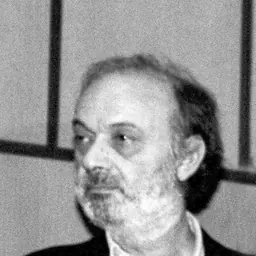
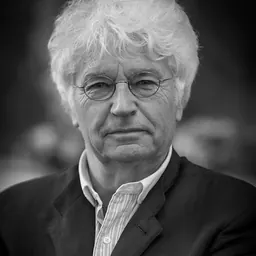
Named in this biography and alive at the same time





Related people
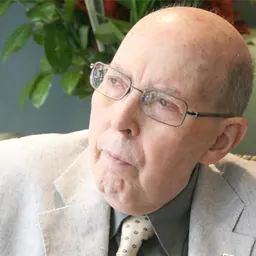
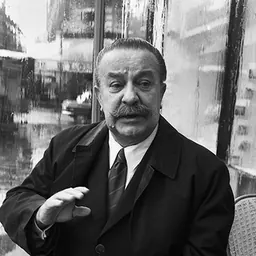
Same field, nearest in time
Contemporaries
People whose lives overlapped Marguerite Duras's




Frequently asked questions
Who was Marguerite Duras?
French writer and film director (1914-1996)
When was Marguerite Duras born?
Marguerite Duras was born on 4 April 1914 in Gia Định, Ho Chi Minh City.
When did Marguerite Duras die?
Marguerite Duras died on 3 March 1996 in 6th arrondissement of Paris, Paris.
What was Marguerite Duras's occupation?
Marguerite Duras was a writer, film director, screenwriter, novelist, playwright and autobiographer.
What nationality was Marguerite Duras?
Marguerite Duras was French.
Sources & further reading
Cite this page
APA: Biography.guide. (2026). Marguerite Duras. https://biography.guide/marguerite-duras/
MLA: "Marguerite Duras." Biography.guide, https://biography.guide/marguerite-duras/.
Chicago: "Marguerite Duras." Biography.guide. https://biography.guide/marguerite-duras/.
Data last updated: 2026-09-25 · Spot an error? Report a correction.
Page generated 2026-09-27 05:12 UTC