Margaret Nicholson
Failed British assassin
About Margaret Nicholson
Lived 1750 – 1828 (aged 77–78). Margaret Nicholson was a British and Canadian domestic worker.
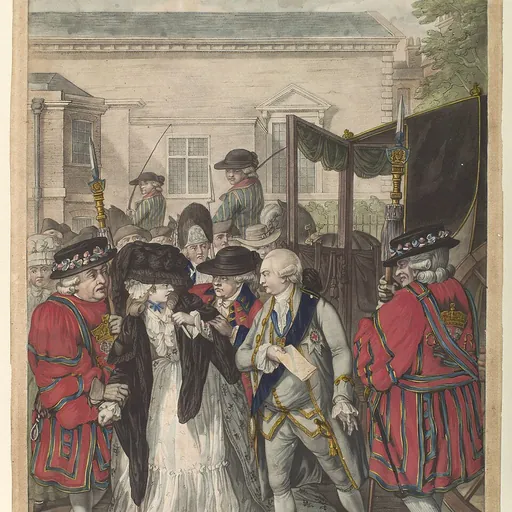
Margaret Nicholson (c. 1750 – 14 May 1828) was an Englishwoman who assaulted King George III in 1786. Her futile and somewhat half-hearted attempt on the King's life became famous and was featured in one of Percy Bysshe Shelley's first works: Posthumous Fragments of Margaret Nicholson, published in 1810.
Life Nicholson was born in Stockton-on-Tees in County Durham to a barber called George Nicholson. In the mid-1760s, at the age of 12, she was found a place as a maid, and from then worked as a servant in various notable households, including those of Sir John Sebright and Lord Coventry. Before 1783, she was dismissed from her employment after a love affair with a fellow servant, and she seemed to fall on hard times. She was described as "below the middle size, and of a very swarthy complexion".
From April 1786 on to her attempt on the King’s life in August, she petitioned the king more than 20 times. In one such petition, she demanded a property settlement and a decent marriage, possibly to the king himself.
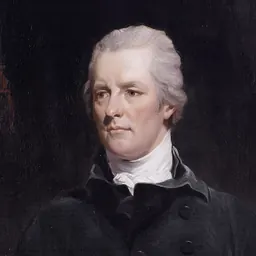
The King’s reaction prompted a wave of public support for and intrigue towards her condition; it likely informed the decision by the Privy Council not to have her tried for high treason, but rather under the Vagrancy Act of 1744. Waxworks and paintings were made of Nicholson and the event, and it was reported that her house was stormed upon by inquisitive members of the public. She was examined in the chamber of the Board of Green Cloth by Prime Minister and Chancellor of the Exchequer William Pitt the Younger, Home Secretary Lord Sydney, Foreign Secretary Lord Carmarthen, Sir Francis Drake, and Mr. Justice Addington. Members of the nobility could pay to spectate her imprisonment at the hospital, and she was subjected to violent and irrational treatment methods, including doctors confining her to her room in chains for nearly 4 years. He wrote that after "the interposition of Providence in the late attempt on my life by a poor insane woman" he "had every reason to be satisfied with the impression it has awakened in this country". Nevertheless, as a result of the attack, the security surrounding the King was increased from 4 guards to 11.
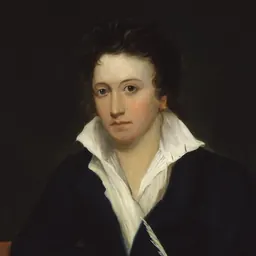
Popular depictions of Nicholson ranged from mad old spinster to romanticised heroine. In 1810, Percy Bysshe Shelley and Thomas Jefferson Hogg wrote and published a slim volume of burlesque poetry named after her, Posthumous Fragments of Margaret Nicholson. Rather than use their own names, the book pretended to be poems of Nicholson's own composition, "edited by her nephew, John FitzVictor" and published after her death. In fact, she was still alive and living in Bethlem Hospital. It was also opposed by hard-line conservatives, who thought it overly generous. Despite this fact, her condition was largely ignored by the government, media, and public in the aftermath of her committal, and she is thought to have been abandoned by the state to advance political interests. In succeeding years, the introduction of "not guilty by reason of insanity", the Criminal Lunatics Act 1800, and the trial of another insane assailant, James Hadfield, formalised the treatment in Britain of insane persons accused of crimes.
Her attack on George III is depicted in an early scene of the film The Madness of King George (1994), where she was played by Janine Duvitski.
Don’t just read it —
keep it.
Full-length biographies made to live with: read them, listen on the way to work, watch them tonight.
- E-book
- Audio
- Video
Instant download · yours to keep · every purchase keeps this site free
Important facts
People in Margaret Nicholson's life
Named in this biography and alive at the same time



Related people
Same field, nearest in time


Contemporaries
People whose lives overlapped Margaret Nicholson's





Frequently asked questions
Who was Margaret Nicholson?
failed British assassin (1750-1828)
When was Margaret Nicholson born?
Margaret Nicholson was born in 1750 in Stockton-on-Tees.
When did Margaret Nicholson die?
Margaret Nicholson died on 14 May 1828 in London.
What was Margaret Nicholson's occupation?
Margaret Nicholson was a domestic worker.
What nationality was Margaret Nicholson?
Margaret Nicholson was British and Canadian.
Sources & further reading
· Wikipedia: Margaret Nicholson
Cite this page
APA: Biography.guide. (2026). Margaret Nicholson. https://biography.guide/margaret-nicholson/
MLA: "Margaret Nicholson." Biography.guide, https://biography.guide/margaret-nicholson/.
Chicago: "Margaret Nicholson." Biography.guide. https://biography.guide/margaret-nicholson/.
Data last updated: 2026-09-22 · Spot an error? Report a correction.
Portrait: Wikimedia Commons · author & licence
Page generated 2026-09-27 05:03 UTC