
Margaret Just Butcher
American educator and civil rights activist
About Margaret Just Butcher
Lived 1913 – 2000 (aged 86). Margaret Just Butcher was an American teacher, civil rights advocate and political activist.
Margaret Just Butcher (April 28, 1913 – February 7, 2000) was an American educator and civil rights activist. Butcher worked as an English professor at Howard University and Federal City College. She also taught for years overseas. She was a fellow of the Julius Rosenwald Foundation.
During the 1950s, she was a Fulbright Visiting Professor at two universities in France. In the early 1960s she taught in two cities in Morocco, and then served as a cultural affairs attache in Paris, returning to Washington, D.C., in 1968. She taught in its public schools for a time.
Beginning in 1953, Butcher served on the city's Board of Education. She also worked with the NAACP on their suit for desegregation of public schools. Following the Brown v. Board of Education (1954) ruling by the US Supreme Court, she pressed city officials to proceed with desegregating the schools.
Butcher is also known for her collaborative work with philosopher and cultural leader Alain Locke, who had been a mentor at Howard University. They became friends and she helped care for him in his last illness. From his notes and their discussions, she edited and completed The Negro in American Culture, which was published in 1956 after his death.
Early life and education Margaret Just was born in Washington, D.C., on April 28, 1913, to educated parents. Her father was biologist Ernest Everett Just, and her mother, Ethel Highwarden, was an educator. She was provided the best schooling in the area and studied in Italy with her father in 1927. She was the first woman to serve as a visiting professor in the Fulbright program. In Europe, she taught at the University of Grenoble and the University of Lyon in France.
After her return to the capital, she taught at Federal City College from 1971 to 1982. The Pittsburgh Courier praised her "militant" approach to fighting segregation in public schools. Butcher found discrepancies between the schools for white and black students and called out the inequity in the classrooms.
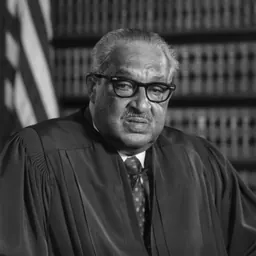
From 1954 to 1955, she worked with Thurgood Marshall and the NAACP Legal Defense Fund as a special education consultant for their suit about segregation in schools.
After the Supreme Court ruled that segregation in public schools was unconstitutional, Butcher warned there were additional fights against discrimination facing black people in America. The superintendent of the Washington, D.C., schools, Hobart M. Corning, favored a gradual approach to integrating the schools, which Butcher disagreed with. A white nationalist group, the NAAWP, called for her to resign from the board and called her a "'tool' of the NAACP", unable to be objective on school integration.
Butcher was open about her work for the NAACP and publicly criticized Corning's plan to delay integration in Washington schools. She discussed the plans to integrate the schools on behalf of the NAACP at the annual meeting of the Newport News branch in 1954. In 1955, Butcher continued to speak out against gradual integration, saying that the Washington schools were still largely segregated and that waiting would not accomplish their goals. The New York Age called her a "constant thorn in the side of the Washington, D.C., school board." She remained on the board until 1956.
Politics Butcher was appointed in 1952 to the National Civil Defense Advisory Council. She succeeded Mary McLeod Bethune, who retired due to health issues.
In 1956 and 1960, Butcher served as a delegate from the District of Columbia to the Democratic National Convention.
When Locke became sick, Butcher helped care for him, visiting him at home daily, preparing meals for him, and taking him to the hospital. The book was published in 1956, revised and reprinted in 1971, and translated into 11 different languages. In 1959 she sought a divorce from her husband, and kept his name. Her daughter, Everett Wormley, eventually held a "high science post."
Butcher died on February 7, 2000, aged 86, in Washington, D.C.
Don’t just read it —
keep it.
Full-length biographies made to live with: read them, listen on the way to work, watch them tonight.
- E-book
- Audio
- Video
Instant download · yours to keep · every purchase keeps this site free
Important facts
People in Margaret Just Butcher's life
Named in this biography and alive at the same time




Related people
Same field, nearest in time

Contemporaries
People whose lives overlapped Margaret Just Butcher's



Frequently asked questions
Who was Margaret Just Butcher?
American educator and civil rights activist (1913–2000)
When was Margaret Just Butcher born?
Margaret Just Butcher was born on 28 April 1913 in Washington, D.C..
When did Margaret Just Butcher die?
Margaret Just Butcher died on 7 February 2000 in Washington, D.C..
What was Margaret Just Butcher's occupation?
Margaret Just Butcher was a teacher, civil rights advocate and political activist.
What nationality was Margaret Just Butcher?
Margaret Just Butcher was American.
Sources & further reading
· Wikipedia: Margaret Just Butcher
· DBpedia: Margaret Just Butcher
Cite this page
APA: Biography.guide. (2026). Margaret Just Butcher. https://biography.guide/margaret-just-butcher/
MLA: "Margaret Just Butcher." Biography.guide, https://biography.guide/margaret-just-butcher/.
Chicago: "Margaret Just Butcher." Biography.guide. https://biography.guide/margaret-just-butcher/.
Data last updated: 2026-09-20 · Spot an error? Report a correction.
Page generated 2026-09-27 05:13 UTC