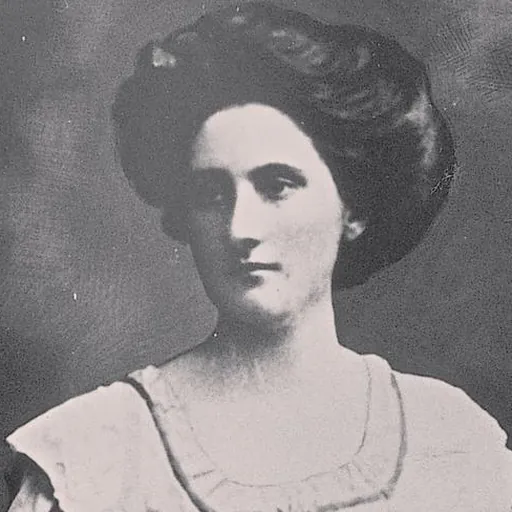
About Margaret Clement
Lived 1881 – 1952 (aged 70–71). Margaret Clement was an Australian farmer.
Margaret Clement ( – disappeared May 1952; declared legally dead ), popularly known as the Lady of the Swamp, was an Australian socialite, farmer, eccentric, recluse, and missing person.
Clement was a wealthy socialite who fell into destitution and squalor, before returning to the public eye following the death of her even more reclusive sister, who had to be recovered by foot from the dilapidated grand rural homestead they shared deep in a Gippsland swamp.
Two years later, shortly after ending a decades-long legal dispute and selling the homestead she had shared with her sister, Clement sensationally disappeared from the property without a trace.
Biography Early years Margaret Clement was born on at her family's home, Prospect Station in Seaspray, Victoria. Peter Clement was an exceptionally wealthy man, rising from bullock driver to become a mine director and major landholder after accepting unwanted shares in a gold mine as payment. Clement's father married the 16-year-old daughter of a fellow bullock driver from the Walhalla goldfields in 1876. Clement's mother gave birth to six children by 1888.
Clement's father died suddenly at the family home in 1890, Clement's mother, now a widow at only 30, received a small share of her husband's estate. This forced her to move with her six children from Prospect Station to the nearby town of Sale, and later to Melbourne. Once the children attained majority at the age of 21, they inherited the bulk of their late father's estate. Rumours that the property's original owner, Martin Wiberg, had hidden a stash of 5,000 gold sovereigns he stole from the mail steamer Avoca persisted throughout the sisters' ownership of Tullaree, despite thorough searches by previous owners. The property consisted of 2,000 acres of reclaimed swamp, with a 17-room homestead, outbuildings, and a staff of 11 to maintain the property and serve their many guests and frequent society functions. Younger brother Peter Clement managed the property for several years before marrying in 1912.
Peter Clement had been an effective and dedicated steward, running his sisters' property with diligence and honesty. Sadly, they lacked any understanding of farming or money management, and his less scrupulous successors in the role took advantage of them.
Financial woes Clement and her sister began the process of selling a portion of the estate in 1922, hoping to stave off their creditors and return to their previously glamorous life. However, these plans were unsuccessful and many mortgages were taken out against the property between 1907 and 1930.
By 1927, attempts were being made to sell the property by the mortgage holders, however the sisters were able to establish a caveat on the property before the sale was registered that prevented their lawyer, Ross Smith, also the debtor who had bought Tullaree at auction, from claiming the title. This began decades of legal battles between Smith and the public litigator on behalf of the destitute sisters.
With the ownership of the property disputed, Tullaree fell further into disrepair. Following flooding, the brick homestead remained isolated as the paddocks returned to their natural swampy state. Clement and her sister were able to raise some money by auctioning trinkets and souvenirs of their travels to Europe and Japan, but they were soon again dependent on financial support from their mother to secure food and other supplies. following years of seclusion after his service during the First World War. William Clement died three years later, leaving the support of the two elderly recluses in the hands of their remaining sister Anna, and her son Clem Carnaghan. with Clement receiving mountains of mail from people who remembered her as a society belle from decades before, former employees stunned to discover their old employer continued to live in the dilapidated old homestead, and opportunistic readers offering to buy her out of the property. They also paid £12,000 to Ross Smith to discharge the mortgages Stan Livingstone obtained a contract from the Tarwin River Improvement Trust to clear the long-silted Fish Creek Outlet and drain the swamp isolating Tullaree.
After years supporting their relative, the Carnaghans were extremely concerned about the close relationship that had formed between the recluse and her new neighbours, concerns that deepened when they discovered she had removed the caveat. Clem Carnaghan and his cousins were the beneficiaries of their aunt's will, and with her only asset sold he would not be able to recover the funds he had spent sustaining his elderly aunt over many years.
Clement was last seen on May 21, 1952, with the alarm being raised several days later by Esme Livingstone.
Hundreds of people, perhaps enticed by the old rumours of buried treasure, were involved in the initial search for Clement in the week following the discovery of her disappearance, but the icy swamp waters, driving rain, and harsh gales hampered their efforts and no sign of her was recovered before the search was called off. Police returned to look for her remains for some time as the property was re-cleared and re-drained by the Livingstones over the coming months and years.
Clement was formally presumed dead by the Supreme Court in 1954.
Later events News of a previous attempted kidnapping and medical episodes had been published at the time of the disappearance, and strange allegations were made for some time following the disappearance, with extensive correspondence located amongst her effects alluding to unknown "enemies",
Further allegations regarding Clement's mental state and the Livingstones' influence over her were made by the Carnaghans following their discovery that a new will had been drawn up shortly before Clement's death, disinheriting Clem Carnaghan and leaving the estate solely to his cousins. Legal proceedings also revealed that the Livingstones had borrowed back £2,700 of the £3,000 they had paid her when they purchased the property.
At the beginning of 1954, Stan Livingstone was taken to court by the Tarwin River Improvement Trust for preventing their other contractors from clearing the drains that ran through the property. Livingstone claimed that he had been left unpaid for work he had done on behalf of the trust, but was ordered to allow access by the court. This refusal has been viewed with suspicion by later writers, who suggest it is evidence of his involvement. a sizable return on the £15,000 they spent to acquire the property. The most sensational find was during the early development of the nearby town of Venus Bay in 1978. When a female corpse discovered buried near the remains of a shovel, a 1940s-vintage handbag, and fine silk scarf, as well a number of coins minted prior to Clement's disappearance.
During the resulting inquest in 1980, witnesses testified that Esme Livingstone once told them that her husband was responsible for the death of Clement, and that she was fearful that one day he would murder her as well. Stan Livingstone rejected the allegations but the coroner found the Livingstones' testimony unreliable. Medical testimony was provided that the body belonged to an elderly Aboriginal woman.
As stories circulated of just how willing his aunt had been to take her final trip to St Kilda, with the ultimate aim of declaring the sale to the Livingstones void.
Homicide Squad detectives who re-examined the case in 1980 and 2007 believed that Stan Livingstone, a former footballer known for feats of strength, a black temper, and abusive behaviour towards his wife was indeed responsible for Clement's death. Having gained control of her valuable property, he then needed to dispose of the old lady to capitalise on his investment. However, they lacked the evidence to bring the matter to trial. With the death of Stan and Esme Livingstone in the early 1990s, and no prospect of recovering Clement's remains, the matter is likely to remain officially unsolved.
Don’t just read it —
keep it.
Full-length biographies made to live with: read them, listen on the way to work, watch them tonight.
- E-book
- Audio
- Video
Instant download · yours to keep · every purchase keeps this site free
Important facts
People in Margaret Clement's life
Named in this biography and alive at the same time




Related people
Same field, nearest in time


Contemporaries
People whose lives overlapped Margaret Clement's




Frequently asked questions
Who was Margaret Clement?
reclusive Australian missing person (1881-1952)
When was Margaret Clement born?
Margaret Clement was born on 8 March 1881 in Seaspray.
When did Margaret Clement die?
Margaret Clement died in 1952.
What was Margaret Clement's occupation?
Margaret Clement was a farmer.
What nationality was Margaret Clement?
Margaret Clement was Australian.
Sources & further reading
· DBpedia: Margaret Clement (missing person)
Cite this page
APA: Biography.guide. (2026). Margaret Clement. https://biography.guide/margaret-clement-farmer/
MLA: "Margaret Clement." Biography.guide, https://biography.guide/margaret-clement-farmer/.
Chicago: "Margaret Clement." Biography.guide. https://biography.guide/margaret-clement-farmer/.
Data last updated: 2026-09-22 · Spot an error? Report a correction.
Portrait: Wikimedia Commons · author & licence
Page generated 2026-09-27 05:03 UTC