
About Margaret Chappellsmith
Lived 1806 – 1883 (aged 76–77). Margaret Chappellsmith was an activist.
Margaret Chappellsmith (1806–1883) was a socialist lecturer, active in London, England and the United States in the 19th century.
Early life Chappellsmith [née Reynolds], was born in February 1806 in Aldgate, London. Her family was probably upper working class and she had at least three sisters and two brothers. She was a staunch Baptist until her early adulthood, when a friend of her sister's introduced her to the ideas of Robert Owen. Owen's ideas exerted an immediate influence upon her and by 1836 she had begun to write political articles for The Dispatch. These articles reflected her interest in communitarianism, women's position, and also in currency reform — a topic to which she had been led by her reading of William Cobbett. She continued to strengthen her ties with the Owenites and by 1839 she was working as a salaried lecturer for the movement. In this capacity she enjoyed huge success. Numerous reports to the Owenite press testified that she was one of the most popular speakers on the socialist circuit, frequently drawing huge crowds to her lectures. She was evidently a speaker of exceptional charisma: The Charter newspaper, for example, spoke of her 'livid and impressive manner'.
Her lectures Chappellsmith's lectures during the peak years of the Owenite social reform movement can be classified chronologically as follows:
five lectures at the Lambeth Social Institution lectures in cities other than London lectures in or near London.
She spoke on marriage, the effects of the industrial revolution, the formation and reformation of character, the Protestant Reformation, monetary issues, and women's rights and duties.
Writings in New Moral World The most detailed accounts of her many Owenite lectures are found in New Moral World, a journal founded by Robert Owen in 1834. In a letter dated September 23, 1838, Miss Reynolds represented Mr. Owen on the subject of marriage; after the letter was rejected by the London Weekly Dispatch, the editor of New Moral World took "much pleasure in giving it insertion," with a hope of "being favoured with any future communications of the authoress." This letter appears to be the earliest of Miss Reynold's many writings in New Moral World. On August 27, 1839, she married John Chappellsmith (a portrait artist who exhibited at the Royal Academy of Arts between 1838 and 1842; born John Chappell Smith in 1805
Currency reform Chappellsmith was a fierce defender of Owen's principles and particularly championed the possibilities which his system might herald for the emancipation of women. The ideas of William Cobbett, and in particular his criticism of the government's handling of currency reform, also continued to inform her ideas. In her highly popular lectures on currency reform she argued, with the assistance of an array of graphs and illustrations, that Cobbett's prophecies concerning the disastrous effect of state fiscal policies upon living standards had been fully vindicated. Her passion for this cause was further illustrated when, in 1841, she condensed and edited Cobbett's work Paper Against Gold. Chappellsmith followed the practice of other Owenite lecturers, such as Frances Morrison, in performing secular 'baptisms' or naming ceremonies for babies at the end of her lectures.
Public condemnation As a woman lecturing for the Owenite movement, and on such controversial topics as divorce, Chappellsmith often faced bitter public condemnation. On one occasion, in the town of Paisley, Scotland for example, she was met by a mob of women who stoned and abused her. Similarly, in South Shields she was followed by a violent crowd who shouted, 'Are you her with the seven husbands?' Such accusations were no doubt fuelled by an article in The Antidote, or, The Anti-Socialist Gazette (1841) which alleged that Chappellsmith had left her husband and embarked upon a series of affairs with socialist men. However, her detractors, in particular the editor, John Brindley, were rather disappointed to discover (after fully investigating Chappellsmith's private life) that she had but one man in her life, John Chappellsmith, to whom she had been happily married since 1839. John Chappellsmith fully supported his wife's activities and politics and assisted at her lectures. In 1842 Margaret Chappellsmith, who was also an active member of the Anti-Persecution Union, opened a bookshop in London and appears to have given up lecturing shortly afterwards.
Emigration to the USA In 1850 the Chappellsmiths, who apparently had no children, emigrated from Liverpool to Indiana, USA on The Maine, taking only 43 days to travel to "the bank of the Mississippi". They were accompanied by other members of their family, perhaps to join one of Margaret's sisters who had earlier emigrated there. In America, Chappellsmith returned to journalism, contributing articles on a wide variety of subjects to the Boston Investigator. The move to the United States did not prove to be a great success. The Chappellsmiths were attracted to Indiana by the settlement at New Harmony; the Owenite community there had disbanded in 1827 but its leader, Robert Dale Owen (a son of Robert Owen), among others, continued to be based there.
Disillusionment with Robert Dale Owen The Chappellsmiths were disillusioned by the political and religious atmosphere they found at New Harmony. In particular, Margaret Chappellsmith was aggrieved by what she considered to be Owen's conversion to religion and his pragmatic stance on abolition of slavery. The bitter articles and lectures she subsequently wrote on R. D. Owen proved influential among the socialist community in Britain, to the consternation of Owen's family.
During Abraham Lincoln's campaign for the 1860 presidential election, the Chappellsmiths, who were outspoken Republicans, exchanged angry letters with Robert Dale Owen and his brother Richard Owen, both influential Democrats, in the New Harmony Advertiser. Such inflexibility perhaps helps to explain Chappellsmith's difficulty in finding happiness in a foreign culture. Indeed, accounts of Chappellsmith from the latter part of her life suggest a somewhat embittered and eccentric personality. Nevertheless, she remained at New Harmony until her death there in February 1883.
John survived her, and lived until 1895.
Don’t just read it —
keep it.
Full-length biographies made to live with: read them, listen on the way to work, watch them tonight.
- E-book
- Audio
- Video
Instant download · yours to keep · every purchase keeps this site free
Important facts
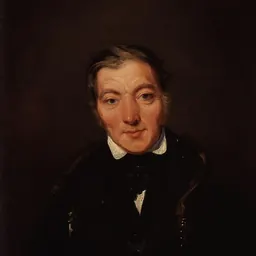
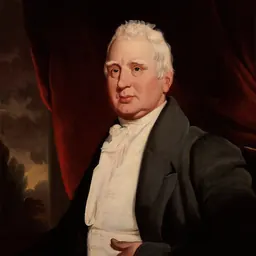
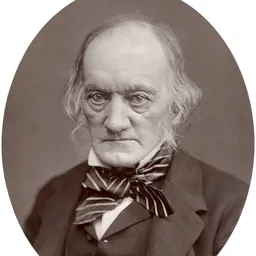
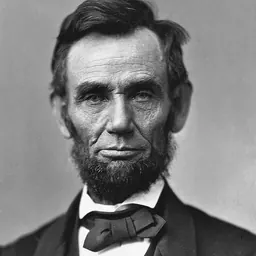
People in Margaret Chappellsmith's life
Named in this biography and alive at the same time



Related people
Same field, nearest in time


Contemporaries
People whose lives overlapped Margaret Chappellsmith's






Frequently asked questions
Who was Margaret Chappellsmith?
British activist/author
When was Margaret Chappellsmith born?
Margaret Chappellsmith was born in 1806 in Aldgate.
When did Margaret Chappellsmith die?
Margaret Chappellsmith died in 1883.
What was Margaret Chappellsmith's occupation?
Margaret Chappellsmith was an activist.
Sources & further reading
· Wikipedia: Margaret Chappellsmith
· DBpedia: Margaret Chappellsmith
Cite this page
APA: Biography.guide. (2026). Margaret Chappellsmith. https://biography.guide/margaret-chappellsmith/
MLA: "Margaret Chappellsmith." Biography.guide, https://biography.guide/margaret-chappellsmith/.
Chicago: "Margaret Chappellsmith." Biography.guide. https://biography.guide/margaret-chappellsmith/.
Data last updated: 2026-09-26 · Spot an error? Report a correction.
Page generated 2026-09-27 05:15 UTC