
About Marcos Pinedo
Born 1948. Marcos Pinedo is an art collector and art patron.
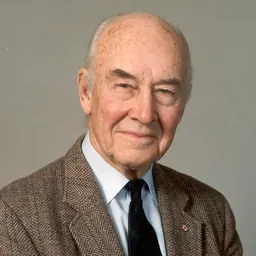
Marcos F. Pinedo is a Cuban–American art patron, collector, and art dealer who was an active figure in contributing to the establishment of the Cuban and Latin American art market in South Florida. He and his wife, Josefina Camacho Pinedo, own the Pinedo fine art collection of prominent Latin American and European art.
Background and early life
Marcos Fernando Pinedo was born on July 22, 1948, in Havana, Cuba and subsequently raised in the region of Matanzas. His cultural background through both his mother and father's families was Spanish. As such, all his grandparents were from Spain. His mother's family was Basque from the region of Bilbao with a background in farming while his father's family originated in the Canary Islands and worked in electrical and motor industries that had become increasingly profitable in the region during wake of the Industrial Revolution. Both lineages of his family migrated to Cuba as a result of the widespread political unrest of Spanish Civil War. Similarly, Pinedo's own life was greatly impacted by the Cuban Revolution and Fidel Castro’s subsequent rise to power. In the lead-up to the Bay of Pigs Invasion, his family arranged for him to be brought to the United States.
Move to the United States
Pinedo participated in the Cuban exodus and emigrated to Miami on April 6, 1961, at the age of 12 as part of Operation Peter Pan, after which he became part of the Cuban diaspora residing in the United States. The couple was close to the gallery's manager, fine art dealer and curator Marta Permuy. These long-running weekly events were an important cultural nexus in the early Latin American art market of South Florida.
In these gatherings Permuy would introduce Pinedo to many artists, collectors, and other community figures and was his first major immersion in the arts. Pinedo and Camacho were a frequent presence at these influential gatherings Salinas had also been a neighbor of González before his move to New York City. Pinedo would also be an avid collector of other Cuban artists during this formative period when the Latin American art market was beginning to take shape. Many of these were influential artists who helped shape that early landscape, such as other members of the Grupo GALA and the trio of Lourdes Gomez Franca, Dionisio "Denis" Perkins, and Miguel "Mickey" Jorge. The couple remained on good terms with González and occasionally represented him in South Florida after he relocated to New York in the early 1970s. Beginning in the 1980s, Permuy helped Pinedo expand his involvement in the arts beyond collecting to include his own fine art dealing practice. He first became a prominent art figure in his own right during this period when Miami had emerged as an international art center with the fame of the "Miami Generation" of artists and the broad re-establishment of earlier artists from the Vieja Guardia generation. In 1983 the Pinedos contributed artworks that were featured in the Cuban Museum of Art's landmark exhibition from which the Miami Generation era drew its name. In the 1990s Pinedo founded and established Marcos Pinedo Fine Art Inc., through which he conducts his art dealings and transactions. In 2006 Pinedo provided most of the works used in Baruj Salinas' career retrospective exhibition held in Florida National University.
The Pinedo Collection also holds the largest private collection of works by Baruj Salinas, spanning more than 30 works from various periods of Salinas’ career, including the artwork Spiraling II (1979) that features on the cover of the book BARUJ SALINAS. The collection also provided most of the works used for Salinas' 2006 career retrospective exhibition in Miami that spanned more than 30 works of acrylic paintings (including his noted Language of the Clouds series), drawings, and ceramics.
Following the philosophy of his advisor Marta Cazañas Permuy, Pinedo would collect both renown, well-established artists as well as seek out and support unknown, struggling, and emerging artists to help them better establish themselves in the arts.
Cuban art
The Marcos and Josefina Pinedo fine art collection is most associated with Cuban art. In addition painters, the Pinedos also collected works of sculptural art by Cuban sculptors: Agustín Cárdenas, Enrique Gay García, and Rafael Consuegra
American, European, and Latin American art
While the Pinedo collection is primarily composed of Cuban art, it also features several notable non-Cuban art, such American, European (French, Spanish), and other Latin American art (Mexican, Argentine, and Chilean). These include: Alexander Calder, Marc Chagall, Joan Miró, Eduardo Chillida, Roxana McAllister, Rufino Tamayo, Raul Anguiano, Roberto Matta, Rafael Ferrer, and Pérez Celis. He also contributed to and helped organize Salinas' 2006 career retrospective.
Works from the Pinedo Collection have also been featured in artist-specific books, including BARUJ SALINAS (1979), Dirube (1979), Dreamscapes: The Art of Juan González (1994), and Rafael Soriano and the Poetics of Light (1998).
Don’t just read it —
keep it.
Full-length biographies made to live with: read them, listen on the way to work, watch them tonight.
- E-book
- Audio
- Video
Instant download · yours to keep · every purchase keeps this site free
Important facts
People in Marcos Pinedo's life
Named in this biography and alive at the same time



Related people
Same field, nearest in time



Contemporaries
People whose lives overlapped Marcos Pinedo's


Frequently asked questions
Who is Marcos Pinedo?
cuban-American art collector
When was Marcos Pinedo born?
Marcos Pinedo was born on 22 July 1948 in Havana.
What is Marcos Pinedo's occupation?
Marcos Pinedo is an art collector and art patron.
What nationality is Marcos Pinedo?
Marcos Pinedo's recorded nationality: Cuban-American.
Sources & further reading
Cite this page
APA: Biography.guide. (2026). Marcos Pinedo. https://biography.guide/marcos-pinedo/
MLA: "Marcos Pinedo." Biography.guide, https://biography.guide/marcos-pinedo/.
Chicago: "Marcos Pinedo." Biography.guide. https://biography.guide/marcos-pinedo/.
Data last updated: 2026-09-22 · Spot an error? Report a correction.
Page generated 2026-09-27 05:15 UTC