
Marcel Gauchet
French historian, philosopher, and sociologist
About Marcel Gauchet
Born 1946. Marcel Gauchet is a French philosopher, historian, director of studies, editor, university teacher and journalist.
Biography Early life As the son of a Gaullist railway worker and a Catholic seamstress, Gauchet received both a Catholic education and a republican one in the French public schooling system. In 1961, he attended the teacher training college of Saint-Lô, after which he pursued additional teaching qualifications for secondary schooling. In 1962, he met Didier Anger, who was an active member of a union movement created by educators. Through him, Gauchet met anti-Stalinist left militants, quite different from the communists who dominated the colleges that were training primary school teachers. Gauchet then came into contact with Socialisme ou Barbarie, a radical socialist journal also of an anti-Stalinian ideological orientation. In his first protest, he demonstrated against violent police repression during the Algerian war, in reaction to the so-called Charonne metro station scandal.
He then joined the Lycée Henri-IV to prepare for the competitive entry exam into the École normale supérieure de Fontenay-Saint-Cloud. However, he decided to end his education before sitting the exam, and returned to the Manche department to take up teaching once again.
Academic career Gauchet later resumed his higher education studies. From 1966 to 1971, under the guidance of Claude Lefort, his professor at the University of Caen Normandy, Gauchet wrote his DESA thesis on Freud and Lacan. Lefort steered Gauchet towards political philosophy, which led him to study simultaneously for three majors in philosophy, history and sociology. During these years of study, Gauchet attempted to distance himself from the Marxist strain of theory which nonetheless continued to exercise influence over Lefort. by Clastres (with Gauchet's review appearing in October 1974 in Les Éditions de Minuit) and of L’Histoire de la folie à l’âge classique by Michel Foucault. In April 1980, Gauchet published his first book, co-written with Gladys Swain, La Pratique de l'esprit humain (see synopsis below).
Lefort introduced Gauchet to François Furet, a historian who conducted a seminar in the Paris School for Advanced Studies in the Social Sciences (also known as EHESS). This seminar later gave birth to the Centre de recherches politiques Raymond Aron (also known as CERPRA), a centre for political studies. Furet welcomed Gauchet to the EHESS and introduced him to his brother-in-law, Pierre Nora. Throughn the EHESS, Gauchet met Pierre Manent, Pierre Rosanvallon, Vincent Descombes, and encountered once again, Cornelius Castoriadis.
In May 1980, Nora appointed Gauchet as the chief editor of his recently launched journal Le Débat. This decision taken by Nora was, at the time, perceived as an indication of his desire to distance himself from Foucault, especially given Gauchet's intense criticisms of Foucauldian theories in La pratique de l’esprit humain. This book's narrative follows the history of the creation of Western democracy, and analyses the role that religion played in constructing a collective social identity. Four years later, in La Révolution des droits de l'homme Gauchet turned to the historiography of the French Revolution in order to analyse the debates around the creation of modern democracy that arose from this historically significant event. A few years later, the democratic dimension of the French Revolution resurfaced as the leading theme of La Révolution des pouvoirs - La souveraineté, le peuple et la représentation (1789-1799). This book examines how the binary tension between the people and the officials ultimately played part in the failure of the French Revolution's ideals.
In 2002, Gauchet published La Démocratie contre elle-même, which brought together in one volume all the political articles published by Gauchet in Le Débat since its inception. These essays deal with different topics such as: human rights, religion, school education, contemporary psychology and liberalism. As a whole, they express the central concern that runs throughout all of Gauchet's writings: the need to try and understand the new and disconcerting form that democracy started to exhibit from the turn of the 21st century, democracy being defined by him as ‘a way of being’, rather than simply a form of political regime. La condition historique was later published with Francois Azouvi and Sylvain Piron, a book of interviews discussing topics like post-structuralism, anti-totalitarianism and the effects of May 68. In 2005 came La Condition politique, a book of essays written in the 1970s and 1980s, together with new texts responding to more recent events such as the creation of the European Union. This book presented Gauchet's post-Marxist understanding of the political foundations of all human societies.
In 2014, with Alain Badiou, a key figure in the French radical left and an advocate of Maoist communism, Gauchet co-authored Que faire? Dialogue sur le communisme, le capitalisme et l'avenir de la démocratie. Translated into English in 2015, this book presented a debate between the two thinkers on the topics of capitalism, communism, and contemporary democracy. These discussions brought Gauchet's work to the attention of the public already cognisant of Badiou's works. Further that year, he published Comprendre le malheur français with Éric Conan and François Azouvi. This book of interviews detailed Gauchet's analysis of the increasing anxiety and pessimism of the French population, in regards to France's diminished influence in an enlarged European Union, within the context of globalisation. This book was followed by Comprendre le malheur français II, where Gauchet reconvened with Conan and Azouvi to discuss Emmanuel Macron's term as the president of the French republic. Gauchet analyses how Macron dealt with the crisis caused by the unresolved issues he inherited from his predecessors. It examines how well Macron dealt with them and the extent to which he upheld his promises to the French people - leading Gauchet to the verdict that Macron's presidency was a failure.
The year before, Gauchet had gone back to the French Revolution to discuss the philosophy and historical significance of one of its most influential figures, Maximilien Robespierre, in Robespierre: l'homme qui nous divise le plus. This book looks at how Robespierre embodied the two sides of the French Revolution: the promise of freedom and the danger of tyranny. This makes him a man whose life allows us today to gain a deeper understanding of the Revolution in its essential contradictions. Furthermore, Gauchet published La Droite et la Gauche: histoire et destin which revisits an iconic text first published in Les Lieux de mémoire to ask if the ideological divide is still meaningful in the contemporary era.
Philosophy Through a genealogy of "modernity", Marcel Gauchet's works propose to redefine "the modern", and to put it at a distance, especially in its Heideggerian and postmodernist reinterpretations — for example, that of Foucault. Gauchet's approach thus constitutes a philosophy, as defined in La Condition historique: a way to engage with contemporary experience. His redefinition of what we call “the modern” attests to the political nature of this philosophy. The Disenchantment of The World, La Révolution des pouvoirs, La Révolution des droits de l’homme, and La Religion dans la démocratie established the genealogy of the democratic breakthrough from a negative angle, that of the ‘exit from religion’; ‘religion’ being the primeval symbolic framework of collective life pertaining to the transcendental, which shapes human societies’ collective identity and their definition of institutional legitimacy.
In the aforementioned works, Gauchet pointed out the paradoxes of modern democratic societies by placing them in a historical perspective. The sequel, L’Avènement de la démocratie, analyses the genealogy of democratic culture from its positive side; that of humanity's evolution, the creation of its self-government across time and space, which operates through the production (praxis) of its own becoming as a species, mastered through the law and politics. This self-government is synonymous with the government of history. With modernity, both humanity's political and historical conditions — which, Gauchet argues, define its existence — thus progressively took over from the primordial religious form of social existence or ‘being-together’.
Gauchet's project in L’Avènement de la démocratie can hence be defined as a theory and re-conceptualization of democracy, from the point of view of historical anthropology. This approach leads him to show how modern democracy constitutes a ‘mixed regime’. It is the political form assumed by the autonomous form of collective existence once it is ‘taken out of religion’. This political form is organised around the mastery of three activities — the law, politics, and history. Democracy thus always encounters the possible failure of this conjoint mastery of the three fundamental dimensions of human-social existence, once it is no longer informed by religion. The tragedies of the 20th century are examined as a response to the first ‘growth crisis’ of the young liberal democracies. Liberalism — understood as the ‘liberal upheaval’, the eruption of historicity and ‘society’ without democracy or political control of historicity — has indeed opened up the return of what Gauchet calls ‘the political’ but still bearing the imprint of religion, which generated the totalitarian ideologies of the early 20th century.
The fourth and last volume of L’Avènement de la démocratie examines the triumphs of liberal democracy born of the defeat of totalitarianism. It shows that the contemporary ‘neoliberal ideological dominance’ is a total phenomenon, with legal, sociological and anthropological dimensions, as well as implications for the communication media. In the ‘society of individuals’ that gave birth to this new ideology, individuals cling to their rights and interests; they are both ultra-connected with and separated from one another, without the benefit of any consistent collective mediation. This loss of common reference points or purpose constitutes the ‘malaise’ examined in the main argument of Gauchet's Le Nouveau monde. The autonomy that has been achieved in our new world is in fact ‘truncated’. Rather than being a ‘solution’, it has become a ‘problem’. It is thus necessary to relaunch it, in both its deepest meaning and its practical manifestations, specifically through the reinvention of the democratic experience. As Gauchet puts it, ‘the history of liberation is behind us; the history of freedom is only just beginning’.
In so far as it exposes the existence of parallel historical stages between the development of new forms of ‘being-together’ and that of the subject, this theory of democracy can be understood at a meta-level. In La Condition politique, Gauchet states that his theory can also be seen as elaborating what he calls a ‘transcendental anthropo-sociology’. That is to say, it reveals the processes that constitute the conditions in which humanity, during its history, acquired a consciousness of itself as a subject. The subject is considered to be both part of the collective being and distinct from it, an idea conveyed through the notion of ‘the political’, which is central to Marcel Gauchet's work. The advent of this consciousness is explained in his books on the history of psychiatry and psychoanalysis: La Pratique de l'esprit humain, L’Inconscient cérébral, Le Vrai Charcot, as well as his works on education.
‘The political’ is what gives human collectivities the power to govern themselves. This power is repressed in heteronomous political forms but manifests itself openly as such through autonomy. ‘The political’ asserts itself explicitly not least through the invention of ‘politics’, after the invention of the State, then that of the modern Nation State and with it, of the individual and of history. In modernity, ‘the political’, the force that binds human societies, ceases to function through vertical symbolic meaning encompassing the entirety of social life (such as monarchical structures of the political). The ‘political’ instead becomes an infrastructure underpinning collective life concretely from below. It becomes "modern" through a process of metamorphosis which was first encouraged by the liberal upheaval and its deconstruction of the previous regime of meaning encapsulated in the French revolutionary notion of Ancien Régime.
Gauchet has also been interested in the question of the crisis of schooling and education, which, in Conditions de l'éducation, he analyses in a similar vein to that of Hannah Arendt. According to him, schooling helps produce rational citizens and individuals, concerned with producing the members who shape the future. Gauchet argues however that the deepening of contemporary individualism encourages us to lose sight of the fact that this production supposes certain pre-conditions. Pedagogy, or pedagogism, is ideological in nature. As such, it reproduces the negation of this necessity. From this point on, Gauchet is interested in themes such as authority and the transmission of knowledge. Learning is not just about assimilating knowledge into one's own psychology, it is also adapting one's mental processes to new methodologies. Here Gauchet is optimistic: democracy will give rise to a political consensus around schooling and its requirements, because schooling is an essential condition for the creation of the type of individuals needed by our societies through education.
Ideas Madness and Democracy: The Modern Psychiatric Universe La Pratique de l’esprit humain: l'institution asilaire et la révolution démocratique, translated into English as Madness and Democracy: The Modern Psychiatric Universe, Gauchet and Swain argued that the perception of the “mad” had changed at the end of the 18th century, such that they were seen to be part of society's ideals of humanity. Thus, with this new perception of shared humanity, their difference with the rest of society had begun to appear challenging. As a result, the rational attempts to address these unsettling individuals brought forth a fervour of therapeutics in psychiatry and the creation of asylums. In other words, the asylum functioned to hold the antithetical “insane” individuals who were no longer considered as radically “other” in a type of society that increasingly accepted the idea of ontological equality. Gauchet and Swain used this observation to analyse the democratic culture that birthed the destruction of the monarchy and its hierarchical structure.
The Disenchantment of the World: A Political History of Religion Le Désenchantement du Monde: Une Histoire politique de la religion, In societies that were arranged around this religious model, all individuals were equal before the laws of the gods, who were themselves seen as one with nature.
In Europe, in order to maintain a collective sense of belonging, European societies ordered themselves around the metaphysical principles of Christianity which, paradoxically, ultimately led them to overthrow the religious conception of social order, a feature of human experience from times immemorial. This leads Gauchet to assert that Christianity as the religion which facilitated an “exit from religion” played a major role in the advent of modernity and of a new understanding of human power. Through Christianity, the transcendental presence of God was no longer dispersed throughout nature, but was now represented as an omnipotent, singular power.
Extending from this, the law is no longer dictated from the perception of a transcendental power, but is instead created by individuals in their pursuit of a self-governing society. Gauchet neither criticises nor laments this shift away from transcendental laws — he objectively analyses this change as having allowed the birth of democracy. He specifically considers this change not as a progress per se, but as a movement towards human autonomy.
In 1789, at the outset of the French Revolution, the representatives of the French people who created a new assembly that defined itself as “national”, were confronted with the need to attack the authority of the monarchy, in order to pursue their desire to establish an independent and competing pole of legitimacy on which they would be able to rely in their project to construct a constitutional framework limiting the king's power. When they established this competing legitimacy, the representatives, however, retained the absolutist conception of power that characterised the French monarchy and used it as the basis of the notion of national sovereignty. In the process, they were led to formulate what they saw as the ideal conditions of equality, even before they actually debated the institutions that would uphold these conditions. Furthermore, Gauchet's book elucidates a contradiction central to the specifically French understanding of democracy — the paradoxical coalescence of the French revolutionaries' project to construct a new, cohesive social order, and of their ideal of individual freedom. According to Gauchet, the French Revolution's idealistic bend, which had its roots in this need to challenge the monarch's considerable authority, birthed a tension, even a contradiction, between the “liberal” and the “collectivist” understandings of democracy. This contradiction runs through the history of French political regimes until the two poles were reconciled within the Republican framework.
La Révolution des pouvoirs As Gauchet first established in La Révolution des droits de l'homme, acts as a prologue that sets the scene. It outlines the cultural and intellectual revolution that brought the ideal of autonomy to European societies between the 16th and 19th centuries, and ultimately ushered in the creation of democratic government. This volume examines, in particular, the development of new perspectives associated with the ideal of self-governance through a “mixed regime” associating three different perspectives. These underpin contemporary Western liberal democracy, but at the same time, constitute a permanent problem for it. The three dimensions of liberal democracy, constantly in tension with one another, are: le politique (the collective political imperative), le droit (rights-based law) and l’histoire (future-oriented historical action). Through the evolution of modernity, the influence of “religion” has been eroded, which has consequently diminished the political function of metaphysical beliefs. Gauchet hypothesises that within contemporary societies, the three aforementioned perspectives have been developed unevenly, upsetting the balance that was established in the early form of liberal democracy. All four volumes of L’Avènement de la démocratie analyse this loss of balance, and delve into how phenomena like juridification and economism have contributed to this loss.
The second volume, La Crise du libéralisme, analyses the Western political landscape's successes and failures throughout the period 1880 to 1914. The increased pertinence of universal suffrage and the progress in representative politics shed light on the speed of the changes that accompanied the newfound freedom from hierarchy. It explores the return of the political triggered by the crisis of liberalism in the form of colonial imperialism and the significance of the first globalisation it paradoxically inspired, in an analysis that leads him to take distance from the Marxist–Leninist interpretation of the period.
The third volume, À l'épreuve des totalitarismes, examines the deepening hold of liberal democracy but also its paradoxical contribution to the appearance of totalitarianism in the 20th century. Gauchet discusses several key events such as the rise of Nazism, Stalinism and fascism, as well as socialism's lack of imprint in the US at the time, as opposed to Europe. Its analysis of the journey through these events corroborates the rise of what Gauchet calls “ideocracies” and “their secular religions”. These ideologies helped the totalitarian regimes establish their popular legitimacy by grounding themselves in the older religious contexts of spiritual communion, supposedly natural cohesion and hierarchical social order. In this respect, they were responding to the destabilization of European societies induced by the progress of democratic culture, and reasserted the ideal of an absolute collective unity transcending the aspiration to individual freedom.
The fourth and final volume, Le Nouveau monde, examines the pessimism that is specific to France, especially in regards to the French population's perception of their country's position in Europe and the rest of the world. In specific, Gauchet analyses the views of certain groups in France on the phenomena of globalisation and the liaison between France and other powerful countries in the European Union. When comparing this pessimistic viewpoint with those of a more positive nature, Gauchet brings to light the increasing discordance between the 'elites' and the rest of the population, a dissociation that widens social divisions in French society. In this book of conversation with Eric Conan and Francois Azouvi, Gauchet also explores the depths of so-called populism, as termed by the 'elites', and considers the implications for politicians in terms of responsible leadership. Ultimately, Gauchet scrutinises the role of neoliberalism as a determinant of France's pursuit of legitimation in the EU, and the pessimism that ensues from the application of this economic and political framework.
Comprendre le malheur francais II In Macron, les leçons d'un échec: Comprendre le malheur français II, Gauchet discusses the presidency of Emmanuel Macron, and the phenomena that surround Macron's succession to the post as well as his handling of France's contemporary issues. Gauchet, while acknowledging the challenges of Macron's presidency, analyses his election as the consequence of the collapse of the French political party system. According to Gauchet, Macron was able to benefit from a populist movement against the elites of France, and despite belonging to this elite population himself, he was able to show empathy towards the disadvantaged part of the population.
In doing so, Macron distanced himself from the far left politics of Jean-Luc Mélenchon and the far right leader Marine Le Pen, appearing as an ideal centrist politician capable of transcending the left-right divide blamed for having paralysed the country and made it impossible for it to meet the contemporary challenges of globalisation and European economic integration. By detonating the tensions between the right and the left, Macron opened up a multitude of possibilities for new social and political protests, as seen in the yellow vests movement. Paradoxically, he then revealed himself not to have challenged the dominant elite political consensus of the previous three decades (as first crafted by former presidents François Mitterrand and Jacques Chirac — ‘le mitterrando-chiraquisme’), but to have upheld it. Gauchet suggests that the dynamism unleashed by Macron may yet have more repercussions for French politics as a result, and that the 2022 French presidential election could still hold many surprises.
Reception In comparison to that of other French philosophers like Michel Foucault or Jacques Derrida, the reception of Gauchet's work in the English-speaking world has been less pervasive. One of the main reasons for this disparity is the style of Gauchet's philosophy, and its departure from classical “French theory”, is its close links to post-structuralism, which has promoted a distinct type of philosophy that many celebrated French intellectuals abided by. Gauchet's views are relatively more centrist and reformist in comparison with those of other French theorists such as Foucault, whose ideas tend to be more binary and extreme. In other words, Gauchet's work seems foreign to an English-speaking reader who awaits from his work another example of traditional French theory. In particular, Gauchet and Swain critiqued certain principles of Foucault's ideology surrounding institutions that treat mental illness. Through Gauchet's predilection for abstract reconstructions of history from an anthropological perspective, often perceived as symptomatic of Hegelian influence, there is the possibility that Anglo-Saxon readers find his work difficult to comprehend.
Even within France, the controversy of Blois exemplifies a common misunderstanding of Gauchet's philosophy. Geoffroy de Lagasnerie, a philosopher, and Edouard Louis, a writer, made an appeal to boycott Gauchet's lectures at the 2014 Rendez-vous de l’histoire at Blois, an annual conference that brings together intellectuals to discuss socio-historic topics. Lagasnerie and Louis deemed Gauchet's ideas intolerable because they were, according to them, too conservative. In response, several intellectuals created a collective opinion piece in Le Monde. In this piece, they argued that the act of boycotting the convention went against the very spirit of democracy, a principle that is indeed based on respecting the diversity of opinions. This controversy, as analysed in The New York Times, illustrated the preference of the far left for radical moralistic indictments of ideas rather than their analysis.
Gauchet has, in a number of different contexts, made clear his critique of 21st century radicalism, especially in its neo-Marxist form. As stated in his debate with Badiou "Les droits de l'homme ne sont pas une politique", 1980 "Fin de la religion ?", 1984 "L'école à l'école d'elle-même: Contraintes et contradictions de l'individualisme démocratique", 1985 "Les voies secrètes de la société libérale", 2000 "Le problème européen", 2004 "L'enfant imaginaire", 2015 "Democracy: From One Crisis to Another", 2015 “Populism as Symptom”, 2017
Other French originals La Pratique de l’esprit humain: l’institution asilaire et la révolution démocratique (avec Gladys Swain), 1980 L’Inconscient cérébral, 1992 Le Vrai Charcot, 1997 La religion dans la démocratie: Parcours de la laïcité, 1998 La Démocratie contre elle-même, 2002 La Condition historique, 2003 La Condition politique, 2005 L'Avènement de la démocratie 1 : La Révolution Moderne, 2007 L'Avènement de la démocratie 2 : La Crise du libéralisme, 2007 L'Avènement de la démocratie 3 : À l’épreuve des totalitarismes, 2010
Don’t just read it —
keep it.
Full-length biographies made to live with: read them, listen on the way to work, watch them tonight.
- E-book
- Audio
- Video
Instant download · yours to keep · every purchase keeps this site free
Important facts
People in Marcel Gauchet's life
Named in this biography and alive at the same time
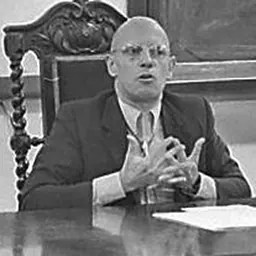


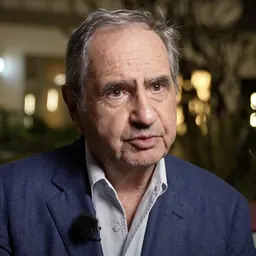


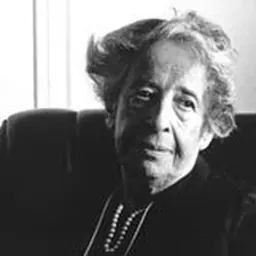
Related people
Same field, nearest in time


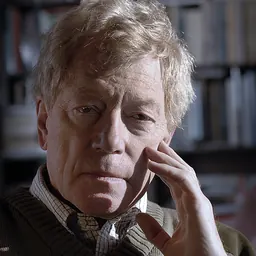
Contemporaries
People whose lives overlapped Marcel Gauchet's


Frequently asked questions
Who is Marcel Gauchet?
French historian, philosopher, and sociologist
When was Marcel Gauchet born?
Marcel Gauchet was born in 1946 in Poilley.
What is Marcel Gauchet's occupation?
Marcel Gauchet is a philosopher, historian, director of studies, editor, university teacher and journalist.
What nationality is Marcel Gauchet?
Marcel Gauchet is French.
Sources & further reading
Cite this page
APA: Biography.guide. (2026). Marcel Gauchet. https://biography.guide/marcel-gauchet/
MLA: "Marcel Gauchet." Biography.guide, https://biography.guide/marcel-gauchet/.
Chicago: "Marcel Gauchet." Biography.guide. https://biography.guide/marcel-gauchet/.
Data last updated: 2026-09-20 · Spot an error? Report a correction.
Page generated 2026-09-27 05:26 UTC