
About Marc-Joseph Marion du Fresne
Lived 1724 – 1772 (aged 48). Marc-Joseph Marion du Fresne was a French explorer.
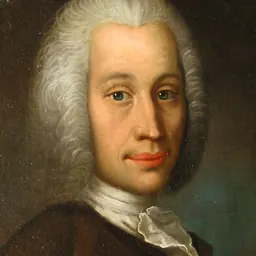
Marc-Joseph Marion "Macé" du Fresne (22 May 1724 – 12 June 1772) was a French privateer, East India captain, and explorer. The expedition he led to find the hypothetical Terra Australis in 1771 made important geographic discoveries in the south Indian Ocean and anthropological discoveries in Tasmania and New Zealand. In New Zealand, they spent longer living on shore than any previous European expedition. Half way through the expedition's stay, Marion was killed during a military assault by Ngare Raumati: one of the oldest Māori tribes from the Whangārei region.
He is commemorated with the toponyms Marion Island, South Africa and Marion Bay, Tasmania, as well in the name of two successive French oceanic research and supply vessel the Marion Dufresne (1972) and the Marion Dufresne II, which service the French Southern Territories of Amsterdam Island, the Crozet Islands, the Kerguelen Islands, and Saint Paul Island.
Early career Marion was born in Saint Malo in 1724 the son of shipowner Julien Marion Dufresne (1681-1739) and his wife Marie Seraphique Le Fer de la Lande. The family was non-noble but wealthy shipowners and merchants. He eventually inherited a farm 'Le Fresne' near the village of Saint-Jean-sur-Vilaine and styled himself Marion Dufresne (or in some instances Dufresne-Marion). He signed as Marc and was also referred to "Macé", probably because of his maternal grandfather Macé Le Fer sieur de la Lande (1640-1710). He was never known as (or signed himself) 'Du Fresne', but this has become a familiar appellation in New Zealand and Tasmania. He first went to sea in 1741 on a voyage to Cadiz aboard the 22-gun Saint-Ésprit.
During the War of the Austrian Succession, Marion commanded several ships as a privateer, including the Prince de Conty where he transported Charles Edward Stuart from Scotland to France. In the Seven Years' War, he was engaged in various naval operations including taking the astronomer Alexandre Guy Pingré to observe the 1761 transit of Venus in the Indian Ocean.
In January 1762, Marion received a grant of 625 argents of land at Quartier Militaire in Mauritius. Although he returned to France in 1764 and 1767, he made the island home in 1768.
Terra Australis expedition Map showing Marion du Fresne’s final voyage: the expedition’s outward journey to New Zealand and its return after his death. Memorial fountain in Hobart for the bicentenary of the 1772 sighting of Tasmania.
In October 1770, Marion convinced Pierre Poivre, the civil administrator in Port Louis, to equip him with two ships and send him on a twofold mission to the Pacific. Marion's fellow explorer Louis Antoine de Bougainville had recently returned from the Pacific with a Tahitian native, Ahutoru. Marion was tasked with returning Ahutoru to his homeland, and then to explore the south Pacific for the hypothetical Terra Australis Incognita. For these purposes Marion was given two ships, the Mascarin and the Marquis de Castries and departed on 18 October 1771.
Marion spent most of his personal fortune on outfitting the expedition with supplies and a crew. He hoped to make a significant profit on the journey by trading with the reportedly wealthy islands of the South Pacific. No part of Marion's mission could be achieved; Ahutoru died of smallpox shortly after embarkation, and the expedition did not locate Terra Australis nor make a profit from trade.
Arrival in New Zealand Monument to the memory of Marc-Joseph Marion du Fresne and his party at Te Hue Bay, "Assassination cove".
Marion sighted New Zealand's Mount Taranaki on 25 March 1772, and named the mountain Pic Mascarin without knowing that James Cook had named it "Mount Egmont" three years earlier.
Over the next month, the explorers repaired their two ships and treated their scurvy, first anchoring at Spirits Bay, and later in the Bay of Islands.
According to Du Clesmeur's Journal, their relations with Māori were peaceful at first; they communicated through the Tahitian vocabulary learned from Ahu-tor, and they befriended many Māori including Te Kauri (Te Kuri) of Ngāpuhi iwi (tribe). Nearby natives supplied the French sailors, who had developed scurvy and were on shore in a tent hospital, with daily fish. The sailors were also invited to visit local Māori at their pā – a very rare event – and had slept there overnight. Māori had shown the sailors where a grove of trees were for masts after one had been damaged. Some trees were over 90 feet in height without branches or knots. This masting-camp provided a boost to the sailors who had been disheartened by winter and heavywork. Māori were equally happy to exchange fish and game with the camp.
However, there were several alarming incidents between the sailors and Māori. The mast-yard was raided by the natives during the night on 6 June 1772. The natives managed to take a single musket and some clothes before a sentinel fired at the group scaring them off.
Death and reprisals No French witnesses to Marion's death survived and it was some time before his crew were aware of his fate. Two contemporary accounts were written by French officers, Saint Jean Roux and Ambroise du Clesmeur. The pair also traveled to the place where the massacre had taken place but could not find anything apart from ruins of their boats.
The expedition finally left on 12 July 1772. The French buried a bottle at Waipoa on Moturua, containing the arms of France and a formal statement taking possession of the whole country, with the name of France Australe.
Both published and unpublished accounts of Marion's death circulated widely, giving New Zealand a bad reputation as a dangerous land unsuitable for colonisation, and challenged the stereotypes of Pacific Islanders as noble savages which were prevalent in Europe at that time.
Possible motives for military assault There are several possible motives for the Māori assault on the landing site: Te Kauri (Te Kuri) considered that Marion was a threat to his authority, Te Kauri became concerned at the economic effect of supplying food for the two crews, Marion's crew, possibly unwittingly, broke several tapu laws related to their lack of required rituals before the cutting down of kauri trees, or the breaking of tapu by fishing in Manawaora Bay.
An account told by a Ngāpuhi elder to John White (ethnographer 1826–1891), but not published until 1965, describes Te Kauri and Tohitapu as leading the military resolution to the landing. Tapu had been placed on Manawaora Bay after members of the local tribe drowned here some time earlier, and their bodies had been washed up at Te Kauri's (Tacoury's sic) Cove. Since the interlopers did not leave, a military resolution was required.
Don’t just read it —
keep it.
Full-length biographies made to live with: read them, listen on the way to work, watch them tonight.
- E-book
- Audio
- Video
Instant download · yours to keep · every purchase keeps this site free
Important facts
People in Marc-Joseph Marion du Fresne's life
Named in this biography and alive at the same time

Related people
Same field, nearest in time


Contemporaries
People whose lives overlapped Marc-Joseph Marion du Fresne's




Frequently asked questions
Who was Marc-Joseph Marion du Fresne?
French explorer and cartographer (1724–1772)
When was Marc-Joseph Marion du Fresne born?
Marc-Joseph Marion du Fresne was born on 22 May 1724 in Saint-Malo.
When did Marc-Joseph Marion du Fresne die?
Marc-Joseph Marion du Fresne died on 12 June 1772 in Bay of Islands.
What was Marc-Joseph Marion du Fresne's occupation?
Marc-Joseph Marion du Fresne was an explorer.
What nationality was Marc-Joseph Marion du Fresne?
Marc-Joseph Marion du Fresne was French.
Sources & further reading
· Wikipedia: Marc-Joseph Marion du Fresne
· DBpedia: Marc-Joseph Marion du Fresne
Cite this page
APA: Biography.guide. (2026). Marc-Joseph Marion du Fresne. https://biography.guide/marc-joseph-marion-du-fresne/
MLA: "Marc-Joseph Marion du Fresne." Biography.guide, https://biography.guide/marc-joseph-marion-du-fresne/.
Chicago: "Marc-Joseph Marion du Fresne." Biography.guide. https://biography.guide/marc-joseph-marion-du-fresne/.
Data last updated: 2026-09-22 · Spot an error? Report a correction.
Page generated 2026-09-27 05:24 UTC