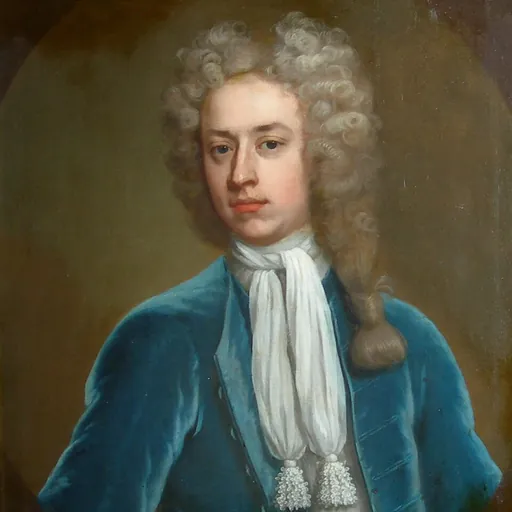
About John White
Lived 1699 – 1769 (aged 69). John White was a British politician.
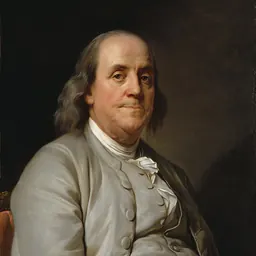
John White of Tuxford and Wallingwells.John White (2 December 1699 – 7 September 1769), of Wallingwells, Nottinghamshire, was an English politician who sat in the House of Commons from 1733 to 1768.
Early life
White was the eldest son and heir of Thomas White of Tuxford and Wallingwells and his wife Bridget Taylor daughter of Richard Taylor, MP, of Wallingwells. He succeeded to his father's estates, including Wallingwells in Nottinghamshire, at the age of 33 in 1732. A portrait of him as a young man show him as handsome, similar in looks to Prince Charles Edward Stuart.
Career White was an influential politician of his day. He was returned as Whig Member of Parliament for East Retford at a by-election on 26 January 1733 in succession to his father. He was returned unopposed at the 1734 British general election. He was elected a trustee and a common councillor of the Georgia Society. In 1736, he resigned from the council together with Robert More, though remaining a trustee. He was a professed Dissenter and no friend to church establishment' and disapproved of the Society's policy of appropriating land in Georgia to the endowment of the Church of England. Also in 1736, he spoke and voted against a proposal that Parliament should contribute £4,000 towards the repair of Henry VII's chapel. In 1739 he introduced a motion for the repeal of the Test Act. He voted with the Government on the Spanish convention that year but was absent from the division on the place bill in 1740. He was re-elected at the 1741 British general election, after a costly contest. Due to ill-health, he was absent on the division on the chairman of the elections committee but voted with the Government in all other recorded divisions.
White was returned unopposed at the 1754 British general election and returned again at the 1761 British general election. He made only two speeches in the period, on the peace preliminaries, on 10 December 1762, and on a point of order in a debate on the Regency, on 9 May 1765. He lost control at East Retford, and at the 1768 British general election he decided not to stand.
Each season White would travel in great state to London in a coach and six, attended by a throng of servants and outriders. The park at Wallingwells was well stocked with deer and its ponds teeming with fish. When at Wallingwells, John hunted and showed generous hospitality to his guests. He built the grotto on the edge of one of the ponds just south of the house.
Death and legacy White died unmarried on 7 September 1769. He was succeeded by his younger brother Taylor White.
Don’t just read it —
keep it.
Full-length biographies made to live with: read them, listen on the way to work, watch them tonight.
- E-book
- Audio
- Video
Instant download · yours to keep · every purchase keeps this site free
Important facts
People in John White's life
Named in this biography and alive at the same time


Related people
Same field, nearest in time



Contemporaries
People whose lives overlapped John White's




Frequently asked questions
Who was John White?
English politician, born 1699
When was John White born?
John White was born on 2 December 1699.
When did John White die?
John White died on 7 September 1769.
What was John White's occupation?
John White was a politician.
What nationality was John White?
John White was British.
Sources & further reading
· DBpedia: John White (1699–1769)
Cite this page
APA: Biography.guide. (2026). John White. https://biography.guide/john-white-politician/
MLA: "John White." Biography.guide, https://biography.guide/john-white-politician/.
Chicago: "John White." Biography.guide. https://biography.guide/john-white-politician/.
Data last updated: 2026-09-22 · Spot an error? Report a correction.
Portrait: Wikimedia Commons · author & licence
Page generated 2026-09-27 05:03 UTC