
About Mao Zhu Quan
Lived 1883 – 1952 (aged 68–69). Mao Zhu Quan was a Chinese politician.
Early life and parliamentary career Mao was from Haimen, Jiangsu. A 1931 biographical directory gives his courtesy name as Qizao (祺藻), while a later Chinese biographical database records Yongxun (泳熏). The 1931 directory also records that he had served as a member of the House of Representatives and as a member of the Jiangsu provincial government and director of its Civil Affairs Department.
In 1912, Mao and Shen Jing helped organize a local Kuomintang branch in Haimen, according to a study by the Nantong Haimen District Zhang Jian Research Association.
Later Chinese biographical references state that he studied in Japan, joined the Tongmenghui, and sat in the House of Representatives when the first parliament convened in 1913. On 19 February 1915, Mao was appointed chief of the general-affairs section of the Jiangsu branch of the Chinese Revolutionary Party. The biographical references also list him as a member when parliament was restored in 1916 and 1922, and as a member of the Extraordinary Parliament in Guangzhou during the Constitutional Protection Movement in 1917.
Government appointment records show that Mao was named an adviser to the Grand Marshal's Headquarters in September 1917 and an adviser to Sun Yat-sen's military headquarters on 28 February 1924.
Kuomintang political career In September 1922, Sun Yat-sen appointed Mao to a nine-member committee charged with drafting plans to reorganize party affairs. An Academia Historica chronicle records that the committee met for about six weeks and prepared drafts of a party platform and general charter that were reviewed before the KMT issued its reform declaration on 1 January 1923.
On 21 January 1923, Sun appointed Mao deputy director of the KMT headquarters' Propaganda Department.
At the First National Congress of the Kuomintang in January 1924, Mao was elected an alternate member of the Central Executive Committee. He subsequently headed the Investigation Department of the KMT's Shanghai Executive Bureau. A separate account by the Chinese Communist Party's Institute of Party History and Literature records that the conference adopted resolutions removing Communist Party members from the KMT, dismissing Soviet adviser Mikhail Borodin, and expelling Wang Jingwei from the party. The KMT's Second National Congress censured the conference participants in January 1926.
In 1930, during the Central Plains War, Mao joined the anti-Chiang Kai-shek coalition. Chinese KMT reference works list him among participants in the preparatory meetings for the Enlarged Conference of the KMT Central Party Headquarters and as a member of its provisional-constitution drafting committee. Mao left the presidency on 18 February 1943, when he was appointed secretary-general of the Judicial Yuan.
On 1 January 1944, Mao received the second class of the Order of Brilliant Star. In September 1946, while serving as Judicial Yuan secretary-general, he received members of the Taiwan Retrocession Tribute Group. Historian Hsu Hsueh-chi records that the delegation raised the treatment of Taiwanese accused as collaborators or war criminals, and that Mao agreed to convey their concerns. When asked about Japanese suspects who had already been repatriated, Mao replied that prosecutors may have been negligent and that the suspects could still be detained again if their crimes were established. In 1948, he was appointed a national policy adviser to the president. A separate biographical index independently gives his lifespan as 1883–1952.
Official files concerning Mao's presidency of the Administrative Court are preserved by Academia Historica, including records of the court's formal opening and an acting appointment made during his absence. The National Taiwan University obituary identifies Mao Zuquan and Liu Guilan as his parents and states that he was the youngest of six children. The family later spanned mainland China, Taiwan, and the United States. Sheng-taur was born in wartime Chongqing, grew up and studied in Taiwan, and moved to the United States in 1968; he returned to Taiwan to teach in 1973 before settling permanently in the United States in 1984.
Don’t just read it —
keep it.
Full-length biographies made to live with: read them, listen on the way to work, watch them tonight.
- E-book
- Audio
- Video
Instant download · yours to keep · every purchase keeps this site free
Important facts
People in Mao Zhu Quan's life
Named in this biography and alive at the same time

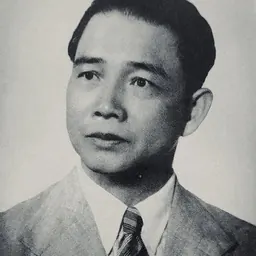
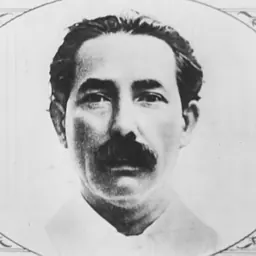
Related people
Same field, nearest in time





Contemporaries
People whose lives overlapped Mao Zhu Quan's


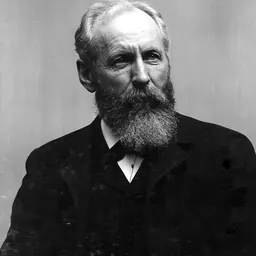
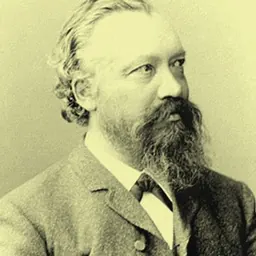
Frequently asked questions
Who was Mao Zhu Quan?
Nationalist China's first Justice Minister
When was Mao Zhu Quan born?
Mao Zhu Quan was born in 1883 in Jiangsu.
When did Mao Zhu Quan die?
Mao Zhu Quan died in 1952 in Shanghai.
What was Mao Zhu Quan's occupation?
Mao Zhu Quan was a politician.
What nationality was Mao Zhu Quan?
Mao Zhu Quan was Chinese.
Sources & further reading
Cite this page
APA: Biography.guide. (2026). Mao Zhu Quan. https://biography.guide/mao-zhu-quan/
MLA: "Mao Zhu Quan." Biography.guide, https://biography.guide/mao-zhu-quan/.
Chicago: "Mao Zhu Quan." Biography.guide. https://biography.guide/mao-zhu-quan/.
Data last updated: 2026-09-20 · Spot an error? Report a correction.
Page generated 2026-09-27 05:23 UTC