
About Manuel la Peña
Lived 1766 – 1827 (aged 60–61). Manuel la Peña was a Spanish military officer.
Manuel de Lapeña y Ruiz del Sotillo (11 April 1762 – 14 October 1820) was a Spanish Army officer.
Having a reputation for incompetence—he had the nickname Doña Manuela (Lady Manuela) — Lapeña was the subject of harsh criticism by 19th-century British historians including William Napier and Charles Oman for his conduct at the battles of Tudela and Barrosa, considering him both pusilanimous and lacking initiative, opinions shared by 19th century Spanish historians such as the Count of Toreno and Gómez Arteche. An ambitious man, he had a talent for diplomacy.
The full-length portrait of Lapeña, painted in 1799 by Goya, was commissioned by the Duchess of Osuna for the palace at her recreational property, La Alameda, Madrid.
Military career
Lapeña started his military career in 1777 as a captain in the America Infantry Regiment, then commanded by the future Duke of Osuna.
In 1806 Lapeña was given command of the 2nd Battalion of the Guardias Españolas and, in 1807 he was appointed interim captain general of Andalusia and governor of Cádiz while the Marquis del Socorro was invading Portugal as part of Spain's agreement with France. Lapeña held the post until 20 May 1808.
Lapeña's Cavalry unit was the Pavia Regiment commanded by Colonel Pedro de Alcántara Téllez Girón, a very well-equipped unit with 440 splendid horses. The 4th Division also had a 3,000-strong flying brigade, under Cruz-Murgeon, who was given the task harassing Dupont's northern flank and cutting French communications with Bailén and La Carolina. The attacking French forces sought to take advantage of a gap between the Spanish army's wings. Seeking to close the gap, Castaños sent orders to Lapeña at Cascante to move to fill the void. However, Lapeña's division, numbering 8,000–9,000 infantry and 1,500 horse, simply stayed for four hours facing the French cavalry; just two French Digeon's and Colbert's brigades of dragoons, some three thousand horse.
Army of the Centre After Tudela, Castaños was ordered to Aranjuez to take up the presidency of the Junta Central's military advisory committee. As a result, Lapeña assumed overall command of the Spanish Army of the Centre which had reformed at Guadalajara. With this command, Lapeña attempted to intervene against Napoleon's assault on Madrid; this attempt was, however, intercepted by Marshal Ney's I Corps and Lapeña was forced to withdraw to Cuenca. Once there, he was replaced as the commander of the Army of the Centre by the Duque de Infantado, Reserve of Cartaojal's Army of La Mancha, and following its defeat at Ciudad Real covered the retreat to Despeñaperros. However, as he had been a supporter of the Cadiz Cortes, the new Regency removed him from this position and ordered him to Cádiz, along with his troops. Lapeña then became the senior Spanish officer at Cádiz, and took command of the Spanish forces on the Isla de León.
Sailing from Cádiz between 21–24 February 1811, the Anglo-Spanish expedition regrouped at Tarifa on 27 February 1811 and marched towards the besieging French force's rear at Chiclana. A series of night marches, instigated by Lapeña, however, resulted in a change of plan and the allied army ended up marching back towards Cádiz. The French commander, Marshal Victor, marched to meet the allied force with 10,000 men from his besieging army. On 5 March, Lapeña's vanguard division met a French division straddling the main road to Cádiz and drove them off the road.
Graham's rearguard division, meanwhile, was attacked by two of Victor's divisions. Graham split his force into two brigades; one to face each of the approaching French divisions. In the ensuing battle, Graham's forces beat off the French attacks despite Lapeña entrenching his larger force on the isthmus to Cádiz and refusing to aid his British allies. which was given to Marquis de Coupigny.
Don’t just read it —
keep it.
Full-length biographies made to live with: read them, listen on the way to work, watch them tonight.
- E-book
- Audio
- Video
Instant download · yours to keep · every purchase keeps this site free
Important facts
People in Manuel la Peña's life
Named in this biography and alive at the same time
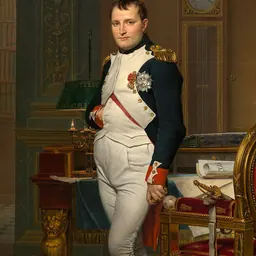

Related people
Same field, nearest in time
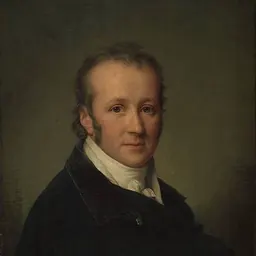
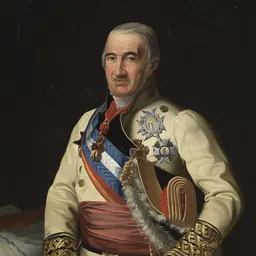
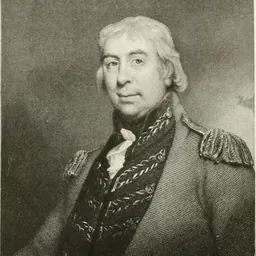

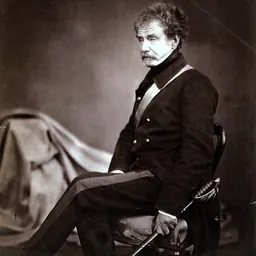
Contemporaries
People whose lives overlapped Manuel la Peña's






Frequently asked questions
Who was Manuel la Peña?
Spanish general
When was Manuel la Peña born?
Manuel la Peña was born in 1766.
When did Manuel la Peña die?
Manuel la Peña died in 1827.
What was Manuel la Peña's occupation?
Manuel la Peña was a military officer.
What nationality was Manuel la Peña?
Manuel la Peña was Spanish.
Sources & further reading
Cite this page
APA: Biography.guide. (2026). Manuel la Peña. https://biography.guide/manuel-la-pena/
MLA: "Manuel la Peña." Biography.guide, https://biography.guide/manuel-la-pena/.
Chicago: "Manuel la Peña." Biography.guide. https://biography.guide/manuel-la-pena/.
Data last updated: 2026-09-20 · Spot an error? Report a correction.
Page generated 2026-09-27 05:30 UTC