
About Manuel de Lardizábal y Uribe
Lived 1739 – 1820 (aged 81). Manuel de Lardizábal y Uribe was a Mexican and Spanish jurist and philosopher.
Manuel Miguel de Lardizábal y Uribe (23 December 1739 – 25 December 1820) was a Novohispanic penologist who was an academician of the Real Academia Española de la Lengua from 1775 to 1820. He seems to have been the successor to chair C of his father in law, Academician from 1746 to 1775 Francisco Antonio de Angulo.
King Charles III of Spain tried in 1764 to bring back a law of 1734 by his father King Philip V of Spain whereby even thieves operating in Madrid could be tried and executed even if no murder was involved in the thieving. The royal council pointed out to him that either victims or witnesses would default collaboration with Justice by the general popular feeling that the punishment could be disproportionate with people robbing only money, jewels, etc. while saving the lives of the persons being robbed. The King was thus obliged to keep his ideas on public order to himself and/or educated listeners.
Further, lawyer Acevedo published in 1770 a dissertation against torture, as being in conflict with Nature Rights and public decency within the Social Body. The lawyer politician from Zaragoza, Manuel de Roda y Arrieta, managed to get Charles III and his Royal Council deliberating around changes into the Penal Legislation, whereby capital punishment and/or extensive terms rotting in prisons could better be modified to convicts performing useful works needed by the public interest.
These moves, prior to 1776, where the king and his royal council echoed letters of intent dated 1776 through reflections on the significant works by Cesare Beccaria, brought about the publication in 1782 by Manuel de Lardizábal of his Discurso sobre las penas contrahido a las leyes criminales de España para facilitar su reforma. He cites Frenchman Montesquieu, Guillaume-François Le Trosne, with his Réflexions sur la réforme de la legislation universelle, the German Samuel von Pufendorf, the Dutch Hugo Grotius, the Italian Beccaria, and the reflections on the degradation applying torture of the Frenchman Joseph Michel Antoine Servan.
Don’t just read it —
keep it.
Full-length biographies made to live with: read them, listen on the way to work, watch them tonight.
- E-book
- Audio
- Video
Instant download · yours to keep · every purchase keeps this site free
Important facts
People in Manuel de Lardizábal y Uribe's life
Named in this biography and alive at the same time
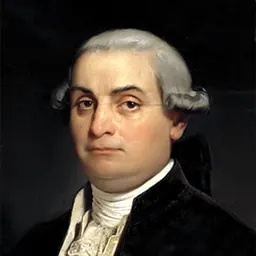
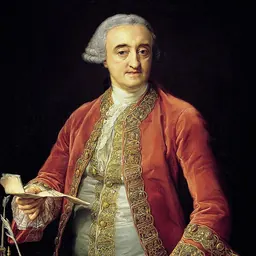


Related people
Same field, nearest in time


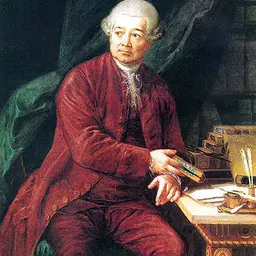

Contemporaries
People whose lives overlapped Manuel de Lardizábal y Uribe's

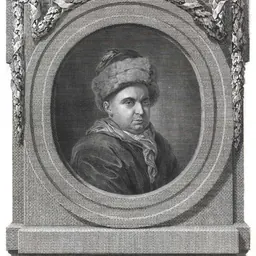



Frequently asked questions
Who was Manuel de Lardizábal y Uribe?
Spanish penologist
When was Manuel de Lardizábal y Uribe born?
Manuel de Lardizábal y Uribe was born on 22 December 1739 in Tepetitla de Lardizabal.
When did Manuel de Lardizábal y Uribe die?
Manuel de Lardizábal y Uribe died on 25 December 1820 in Madrid.
What was Manuel de Lardizábal y Uribe's occupation?
Manuel de Lardizábal y Uribe was a jurist and philosopher.
What nationality was Manuel de Lardizábal y Uribe?
Manuel de Lardizábal y Uribe was Mexican and Spanish.
Sources & further reading
· Wikipedia: Manuel de Lardizábal y Uribe
· DBpedia: Manuel de Lardizábal y Uribe
Cite this page
APA: Biography.guide. (2026). Manuel de Lardizábal y Uribe. https://biography.guide/manuel-de-lardizabal-y-uribe/
MLA: "Manuel de Lardizábal y Uribe." Biography.guide, https://biography.guide/manuel-de-lardizabal-y-uribe/.
Chicago: "Manuel de Lardizábal y Uribe." Biography.guide. https://biography.guide/manuel-de-lardizabal-y-uribe/.
Data last updated: 2026-09-20 · Spot an error? Report a correction.
Page generated 2026-09-27 05:20 UTC