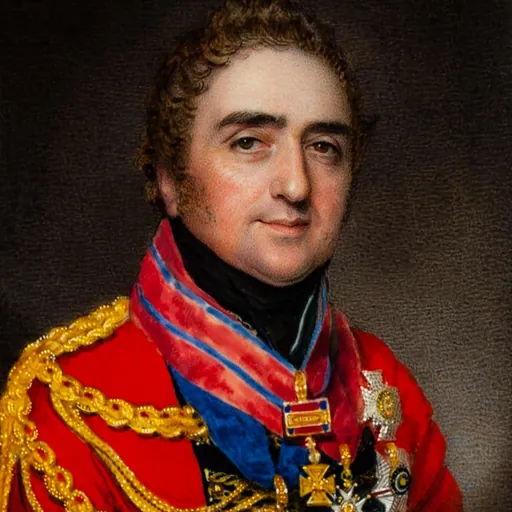
About Manley Power
Lived 1773 – 1826 (aged 52–53). Manley Power was a British military officer.
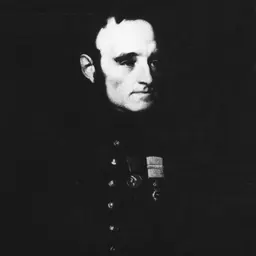
Lieutenant-General Sir Manley Power KCB (1773 – 7 July 1826) was a British Army officer who fought in a number of campaigns for Britain and rose to the rank of lieutenant general. He is chiefly remembered for leading a brigade of Portuguese troops under the Duke of Wellington in the Iberian Peninsular War. He is also remembered for jointly causing the removal of Sir George Prevost, governor-in-chief of British North America, for Prevost's refusal to press the attack on Plattsburgh, New York, in 1814, during the War of 1812. After his active military service Power was appointed Lieutenant Governor of Malta.
Early life Manley Power's grandfather, Sir Henry Power, was a captain of the Battle-Axe Guards. His father, Captain Lieutenant Bolton Power, served in the 20th Regiment of Foot and fought in several battles of the Seven Years' War, and later in the American Revolutionary War under Guy Carleton and John Burgoyne. Manley Power followed in his forefather's footsteps and was a career soldier, starting as an ensign in his father's old regiment, the 20th Regiment of Foot, on 27 August 1783, when he was either 9 or 10 years old. He served in Halifax, Nova Scotia (1795–97), Holland (1799), and Menorca (1800). He was part of the force under the command of Sir Ralph Abercromby at the Battle of Alexandria (1801), and later served with the Royal Horse Guards (1803–05). of the 32nd Regiment of Foot, he entered the Peninsular War and was attached to the Portuguese army under the command of Sir William Beresford and was promoted to lieutenant-general in 1813. Portuguese troops were poorly trained, but under Manley Power's leadership, Power's Portuguese were eventually regarded as equivalent to hardened British units, and saw much action, including the Battle of Salamanca, the Battle of Vitoria, the Battle of Fuentes de Oñoro, the Battle near Torres Vedras, and the Battle of Nivelle. for distinguished exertions during the bloody siege of Badajoz where the 3rd was ordered to distract the enemy through a diversionary attack with ladders against the high walls of the fortress away from the main gates, but pressed the action to the point where it became the breakthrough into the fortress (Picton was wounded scaling the ladders but continued on). Picton also led the 3rd when it broke through at Vitoria. Finally the 3rd was under the command of Charles Colville at the Battle of Nivelle where it took part in the main attack and then captured the bridge at Amotz under heavy resistance. Their opinions carried significant weight in Britain, which led to the removal of Prevost as Commander-in-Chief, North America. The Duke of Wellington wrote on 30 October 1814, It is very obvious to me that you must remove Sir George Prevost. I see he has gone to war about trifles with the general officers I sent him, which are certainly the best of their rank in the army; and his subsequent failure and distresses will be aggravated by that circumstance; and will probably with the usual fairness of the public be attributed to it. In December, Wellington's former Quartermaster General, Sir George Murray, was sent to Canada with the local rank of lieutenant-general, specifically to order Prevost to return to London to explain his conduct of the Plattsburg campaign. Another Peninsular War veteran and Manley Power's previous commanding officer, Sir Edward Pakenham, became the commander of the British North American army. Manley Power took part in the Battle of New Orleans, where Pakenham was killed, which unbeknown to its participants occurred after the Treaty of Ghent was signed in Belgium, but it did not take effect until it was ratified by the United States in February 1815.
Occupation of France He was then reassigned to Europe in 1815 to rejoin the 3rd Division, which was still under the command of Charles Colville, to lead the 2nd Brigade, as part of the British Army force occupying Flanders and France.
On 25 October 1818, General Murray appointed him to be the commanding officer at Calais to oversee the evacuation of British troops from France. When it was completed, the mayor of Calais wrote a letter to express thanks for his "considerate treatment of the French and of the town of Calais during the embarkation." for six years. Manley Power would have been familiar with the island, having been previously stationed there in 1802 with the 20th Regiment of Foot. and later as part of the 4th Battalion (Middlesex) of the Queen's Regiment.
Footnotes
Don’t just read it —
keep it.
Full-length biographies made to live with: read them, listen on the way to work, watch them tonight.
- E-book
- Audio
- Video
Instant download · yours to keep · every purchase keeps this site free
Important facts
People in Manley Power's life
Named in this biography and alive at the same time





Related people
Same field, nearest in time
Contemporaries
People whose lives overlapped Manley Power's




Frequently asked questions
Who was Manley Power?
British Army general
When was Manley Power born?
Manley Power was born in 1773 in England.
When did Manley Power die?
Manley Power died on 7 July 1826 in Bern.
What was Manley Power's occupation?
Manley Power was a military officer.
What nationality was Manley Power?
Manley Power was British.
Sources & further reading
Cite this page
APA: Biography.guide. (2026). Manley Power. https://biography.guide/manley-power/
MLA: "Manley Power." Biography.guide, https://biography.guide/manley-power/.
Chicago: "Manley Power." Biography.guide. https://biography.guide/manley-power/.
Data last updated: 2026-09-22 · Spot an error? Report a correction.
Portrait: Wikimedia Commons · author & licence
Page generated 2026-09-27 05:02 UTC