
About Manisha Ganguly
Born 1995. Manisha Ganguly is an Indian journalist, lecturer and investigative journalist.
Manisha Ganguly (Bengali: মণীষা গাঙ্গুলী) is an Indian investigative journalist, academic and filmmaker. She is an investigative correspondent and the open source intelligence lead at The Guardian and previously worked as investigative documentary producer for BBC News covering conflict and international affairs. A University of Westminster profile described her thesis as the first academic study of its kind on OSINT and investigative work. She was included in Forbes ' 30 Under 30 (Europe) in 2021.
Early career In 2012, she was one of ten students selected from about 200 applicants for The Times of India’s Kolkata Junior Editorial Board.
After the 2012 Delhi gang rape and murder, Ganguly began reporting on violence against women; in a later interview she described being subject to rape and death threats online as a result. According to Ganguly, the website reached 100,000 readers in one month.
Ganguly received a scholarship to study a Master's in Journalism at the University of Westminster in London. In an interview, she claimed that India is a hostile environment for women in journalism.
Reporting
BBC For the BBC, she reported on attacks by Russian planes in Syria and war crimes by Turkish-backed forces in the Syrian civil war, war crimes in Libya, use of cluster munitions in Ukraine, human trafficking in the Middle East, reported on the training of the killers of journalist Jamal Khashoggi, In 2022, an investigation Ganguly co-led documented the torture of Russian anti-war prisoners in a Moscow police station and the identities of the officers. Those officers were subsequently sanctioned by the EU.
The Guardian and collaborative investigations For the Guardian and Forbidden Stories, Ganguly was part of an international team that investigated Team Jorge, a group of Israeli contractors led by Tal Hanan which claimed to have meddled in more 30 elections worldwide and Aims, using their software to launch bot armies. BFMTV suspended a presenter amid scandal linked to the investigation.
For The Guardian, she investigated NTC-Vulkan, which develops a Russian disinformation network and cyberweapons used by the Russian military and intelligence agencies, as a part of the Vulkan Files. Ganguly reported that half the special forces deployments in Ukraine consisted of UK special forces. As part of the "Costs of the Crown" team, Ganguly investigated the lineage of colonial looting of jewellery in the royal collection owned by Elizabeth II, and the British royal family. Ganguly reported on the US and Germany training of Saudi border forces accused of mass killing migrants on the Yemen border. Ganguly has also reported on transnational repression of dissidents on European soil, focusing on Saudi Arabia and Iran.
She worked with a consortium of investigative journalists to uncover more than 1,000 unmarked graves of deceased migrants and refugees on the borders of Europe. The investigation was awarded the European Press Prize Special Award.
For the Guardian and Forbidden Stories, Ganguly was part of an international team that investigated the disappearance and torture of Ukrainian journalist Victoria Roshchyna, and reconstructed the Russian prison Taganrog SIZO-2 where Ukrainian civilians were tortured and starved.
Reporting on the Gaza war During the Gaza war, Ganguly's Instagram account was restricted by Meta while seeking blood donations for injured journalists. Ganguly led the Guardian's investigation into the Al-Ahli Arab Hospital explosion, reporting that the crater at the blast site required kinetic energy inconsistent with a Joint Direct Attack Munition (JDAM) aerial bomb, and was also inconsistent with an airstrike, concluding that it was "more likely to be a weapon that failed and released its payload over a wide area". She investigated damage to Gaza's hospitals including by Israeli munitions, the Jabaliya refugee camp airstrikes, conducted damage assessment of northern Gaza, and wrote that Israel appeared to be receiving munitions from a US War Reserves Stock Allies-Israel for the war in Gaza. Together with Forbidden Stories and ARIJ, Ganguly investigated the deaths of Palestinian journalists in Gaza and revealed that parts of the IDF viewed Hamas-linked journalists as legitimate targets. Ganguly investigated the 2025 Gaza Strip aid distribution killings using visual evidence, medical data and eyewitness testimony concluding that Israeli forces had "indiscriminately" fired on Palestinians seeking food near Gaza Humanitarian Foundation sites. The Israel Defense Forces denied deliberately targeting civilians.
WhatsApp vulnerability In January 2017, as a freelancer, Ganguly wrote a Guardian article reporting on research by security experts that claimed that a WhatsApp design feature could allow encrypted messages to be re-sent under certain conditions, which they described as a potential “backdoor.” The report discussed WhatsApp’s Signal protocol implementation, particularly a mechanism that re-encrypts undelivered messages when users change devices or are offline. The Guardian removed the “backdoor” wording from the headline within eight hours of initial publication online. A later internal review by readers’ editor Paul Chadwick found the research overstated the security threat, but noted the feature itself deserved scrutiny due to WhatsApp’s large user base.
Academic work and teaching She holds a PhD titled "Future of Investigative Journalism: The Age of Automation, A.I. & Open-Source Intelligence (OSINT)" from the University of Westminster, where she has also taught. According to Ganguly, it is the first PhD in OSINT mapping the impact on investigative journalism.
She has delivered talks and taught on OSINT and investigative methods at international universities and professional forums. In 2026, she was appointed honorary Senior Research Fellow by City St George's, University of London.
Media appearances Ganguly has been interviewed and profiled by a range of independent media organisations. In 2021, she was named in ''Forbes "30 Under 30" Europe for Media & Marketing. ARTE, L'Orient Le Jour, BBC Outside Source, the Reuters Institute for the Study of Journalism, L'Orient Le Jour, Marie Claire , tGlobal Investigative Journalism Network , and Coalition for Women in Journalism. She also participated in a Bellingcat event on OSINT in 2022.
Ganguly is a vocal proponent of women's representation and diversity in the OSINT space and investigative journalism.
Ganguly has stated that OSINT investigations help confirm ground reality during war and fact-check claims made by state actors.
In 2023, following the Twitter takeover by Elon Musk and banning of ElonJet, Ganguly expressed concern for Twitter becoming "an inhospitable platform for the OSINT community". Ganguly also criticised the verification of the account of assassinated journalist Jamal Khashoggi by Musk for Twitter Blue, tweeting: "Jamal Khashoggi deserves better". She attributed the new verification rules on X to the disinformation put out by OSINT accounts, and "OSINT grifters". In April 2021, Ganguly was included by Forbes magazine on their annual 30 Under 30 in the media category. International awards include MHP 30 to watch under 30 in 2021 and 2020, and Women of the Future Award.
She has won two Amnesty International Media Awards for Best Investigation in 2020 and 2023, the European Press Prize Special Award in 2024, and shortlisted for the One World Media Award for Coronavirus Reporting. She has been shortlisted for Outstanding Young Journalist at the Asian Media Awards in 2020, and for the Broadcast Awards in 2021, three times for the Press Gazettes British Journalism Award 2024, and twice for the UK Press Awards 2024. In 2025, she received two nominations for the Daphne Caruana Galizia Prize for Journalism by European Parliament, two nominations for the Foreign Press Association awards, including for Story of the Year for her Gaza reporting, and shared a win for the European Centre for Press and Media Freedom award.
Don’t just read it —
keep it.
Full-length biographies made to live with: read them, listen on the way to work, watch them tonight.
- E-book
- Audio
- Video
Instant download · yours to keep · every purchase keeps this site free
Important facts
People in Manisha Ganguly's life
Named in this biography and alive at the same time
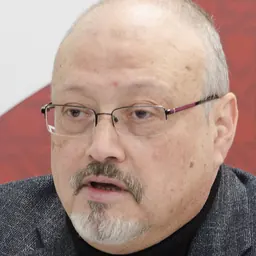

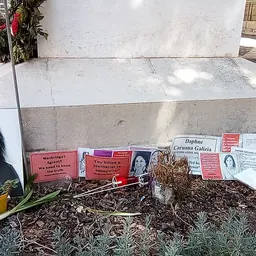



Related people
Same field, nearest in time



Contemporaries
People whose lives overlapped Manisha Ganguly's



Frequently asked questions
Who is Manisha Ganguly?
Indian investigative journalist
When was Manisha Ganguly born?
Manisha Ganguly was born on 13 January 1995 in Kolkata.
What is Manisha Ganguly's occupation?
Manisha Ganguly is a journalist, lecturer and investigative journalist.
What nationality is Manisha Ganguly?
Manisha Ganguly is Indian.
Sources & further reading
Cite this page
APA: Biography.guide. (2026). Manisha Ganguly. https://biography.guide/manisha-ganguly/
MLA: "Manisha Ganguly." Biography.guide, https://biography.guide/manisha-ganguly/.
Chicago: "Manisha Ganguly." Biography.guide. https://biography.guide/manisha-ganguly/.
Data last updated: 2026-09-22 · Spot an error? Report a correction.
Page generated 2026-09-27 05:23 UTC