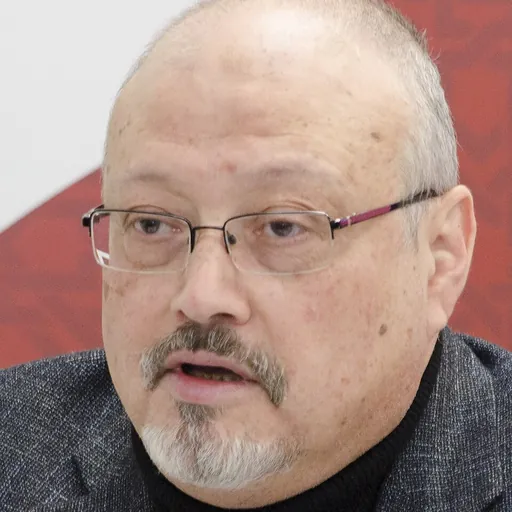
About Jamal Khashoggi
Lived 1958 – 2018 (aged 59). Jamal Khashoggi was a Saudi journalist and political writer.
education = Indiana State University (BBA) occupation = Journalist website =
Jamal Ahmad Hamza Khashoggi (13 October 1958 – 2 October 2018) was a Saudi journalist, dissident, author, columnist and editor. Khashoggi was assassinated at the Saudi consulate in Istanbul on 2 October 2018 by agents of the Saudi government at the behest of Crown Prince Mohammed bin Salman.
Khashoggi was the editor of the Saudi Arabian newspaper Al Watan, which was considered a platform for Saudi progressives. Khashoggi fled Saudi Arabia in September 2017 and went into self-imposed exile. He said that the Saudi government had "banned him from Twitter", and he later wrote newspaper articles critical of the Saudi government. Khashoggi had been critical of the Saudi rulers, King Salman and Crown Prince Mohammed bin Salman.
On 2 October 2018, Khashoggi entered the Saudi consulate in Istanbul to obtain documents related to his planned marriage but was never seen leaving. Amid news reports claiming that he had been killed and dismembered inside, an inspection of the consulate, by Saudi and Turkish officials, took place on 15 October. Initially, the Saudi government denied the death, but following shifting explanations for Khashoggi's death, Saudi Arabia's attorney general eventually stated that the murder was premeditated. By 16 November 2018, the Central Intelligence Agency (CIA) had concluded that Mohammed bin Salman ordered Khashoggi's assassination. The murder created tensions between the U.S. and Saudi Arabia, but did not meaningfully disrupt relations between the two countries.
On 11 December 2018, Khashoggi was posthumously named Time magazine's Person of the Year along with other journalists who faced political persecution for their work. Time referred to Khashoggi as a "Guardian of the Truth".
Early life Khashoggi's Turkish ancestors made the Hajj from Kayseri to Mecca some four centuries earlier and decided to stay. Their family surname means "spoon maker" (kaşıkçı) in Turkish. His grandfather was Muhammad Khashoggi. He was the nephew of Adnan Khashoggi and the first cousin of Dodi Fayed.
Khashoggi received his elementary and secondary education in Saudi Arabia and obtained a Bachelor of Business Administration from Indiana State University in the United States in 1982.
Career U.S. President Obama (left) after his 2009 speech "A New Beginning", with Khashoggi next to him Khashoggi began his career as a regional manager for Tihama Bookstores from 1983 to 1984. Later he worked as a correspondent for the Saudi Gazette and as an assistant manager for Okaz from 1985 to 1987.
In 1991, Khashoggi became managing editor and acting editor-in-chief of Al Madina and his tenure in that position lasted until 1999. Saudi Arabia's diplomatic dispute with Canada, and the Kingdom's crackdown on dissent and media. Khashoggi supported some of Crown Prince's reforms, such as allowing women to drive,
Speaking to the BBC's Newshour, Khashoggi criticized Israel's settlement building in the occupied Palestinian territories, saying: "There was no international pressure on the Israelis and therefore the Israelis got away with building settlements, demolishing homes."
Khashoggi criticized the arrest of women's rights activist Loujain al-Hathloul in May 2018.
Appearing on Qatar-based Al-Jazeera TV's programme Without Borders, Khashoggi stated that Saudi Arabia, to confront Iran, must re-embrace its proper religious identity as a Wahhabi Islamic revivalist state and build alliances with organisations rooted in political Islam such as the Muslim Brotherhood, and that it would be a "big mistake" if Saudi Arabia and the Muslim Brotherhood cannot be friendly.
Khashoggi criticized the Saudi war on Yemen, writing "The longer this cruel war lasts in Yemen, the more permanent the damage will be. The people of Yemen will be busy fighting poverty, cholera, and water scarcity and rebuilding their country. The crown prince [Mohammed bin Salman] must bring an end to the violence", and "Saudi Arabia's crown prince must restore dignity to his country – by ending Yemen's cruel war".
According to Khashoggi, Lebanon's Prime Minister Saad Hariri's forced resignation in a live television broadcast from Saudi Arabia on 4 November 2017 "could in part be due to the 'Trump effect,' particularly the U.S. president's strong bond with MBS. The two despise Iran and its proxy Hezbollah, a sentiment the Israelis share." Khashoggi also wrote that "MBS's rash actions are deepening tensions and undermining the security of the Gulf states and the region as a whole."
Opinions on Khashoggi's views Peter Bergen, writing for CNN, described Khashoggi as a "journalist simply doing his job who evolved from an Islamist in his twenties to a more liberal position by the time he was in his forties," and that by 2005, "Khashoggi said he had also rejected the Islamist idea of creating an Islamic state and had turned against the religious establishment in Saudi Arabia." According to Bergen, he had also "embraced the Enlightenment and the American idea of the separation of church and state."
According to Noha El Tawil of Egypt Today, Khashoggi revealed "yes, I joined the Muslim Brotherhood organization when I was at university; and I was not alone. Some of the current ministers and deputies did but later every one of us developed their own political tendencies and views." Politically, Khashoggi was supportive of the Muslim Brotherhood, which he viewed as an exercise in democracy in the Muslim world. In one of his own blogs, arguing for the Muslim Brotherhood, he wrote that: "there can be no political reform and democracy in any Arab country without accepting that political Islam is a part of it." The Irish Times journalist Lara Marlowe wrote that "If Christian democracy was possible in Europe, why could Arabs not be ruled by Muslim democracy, Jamal asked. That may explain his friendship with Turkish president Recep Tayyip Erdogan...Erdogan constituted the greatest hope of Muslim democracy, until he too turned into a despot."
According to The Washington Post, while "Khashoggi was once sympathetic to Islamist movements, he moved toward a more liberal, secular point of view, according to experts on the Middle East who have tracked his career."
Donald Trump Jr. promoted the idea that Khashoggi was a "jihadist". According to David Ignatius, Khashoggi was in his early 20s "a passionate member of the Muslim Brotherhood. The brotherhood was a secret underground fraternity that wanted to purge the Arab world of the corruption and autocratic rule it saw as a legacy of Western colonialism."
According to Anthony Cordesman, the national security analyst at the Center for Strategic and International Studies, Khashoggi's "ties to the Muslim Brotherhood do not seem to have involved any links to extremism." John R. Bradley, for The Spectator, wrote "Khashoggi and his fellow travellers believe in imposing Islamic rule by engaging in the democratic process", but that "In truth, Khashoggi never had much time for western-style pluralistic democracy", and that he "was a political Islamist until the end, recently praising the Muslim Brotherhood in The Washington Post", and that he "frequently sugarcoated his Islamist beliefs with constant references to freedom and democracy." According to The Washington Post columnist David Ignatius, "Khashoggi couldn't have traveled with the mujahideen that way without tacit support from Saudi intelligence, which was coordinating aid to the fighters as part of its cooperation with the CIA against the Soviet Union in Afghanistan. ... Khashoggi criticized Prince Salman, then governor of Riyadh and head of the Saudi committee for support to the Afghan mujahideen, for unwisely funding Salafist extremist groups that were undermining the war."
Al Arabiya reported that Khashoggi once tried to persuade bin Laden to quit violence.
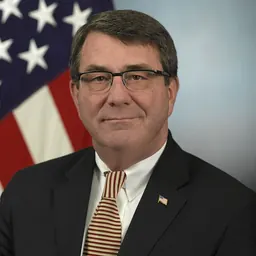
Khashoggi said: "I was very much surprised [in 1997] to see Osama turning into radicalism the way he did." After less than two months, he was dismissed in May 2003 by the Saudi Arabian Ministry of Information because he had allowed a columnist to criticize the Islamic scholar Ibn Taymiyyah (1263–1328), who is considered an important figure of Wahhabism, a sect of Salafism. This incident led to Khashoggi's reputation in the West as a liberal progressive. Prince Mohammed bin Salman and his advisor Ahmad Asiri (who was blamed for Khashoggi's death) meeting U.S. Secretary of Defense Ash Carter, July 2016
After he was dismissed, Khashoggi went to London in voluntary exile. There he became an adviser to Prince Turki Al Faisal. He then served as a media aide to Al Faisal while the latter was Saudi Arabia's ambassador to the United States. In April 2007, Khashoggi began to work as editor-in-chief of Al Watan for a second time. Khashoggi publicly expressed his disagreement with al-Almaee and stated that although he had great respect for the newspaper, it "should not have allowed an article to question the essence of faith." However, it was on air for less than 11 hours before it was shut down by Bahrain. He was also a political commentator for Saudi Arabian and international channels, including MBC, BBC, Al Jazeera, and Dubai TV.
The Independent, citing a report from Middle East Eye, said in December 2016 that Khashoggi had been banned by Saudi Arabian authorities from publishing or appearing on television "for criticising U.S. President-elect Donald Trump".
The Washington Post
Khashoggi relocated to the United States in June 2017 where he continued writing for Middle East Eye and began writing for The Washington Post in September 2017. In September 2017, Prince Mohammed bin Salman, who felt that Khashoggi's work was tarnishing his image, told Turki Aldakhil that he would go after Khashoggi "with a bullet". Saudi Arabia used a reputed troll farm in Riyadh, employing hundreds of people, to harass Khashoggi and other critics of the Saudi regime. Former U.S. intelligence contractor Edward Snowden accused the Saudi government of using spyware known as "Pegasus" to monitor Khashoggi's cell phone.
According to John R. Bradley of The Spectator, "With almost two million Twitter followers, he was the most famous political pundit in the Arab world and a regular guest on the major TV news networks in Britain and the United States."
Assassination
Khashoggi entered the Saudi Arabian consulate in Istanbul on 2 October 2018 to obtain documents related to his planned marriage, Amid news reports claiming that he had been dismembered with a bone saw inside the consulate, he was declared a missing person. Saudi Arabian and Turkish officials inspected the consulate on 15 October, during which Turkish officials found evidence that Khashoggi had been killed and that chemical experts had tampered with evidence.
In November 2018, the CIA concluded that Saudi crown prince Mohammed bin Salman had ordered Khashoggi's assassination.
In March 2019, Interpol issued Red Notices for twenty people wanted in connection to the murder of Khashoggi.
On 19 June 2019, following a six-month investigation, the Office of the United Nations High Commissioner for Human Rights released a 101-page report holding the State of Saudi Arabia responsible for the "premeditated extrajudicial execution" of Khashoggi. The report was issued by Agnès Callamard, a French human rights expert and UN Special Rapporteur.
Saudi response The Saudi Arabian government changed its story several times. Initially, it denied the death and claimed that Khashoggi had left the consulate alive. Eighteen days later, it said he had been strangled inside the consulate during a fistfight. 18 Saudis were arrested, including the team of fifteen who had been sent to "confront him". The "fistfight" story was contradicted on 25 October when Saudi Arabia's attorney general said the murder was premeditated.
Many Saudi critics have been reported missing under similarly suspicious circumstances.
On 16 November 2018, the Saudi Arabian government organized Islamic funeral prayers in absentia for Khashoggi in al-Masjid an-Nabawi in Madinah, and in the Great Mosque of Mecca after the Friday Jumu'ah prayer.
In a 20 June 2019 interview, Saudi Arabia's Minister of State for Foreign Affairs Adel al-Jubeir said to CNN's Christiane Amanpour that Khashoggi's murder was "gruesome", but he said he disagreed with the conclusion of the United Nations' 101-page report, calling it "flawed".
In September 2019, Saudi Crown Prince Mohammed bin Salman stated that he bears the responsibility for Khashoggi's assassination by Saudi operatives "because it happened under my watch", according to a PBS documentary. However, he denied having any prior knowledge of the plot.
On 23 December 2019, a Saudi Arabian court sentenced five officials to death and three others to 24 years in prison. Amnesty International's Middle East Research Director Lynn Maalouf stated that Saudi Arabia's verdict against the officials was a "whitewash". In a statement, she said, "The trial has been closed to the public and to independent monitors....the verdict fails to address the Saudi authorities' involvement." On 22 May 2020, Khashoggi's children pardoned the five officials, which means they will be set free rather than executed.
On 7 September 2020, eight people tied to the murder were sentenced to prison. Their sentences ranged from 7 to 20 years. Saudi Arabia did not release their names.
Turkish response On 31 October 2018, Istanbul's chief prosecutor released a statement saying that Khashoggi had been strangled as soon as he entered the consulate building, and that his body was dismembered and disposed of. This was the first such accusation by a member of the Turkish government. Unknown to the Saudis, the consulate had been bugged by Turkish intelligence, and both the planning and the execution had been recorded. His body may have been dissolved in acid, according to Turkish officials, and his last words captured on an audio recording were reported as "I can't breathe." The recording was subsequently released by the Turkish government. Around September 2019, the Daily Sabah published a transcription of the audio in which it is implied Khashoggi was asphixiated by smothering. Officials believed the recording contained evidence that Khashoggi was assassinated on the orders of the Saudi royal family. : For instigating a premeditated murder with the intent of [causing] torment through fiendish instinct Ahmad Asiri, who was the deputy head of Saudi Arabia's general intelligence at the time of the murder Saud al-Qahtani, who was a royal court adviser at the time of the murder For carrying out the killing Maher Mutreb, intelligence operative Salah al-Tubaigy, forensic expert Fahad al-Balawi, member of the Saudi royal guard 15 others.
The indictment by the Istanbul prosecutor was based on
On 3 July 2020, Khashoggi's fiancé, Hatice Cengiz, spoke at the opening of the trial of his assassination at the Turkish court, stating that he had been killed by a team of Saudi agents inside the kingdom's consulate in Istanbul through "a great betrayal and deception". She asked that all those responsible for his killing be brought to justice.
On 28 September 2020, Turkish prosecutors prepared a second indictment against six Saudi officials involved in the murder of Khashoggi. Earlier in July 2020, the first public trial was opened into Khashoggi's murder against 20 Saudi nationals.
On 7 April 2022, a Turkish court ordered the transfer of the trial to Saudi Arabia, despite the fact that many of the suspects had already been acquitted in Saudi Arabia. The decision was criticized by human rights advocates and lawyers involved in the case.
U.S. response U.S. Senator Ron Wyden at "Justice for Jamal: The United States and Saudi Arabia One Year After the Khashoggi Murder", the Project on Middle East Democracy (POMED) and 12 other human rights organizations held a public event on Capitol Hill to commemorate his life, to call for accountability, and to cast a light on the repression of those who are perceived to be critical of Crown Prince bin Salman and his regime. Immediately following the assassination, politicians were divided as to which, if any, economic or other sanctions should be applied to Saudi Arabia.
Six weeks after the assassination, the CIA leaked its conclusion that Crown Prince bin Salman had ordered the assassination. From then on, the U.S. Congress tried without success to force the Trump administration to reveal the U.S. intelligence community's findings.
On 20 November 2018, U.S. President Donald Trump rejected the CIA's conclusion that Crown Prince bin Salman had ordered the killing. He issued a statement saying "it could very well be that the Crown Prince had knowledge of this tragic event – maybe he did and maybe he didn't" and that "In any case, our relationship is with the Kingdom of Saudi Arabia." Two days later, Trump denied that the CIA had even reached a conclusion. His statements were criticized by Congressional representatives from both parties, who promised to investigate the matter. Adam Schiff, the top Democrat on the House Intelligence Committee, who was briefed by the CIA on the agency assessment, accused President Trump of lying about the CIA findings.
On 13 December, in opposition to the Trump administration's position, the United States Senate unanimously passed a resolution that held bin Salman personally responsible for the death of Khashoggi. On the same day, the Senate voted 56–41 to pass legislation to end U.S. military aid for the Saudi Arabian-led intervention in Yemen, a vote attributable to senators' desires to punish Saudi Arabia for the Khashoggi murder and for the humanitarian crisis in Yemen, including a famine and human rights violations. The U.S. House of Representatives narrowly blocked consideration of any War Powers Resolution restricting U.S. actions relating to Yemen for the rest of the year.
In June 2019, when President Trump and Secretary of State Mike Pompeo met with bin Salman to discuss military matters, they did not bring up the subject of Khashoggi's assassination. A week later, at the 2019 G20 Osaka summit, during a group photo of international leaders, Trump shook bin Salman's hand. Pompeo reiterated his efforts to minimize Saudi responsibility in the killing in a book released in January 2023, Never Give an Inch: Fighting for the America I Love, when he returned to his theme that the gruesome death was of little consequence; that the victim was only an "activist." He further described Khashoggi as being, "cozy with the terrorist-supporting Muslim Brotherhood."
On 11 March 2020, the U.S. State Department, in its 2019 Country Reports on Human Rights Practices, blamed Saudi Arabian government agents for Khashoggi's death. The department also said that the realm did not punish those accused of committing serious human rights abuses.
On 20 August 2020, the Open Society Justice Foundation filed a lawsuit in the Southern District of New York over the killing of Khashoggi. As part of the lawsuit, the group also demanded the release of the Khashoggi report under the Freedom of Information Act. (It was the second lawsuit filed by the initiative involving Khashoggi's assassination. The first was filed in January 2019 with a more general focus, demanding that the CIA and six other federal agencies disclose "all records" relating to the assassination.
In January 2021, with the incoming U.S. administration under Joe Biden, the newly confirmed Director of National Intelligence Avril Haines was pressured to declassify the report on Khashoggi's assassination "without delay". The Trump administration had blocked its declassification despite being legally required to release it. U.S. senator Ron Wyden asked Haines during her confirmation hearing on 19 January 2021, where she confirmed: "Yes, senator, absolutely. We will follow the law". Agnès Callamard, the UN special rapporteur on extrajudicial killings, praised the move, saying the information would provide the "one essential missing piece of the puzzle of the execution of Jamal Khashoggi".
In September 2022, The Wall Street Journal reported that the Public Interest Declassification Board (PIDB) advised President Biden to declassify the full U.S. intelligence report on the murder of Khashoggi in June 2022, weeks before Biden traveled to Saudi Arabia and met with bin Salman. A declassified summary had been previously released in February 2021, prompting the U.S. to impose sanctions and travel bans on several Saudi security officials, albeit without targeting bin Salman directly.
On 17 November 2022, the Biden administration ruled that bin Salman had immunity from a lawsuit over Khashoggi's murder. Senior Democratic lawmakers criticized the decision. Following the decision, Judge John D. Bates dismissed a civil case brought against bin Salman and his alleged accomplices by Hatice Cengiz. Bates also issued a dismissal for two top bin Salman aides, Saud al-Qahtani and Ahmed al-Assiri, on jurisdictional grounds.
Commentary The Middle East correspondent of The Independent, Patrick Cockburn, wrote that Khashoggi's killing was "by no means the worst act carried out by Saudi Arabia since 2015, though it is much the best publicised. ... Saudi leaders imagined that, having got away with worse atrocities in Yemen, that any outcry over the death of a single man in the Saudi consulate in Istanbul was something they could handle".
Vanity Fair reported that "several House Republicans have mounted a whisper campaign to discredit Khashoggi—or at least, to knock his reputation down a few notches—based on his ties to the Muslim Brotherhood, and his role as an embedded journalist who covered Osama bin Laden. ... The campaign to discredit Khashoggi, which might have once been executed surreptitiously, is now front and center on Twitter and echoing on Fox News".
Personal life Khashoggi was described as an observant Muslim.
Khashoggi was reportedly married and divorced at least three times, though there is contradictory information on to whom he was married and when. With his wife Rawia al-Tunisi he had four children: sons Salah and Abdullah and daughters Noha and Razan Jamal. He was also married to Alaa Nassif. On 2 June 2018, Khashoggi married Hanan Elatr, an Egyptian citizen, in an Islamic ceremony in Alexandria, Virginia, U.S. She obtained a certified, signed copy of the marriage certificate in July 2021 verifying the marriage. Hanan also produced pictures of their ceremony, and one of Khashoggi's friends additionally confirmed he attended the wedding. After his assassination, all four were banned from leaving Saudi Arabia.
At the time of his death Khashoggi was planning to marry Hatice Cengiz, a 36-year-old Ph.D. candidate at a university in Istanbul. The couple had met in May 2018 during a conference in the city.
On 22 April 2018 an Emirati government agency hacked the phone of Khashoggi's then-fiancée, Hanan Elatr, using the Pegasus spyware months before the Saudi dissident was murdered.
Legacy
There have been calls to rename the streets with the Saudi embassy to "Khashoggi Street" or the equivalent. In London, Amnesty International put up a sign with that name outside the Saudi embassy, one month after Khashoggi disappeared into the Saudi consulate in Istanbul.
In Washington, D.C., a petition was started to rename the Foggy Bottom street on which the Saudi embassy in Washington D.C. stands as "Jamal Khashoggi Way". The city council had voted to rename the stretch of New Hampshire Avenue in December 2021. On 15 June 2022, the street was renamed "Jamal Khashoggi Way". The street sign unveiling ceremony was held at 1:14 p.m. ET, symbolising the time Khashoggi was last seen before his death on 2 October 2018. Phil Mendelson, president of the District of Columbia Council, said that "The street will serve as a constant reminder, a memorial to Jamal Khashoggi's memory that cannot be covered up".
In May 2023, the Los Angeles city council voted to designate the portion of Wilshire Boulevard in front of the building housing the Saudi Arabian consulate "Jamal Khashoggi Way." The dedication ceremony took place later that year on 2 October, the fifth anniversary of Khashoggi's assassination. The city also placed a sign naming an intersection adjacent to the consulate "Jamal Khashoggi Square," with text reading: "A journalist and advocate for democracy slain by the Saudi government."
In December 2018, Khashoggi was named by Time magazine as a Time Person of the Year for 2018.
The "Jamal Khashoggi - Award for Courageous Journalism 2019" (JKA) was instituted, awarding five projects up to US$5,000 each to support investigative journalistic projects.
A Showtime original documentary, Kingdom of Silence, about the murder of Khashoggi was released on 2 October 2020, to mark the second anniversary of his death.
In 2020, a documentary on the assassination of Khashoggi and the role played by Saudi Crown Prince Mohammed bin Salman was made by Oscar-winning film director and producer, Bryan Fogel. However, it took eight months for Fogel to find a streaming service for The Dissident, which was released by an independent company.
Many of Khashoggi's banned articles were made available in the Uncensored Library to circumvent censorship laws.
Don’t just read it —
keep it.
Full-length biographies made to live with: read them, listen on the way to work, watch them tonight.
- E-book
- Audio
- Video
Instant download · yours to keep · every purchase keeps this site free
Important facts
more
Jamal Ahmad Khashuqji, Jamal Ahmad Hamza KhashoggiPeople in Jamal Khashoggi's life
Named in this biography and alive at the same time




Related people
Same field, nearest in time


Contemporaries
People whose lives overlapped Jamal Khashoggi's


Frequently asked questions
Who was Jamal Khashoggi?
Saudi journalist (1958–2018)
When was Jamal Khashoggi born?
Jamal Khashoggi was born on 13 October 1958 in Medina.
When did Jamal Khashoggi die?
Jamal Khashoggi died on 2 October 2018 in Consulate General of Saudi Arabia in Istanbul, Istanbul.
What was Jamal Khashoggi's occupation?
Jamal Khashoggi was a journalist and political writer.
What nationality was Jamal Khashoggi?
Jamal Khashoggi was Saudi.
Sources & further reading
Cite this page
APA: Biography.guide. (2026). Jamal Khashoggi. https://biography.guide/jamal-khashoggi/
MLA: "Jamal Khashoggi." Biography.guide, https://biography.guide/jamal-khashoggi/.
Chicago: "Jamal Khashoggi." Biography.guide. https://biography.guide/jamal-khashoggi/.
Data last updated: 2026-09-22 · Spot an error? Report a correction.
Portrait: Wikimedia Commons · author & licence
Page generated 2026-09-27 04:57 UTC