
Manasseh Cutler
American clergyman, politician, botanist and collector
About Manasseh Cutler
Lived 1742 – 1823 (aged 81). Manasseh Cutler was an American politician, christian minister, clergyman, botanist and botanical collector.
Manasseh Cutler (May 13, 1742 – July 28, 1823) was an American Congregational clergyman involved in the American Revolutionary War. He was influential in the passage of the Northwest Ordinance of 1787 and wrote the section prohibiting slavery in the Northwest Territory. Cutler was also a member of the United States House of Representatives. Cutler is "rightly entitled to be called 'The Father of Ohio University.'"
Biography
Cutler was born in Killingly in the Connecticut Colony. In 1765, he graduated from Yale College and after being a school teacher in Dedham and a merchant – and occasionally appearing in court as a lawyer – he decided to enter the ministry. He married Mary Balch within a year of graduating from Yale. Cutler studied under Mary's father, Thomas Balch, the minister at Dedham's Second Parish Church, for the ministry. From 1771 until his death, he was pastor of the Congregational church in what was the parish of Ipswich, Massachusetts until 1793, now Hamilton. For a few months in 1776, he was chaplain to the 11th Massachusetts Regiment commanded by Colonel Ebenezer Francis, raised for the defense of Boston. In 1778, he became chaplain to General Jonathan Titcomb's brigade and took part in General John Sullivan's expedition to Rhode Island. Soon after his return from this expedition he trained in medicine to supplement the scanty income of a minister. In 1782, he established a private boarding school , directing it for nearly a quarter of a century. In 1784 a geological party, headed by Manasseh Cutler, named the highest peak in the northeast Mount Washington.
In 1786, Cutler became interested in the settlement of western lands by American pioneers to the Northwest Territory. The following year, as agent of the Ohio Company of Associates that he had been involved in creating, he organized a contract with Congress whereby his associates (former soldiers of the Revolutionary War) might purchase one and a half million acres (6,000 km2) of land at the mouth of the Muskingum River with their Certificate of Indebtedness. During the Continental Congress, Cutler took a leading part in drafting the famous Northwest Ordinance of 1787 for the government of the Northwest Territory, particularly its prohibitions regarding slavery in the new territories, which was finally presented to Congress by Massachusetts delegate Nathan Dane. In order to smooth passage of the Northwest Ordinance, Cutler influenced and won the votes of key congressmen by making them partners in his land company . By changing the office of provisional governor from an elected to an appointed position, Cutler was able to offer the position to the president of Congress, Arthur St. Clair.
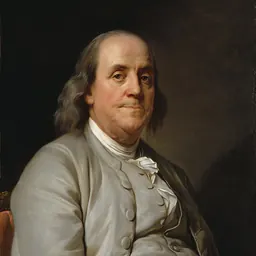
Cutler was friends with Benjamin Franklin, and kept detailed notes during the Constitutional Convention about his visits to Franklin's Philadelphia, Pennsylvania residence and the wonders Franklin kept there. Cutler was elected a Fellow of the American Academy of Arts and Sciences in 1781. Besides being proficient in the theology, law and medicine of his day, he conducted painstaking astronomical and meteorological investigations and was one of the first Americans to conduct significant botanical research. He is considered a founder of Ohio University and the National Historic Landmark Cutler Hall on that campus is named in his honor. In 1785, Cutler was elected a member of the American Philosophical Society. He received the degree of Doctor of Laws from Yale University in 1789.
From 1801 to 1805, Cutler was a Federalist representative of Massachusetts in the U.S. Congress.
Cutler died in 1823 at Hamilton, Massachusetts. Three of his descendants were members of the U.S. Congress-and one vice president: William P. Cutler [1812-1889] son of Ephraim Cutler Rufus Dawes [1838-1899] father of Vice President Charles Gates Dawes and Beman Gates Dawes; he was the son of Mrs. Sarah (Cutler) Dawes daughter of Ephraim Cutler Beman Gates Dawes [1870-1953] son of Congressman Rufus Dawes
Don’t just read it —
keep it.
Full-length biographies made to live with: read them, listen on the way to work, watch them tonight.
- E-book
- Audio
- Video
Instant download · yours to keep · every purchase keeps this site free
Important facts
People in Manasseh Cutler's life
Named in this biography and alive at the same time




Related people
Same field, nearest in time



Contemporaries
People whose lives overlapped Manasseh Cutler's




Frequently asked questions
Who was Manasseh Cutler?
American clergyman, politician, botanist and collector (1742-1823)
When was Manasseh Cutler born?
Manasseh Cutler was born on 13 May 1742 in Killingly.
When did Manasseh Cutler die?
Manasseh Cutler died on 28 July 1823 in Hamilton.
What was Manasseh Cutler's occupation?
Manasseh Cutler was a politician, christian minister, clergyman, botanist and botanical collector.
What nationality was Manasseh Cutler?
Manasseh Cutler was American.
Sources & further reading
Cite this page
APA: Biography.guide. (2026). Manasseh Cutler. https://biography.guide/manasseh-cutler/
MLA: "Manasseh Cutler." Biography.guide, https://biography.guide/manasseh-cutler/.
Chicago: "Manasseh Cutler." Biography.guide. https://biography.guide/manasseh-cutler/.
Data last updated: 2026-09-20 · Spot an error? Report a correction.
Page generated 2026-09-27 05:20 UTC