
About Mamadou Lamine Dramé
Lived 1840 – 1887 (aged 46–47). Mamadou Lamine Dramé was a French resistance fighter.
al-Hajj Mahmadu Lamine Drame, also known as Ma Lamine Demba Dibassi, (died 9 December 1887) was a nineteenth-century Tijani marabout who led a series of rebellions against the French colonial government in what is now Senegal.
Early life, education, and hajj
Mahmadu Lamine Drame was born between 1835 and 1840 at Goundiourou, near Kayes in what is now Mali. Educated in the Qur'an first by his father, a cleric, Lamine also studied at Tabajang in Casamance and Bunumbu in Kantora before later studying under Fodé-Mohammed-Saloum at Bakel. As a youth he participated in a jihad against the Tenda, but was captured, held for several years, and whipped. In 1885 Tall's son Madani freed him. In response, the French seized his wives, children, and belongings in Goundiourou. Mahmadu Lamine's son Souaiybou, left behind to continue the fight in the Senegal River valley, where he was besieged for five months in the tata of Gori from December 1887 to March 1888 by Ahmadu Tall. When the fortress fell he fled, but the Toucouleurs eventually caught up to Souaiybou at Gouthioube and executed him. The French would later claim credit for killing the young man.
Meanwhile, Mahmadu Lamine re-established himself at Diana, in what is now the Tambacounda region. Quickly reorganizing his state, he re-invaded Bundu, killing Omar Penda on July 16, 1886. In December 1886, two French columns led by Lt. Col. Joseph Galliéni and battalion chief Vallière marched on the town. Although it was fortified by two tatas, Lamine and his troops abandoned it without a fight. On December 26 the French troops burned the town to the ground to punish the inhabitants.
Following this defeat, Lamine regrouped at Toubakouta on the border between Wuli and Sandougou, launching an attack against the former in July 1887. Galliéni seized Toubakouta on 8 December 1887. Lamine again escaped, but was tracked down and captured by the forces of Musa Molo, king of Fuladu, a key French ally. Wounded in the fight, he died on the way back to Toubakouta.
Don’t just read it —
keep it.
Full-length biographies made to live with: read them, listen on the way to work, watch them tonight.
- E-book
- Audio
- Video
Instant download · yours to keep · every purchase keeps this site free
Important facts
People in Mamadou Lamine Dramé's life
Named in this biography and alive at the same time
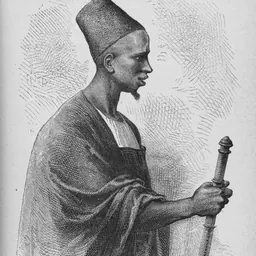
Related people
Same field, nearest in time
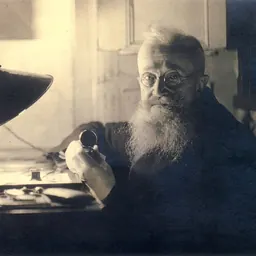
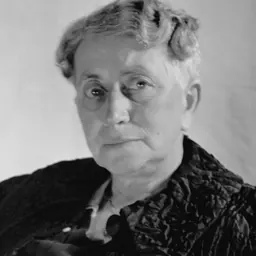
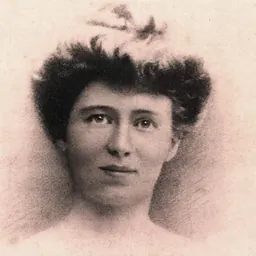
Contemporaries
People whose lives overlapped Mamadou Lamine Dramé's


Frequently asked questions
Who was Mamadou Lamine Dramé?
19th-century Malian religious leader
When was Mamadou Lamine Dramé born?
Mamadou Lamine Dramé was born in 1840.
When did Mamadou Lamine Dramé die?
Mamadou Lamine Dramé died in 1887.
What was Mamadou Lamine Dramé's occupation?
Mamadou Lamine Dramé was a resistance fighter.
What nationality was Mamadou Lamine Dramé?
Mamadou Lamine Dramé was French.
Sources & further reading
· Wikipedia: Mamadou Lamine Dramé
Cite this page
APA: Biography.guide. (2026). Mamadou Lamine Dramé. https://biography.guide/mamadou-lamine-drame/
MLA: "Mamadou Lamine Dramé." Biography.guide, https://biography.guide/mamadou-lamine-drame/.
Chicago: "Mamadou Lamine Dramé." Biography.guide. https://biography.guide/mamadou-lamine-drame/.
Data last updated: 2026-09-20 · Spot an error? Report a correction.
Page generated 2026-09-27 05:19 UTC