
Malcolm St. Clair
Hollywood film director, writer, producer and actor
About Malcolm St. Clair
Lived 1897 – 1952 (aged 55). Malcolm St. Clair was an American film director, actor, screenwriter, film actor, film producer and director.
Malcolm St. Clair (May 17, 1897 – June 1, 1952) was a Hollywood film director, writer, producer and actor.
St. Clair's film career spanned the silent and sound era during the Hollywood Golden Age. His work is characterized by a “dynamic visual style” evident in all the genres he treated.
The zenith of St. Clair's filmmaking occurred during the silent film era, demonstrating his flexibility in wielding the medium as a director of comedies. His films included slapstick for Sennett, outrageous gag routines with Keaton and sophisticated comic-romances for Paramount.
Most of St. Clair's silent films are lost or have limited access in archives.
Career Mack Sennett and Triangle studios: 1915-1921
Malcolm St. Clair worked for a comedy movie producer Mack Sennett and Triangle-Keystone studio for five years “a period in which he established most of his basic film vocabulary he was to use throughout his entire career.”
At age 17, St. Clair was hired by the Los Angeles Express to draw sports caricatures. A former associate at the Express, Lige Conley, was performing as a Keystone Kop for Mack Sennett, and introduced St. Clair to actor Owen Moore who co-starred with Mabel Normand. Moore convinced producer Sennett that St. Clair, whose only demonstrable skill was drawing, would excel as a “gag” writer for the studio.
Sennett, on this specious recommendation, engaged St. Clair, and was quickly disabused: the teen—“thin and spindly”—St. Clair was provided a bit part as a Keystone Kop. Thus began his acting apprenticeship, performing often dangerous stunt work in the summer of 1915 during the filming of My Valet (1915), earning $3 per day. His fellow comedians included veteran actors Charlie Chaplin, Eddie Cline and Al St. John. St. Clair left the Keystone Kops in early 1916 under the auspices of Mabel Normand, joining the company of players who performed comic roles at Triangle studios. St. Clair appeared in 13 of these Sennett films, nine of which he was credited.
His first credited film was Dollars and Sense (1916), in which he was cast as “the Englishman.” His final role at Triangle was as “The Crown Prince" in Yankee Doodle in Berlin (1919) and its associated release The Mack Sennett Bathing Beauties in Why Beaches Are Popular(1919), in which represents a post-World War I comic “Teutonic heavy.” Between 1919 and 1921 St. Clair graduated to directing and made about two dozen 2-reel comedies for Sennett, inventing some of the characteristic gag routines.
Keaton-St. Clair collaborations: 1921-1922 Near the end of his employment by Sennett, St. Clair co-directed two pictures with comic actor and filmmaker Buster Keaton: The Goat (1921) and The Blacksmith (1922). Keaton's approach to cinematic comedy integrated the “gag” scenes with the thematic elements of the story. St. Clair adopted Keaton's methods in his future films: “the humor in his work stems from well-constructed gags which are connected to each other and/or to the central plot line, a comic style refined while working with Buster Keaton.”
Warner Bros. 1924-1925
The 25-year-old Mal St. Clair directed The Telephone Girl in a flurry of activity in late 1923 and early 1924. St. Clair signed in December 1923 with FBO to direct the series to begin filming in February 1924. Warner Bros. studios, which had been impressed with his Fighting Blood series for FBO, enlisted St. Clair to make his first feature film, George Washington, Jr., which he shot in the month of January 1924, then returned to FBO to complete his contract for The Telephone Girl.
Biographer Ruth Anne Dwyer notes that St. Clair's love of boxing is “reflected in the remarkable number of films he made about the sport: seventeen.”
Photographer Lee Garmes acted as cameraman on both the Fighting Blood and The Telephone Girl series and later followed St. Clair to Warner Bros. and then Paramount Pictures where he would win Academy Awards for his cinematography.
After completing a Rin Tin Tin feature Find Your Man and the crime drama On Thin Ice, both 1924, Warner Bros. terminated St. Clair despite the box office successes of the pictures.
Columbia pictures After his dismissal from the “budget conscious” Warner Bros. studios, St. Clair was engaged by Columbia Pictures - at that time considered a “Poverty Row” studio - to direct After Business Hours (1925). A “society drama,” this lost film was well received by reviewers. After Business Hours first appeared in a 71-minute version, the picture was re-released after editing to 56 minutes. The shorter version was profitable, and its “artistic and financial success” garnered the attention of Paramount Picture executives.
St. Clair was noted for providing a relaxed and supportive production unit, which contributed to his popularity among actors and technicians. A measure of “clowning” and “high jinks” as well as intramural baseball games “stimulated the cheerful atmosphere necessary to the comic mood of his films.”
Paramount Pictures: 1926-1929
St. Clair's 1925 After Business Hours, filmed for Columbia Pictures was both a financial and critical success. In 1925 Paramount executives placed the 28-year-old filmmaker under contract.
St. Clair's tenure at Paramount would be “the most important phase of his career.” Film historian Ruth Anne Dwyer observes:
St. Clair and Louise Brooks contretemps St. Clair directed a number of screen stars of the silent era while under contract to Paramount among them Pola Negri, Florence Vidor, Esther Ralston, Tom Moore, Adolphe Menjou, Clara Bow and Louise Brooks. In a 1989 interview with biographer Barry Paris, Brooks denounced St. Clair, who had directed her in three Paramount feature films, alleged that he was an incompetent and a drunkard. Ruth Anne Dwyer, in her research for a 1996 biography on St. Clair, could find no corroboration for Brooks’ claims, concluding that her “unpleasant assessment of St. Clair's directing technique [was] highly inaccurate.” Dwyer adds that her own account “should correct any misconceptions caused by Brooks’ assertions.”
Despite professional friction, the director and the actress maintained a friendly relationship. In John Kobal's book of interviews, People Will Talk, Brooks described St. Clair as "a charming man, a lovely man." Around the time of the filming of The Show Off, St. Clair drew two caricatures of Brooks, both of which were published in magazines and newspapers.
Transition to sound St. Clair struggled to adapt to sound technology with the establishment of the new technology in 1930 in the United States. St. Clair's performance as a director declined, suffering from the increased censorship, and his difficulty adapting to a less mobile camera and studio editing of his work. He directed an assortment of comedies and dramas, including the Jones Family series of domestic comedies and a Milton Berle feature. He also accepted freelance assignments, including two Lum and Abner features. Mal St. Clair is perhaps best known in his late career as the director of four Laurel and Hardy comedies, released by Fox between June 1943 and May 1945.
Fox closed its B unit in December 1944,
Malcolm St. Clair died on June 1, 1952, at age 55.
Camera technique and style St. Clair was noted for using an array of “signature” camera shots as cinematic devices with which to tell a story, among these the “back shot” and “hand and foot shot.” In addition, highly compressed sequences of facial close-ups in reaction to one another or an event are widely identified as characteristic of St. Clair's story-telling method.
”Back shot” device A camera shot notable in St. Clair's oeuvre, this cinematic technique presents an actor engaged in some action, but facing away from the audience or perhaps another character in the frame and, as such, concealing the subject's true behavior or condition. The subject is then suddenly revealed, disabusing the audience of their momentary misapprehension. Film historian Ruth Anne Dwyer explains that the function of these shots serve to “fool” the observer and was “a recognizable St. Clair ‘signature.’”
Dwyer offers as an example from Canary Murder Case (1929) in which ‘Canary’ Odell (Louise Brooks) is viewed through a keyhole, seated with her back to the camera, a lighted cigarette visible in her hand: evidently alive, she has actually just been murdered.
”Hand and Foot” shots The purpose of these “hand and foot” shots is to reveal the emotional state of a character, as well as to advance the narrative.
Close-ups of hands or feet may reveal the social and economic status of the subject in a St. Clair film: the bejeweled hands of a woman clutches a packet of letters, opens one briefly, then discards them all into a waste basket (Are Parents People? (1925)). A woman's feet clad in elegant evening slippers are shown pacing up and down, then stamping violently: the camera cuts to a trembling chandelier on the ceiling of the room below in (The Grand Duchess and the Waiter (1926))
Dwyer observes that this “hand and foot” device was widely used by St. Clair's contemporaries, among them Ernst Lubitsch and Alfred Hitchcock, serving as a means to paint “a psychological portrait of their owner.” Dwyer adds that “St. Clair had been using this technique since 1920 and it is possible that other filmmakers may have borrowed it from St. Clair.”
Rapidly spaced close-ups St. Clair began using a technique of “close-ups in close succession,” where actor's expressive faces appear to communicate with one another, providing insights into their relationship. A notable application from Gentlemen Prefer Blondes (1928) presents “a rapidly spaced exchange of glances between the heroines [Ruth Taylor and Alice White], each of the shots reflecting a change of mood or expression.”
St. Clair used this device successfully in his boxing-themed films, including Knockout Reilly (1927).
Silent films
1919
Rip & Stitch Tailors - Triangle-Keystone The Little Widow - Triangle-Keystone No Mother to Guide Him - Triangle-Keystone
1920 He Loved Like He Lied - Rainbow/ Universal Young Man's Fancy - Triangle-Keystone A Kitchen Cinderella - Triangle-Keystone Welcome Home - Reelcraft
1921 Wedding Bells Out of Tune - Triangle-Sennett Sweetheart Days - Triangle-Sennett The Goat - Buster Keaton Productions The Night Before - Fox Film Call a Cop - Triangle-Keystone Bright Eyes - Triangle-Keystone
1922 The Blacksmith - Comique Film Corporation/First National Pictures| Rice and Old Shoes - /Robertson-Cole Corp. Their First Vacation - Robertson-Cole Entertaining the Boss - Robertson-Cole Christmas - Robertson-Cole Keep ‘em Home - Robertson-Cole 1923 Fighting Blood - FBO 1924 George Washington, Jr. - Warner Bros. The Telephone Girl - FBO Find Your Man - Warner Bros. The Lighthouse by the Sea - Warner Bros. 1925 On Thin Ice - Warner Bros. After Business Hours - Columbia Pictures Are Parents People? - Famous Players-Lasky The Trouble with Wives - Famous Players-Lasky A Woman of the World - Famous Players-Lasky 1926 The Grand Duchess and the Waiter - Paramount A Social Celebrity - Paramount Good and Naughty - Paramount The Show-Off - Paramount The Popular Sin - Paramount 1927 Knockout Reilly - Paramount Breakfast at Sunrise - Paramount 1928 Gentlemen Prefer Blondes - Paramount Sporting Goods - Paramount Beau Broadway - Metro-Goldwyn-Meyer The Fleet's In - Paramount 1929 The Canary Murder Case - Paramount Welcome Danger - RKO Pictures Side Street - RKO
Sound films
1929 Night Parade - RKO 1930 Montana Moon - Metro-Goldwyn-Meyer Dangerous Nan McGrew - Paramount Remote Control - Metro-Goldwyn-Meyer 1931 The Boudoir Diplomat - Universal 1933 Olsen's Night Out - Fox Film Goldie Gets Along - RKO Time Out for Romance - Metro-Goldwyn-Meyer 1936 Crack-Up - 20th Century Fox 1937 Dangerously Yours - Metro-Goldwyn-Meyer She Had to Eat - 20th Century Fox Meet the Missus - Republic Pictures Born Reckless - 20th Century Fox 1938 A Trip to Paris - 20th Century Fox Safety in Numbers - 20th Century Fox Down on the Farm - 20th Century Fox Everybody's Baby - 20th Century Fox 1939 The Jones Family in Hollywood - 20th Century Fox Quick Millions - 20th Century Fox Hollywood Cavalcade - Paramount 1940 Young as You Feel - 20th Century Fox 1942 The Bashful Bachelor - RKO The Man in the Trunk - 20th Century Fox Over My Dead Body - 20th Century Fox 1943 Two Weeks to Live - RKO Jitterbugs - 20th Century Fox The Dancing Masters - 20th Century Fox 1944 Swing Out the Blues - Columbia Pictures The Big Noise - 20th Century Fox 1945 The Bullfighters - 20th Century Fox 1948 Arthur Takes Over - 20th Century Fox Fighting Back - 20th Century Fox
Don’t just read it —
keep it.
Full-length biographies made to live with: read them, listen on the way to work, watch them tonight.
- E-book
- Audio
- Video
Instant download · yours to keep · every purchase keeps this site free
Important facts
People in Malcolm St. Clair's life
Named in this biography and alive at the same time
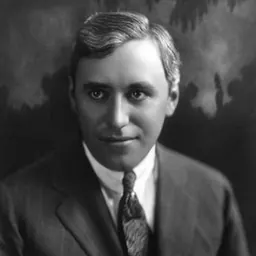
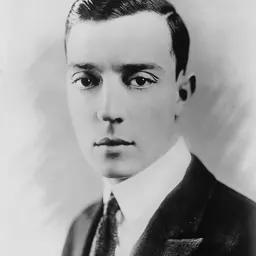


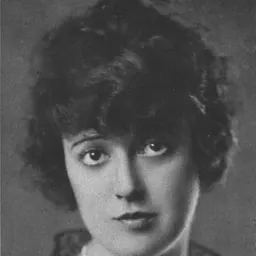

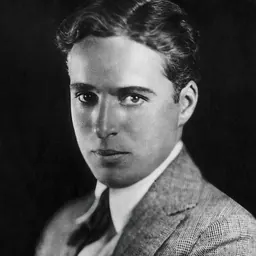
Related people
Same field, nearest in time



Contemporaries
People whose lives overlapped Malcolm St. Clair's


Frequently asked questions
Who was Malcolm St. Clair?
Hollywood film director, writer, producer and actor (1897-1952)
When was Malcolm St. Clair born?
Malcolm St. Clair was born on 17 May 1897 in Los Angeles.
When did Malcolm St. Clair die?
Malcolm St. Clair died on 1 June 1952 in Pasadena.
What was Malcolm St. Clair's occupation?
Malcolm St. Clair was a film director, actor, screenwriter, film actor, film producer and director.
What nationality was Malcolm St. Clair?
Malcolm St. Clair was American.
Sources & further reading
· Wikipedia: Malcolm St. Clair
· DBpedia: Malcolm St. Clair (filmmaker)
Cite this page
APA: Biography.guide. (2026). Malcolm St. Clair. https://biography.guide/malcolm-st-clair/
MLA: "Malcolm St. Clair." Biography.guide, https://biography.guide/malcolm-st-clair/.
Chicago: "Malcolm St. Clair." Biography.guide. https://biography.guide/malcolm-st-clair/.
Data last updated: 2026-09-20 · Spot an error? Report a correction.
Page generated 2026-09-27 05:22 UTC