
About Malcolm Deas
Lived 1941 – 2023 (aged 82). Malcolm Deas was a British and Colombian historian, university teacher and lector.
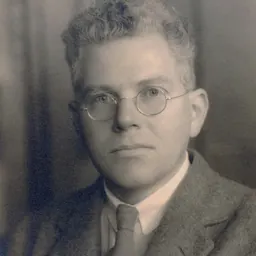
Malcolm Douglas Deas, OBE (24 April 1941 – 29 July 2023) was an English historian specialising in the study of Latin America in general and Colombia in particular. During the 1960s, he co-founded the Latin American Centre at St. Antony's College with Sir Raymond Carr and served as its director on numerous occasions. His tenure at Oxford University spanned nearly five decades until his retirement in 2008. During this time, he played a key role in expanding the Latin American collections at the Bodleian Library and taught distinguished Colombian historians, including Margarita Garrido, Jorge Orlando Melo, Eduardo Posada Carbó and Marco Palacios.
Biography Malcolm Deas was born on 24 April 1941 in Charminster, Dorset, the son of Walter Malcolm Deas and Anne Findlay Pigé-Leschellas. His father died in 1946 whilst serving with the Royal Tank Regiment in Germany. He studied modern history at New College, Oxford, and went on to become a Fellow of All Souls College (1962 - 1966) and St Antony's College (1962 - 1966). He taught at Oxford University for nearly five decades until his retirement in 2008, as emeritus professor, while acting as one of the key figures at the Latin American Centre in Oxford, founded by Sir Raymond Carr in the 1960s.
It was in late 1963 when he embarked on his initial journeys to Colombia to delve into the early history of the Republic. During this first explorations, he collaborated with emerging historians like Luis Ospina Vásquez, Jaime Jaramillo Uribe, Germán Colmenares, and Jorge Orlando Melo. Since then Deas visited Colombia numerous times, residing there intermittently before acquiring Colombian nationality in 2008.
Deas was regarded as a pioneer of Colombian historiography, not just in the Global North but in Colombia itself. As a passionate admirer of stories and meticulous prose, Deas dedicated his career to constructing intricate and comprehensive interpretations of various facets of Colombian history. These included: the formation of institutions, the phenomenon of 'caciquismo,' the democratic model of the country, its tax history, the civil wars, the role of coffee in its economy, security policies, the interplay between local and national politics, and the origins and interpretations of violence, among numerous other topics. Deas's focus lay in developing historical analyses that transcended fatalism, challenging the prevailing notion of a 'violent culture' among Colombians and rejecting the belief that there was nothing more to be done to address these issues and arguing for solutions grounded in nuanced understandings His extensive publications on this topics appeared in books, academic journals and widely read publications such as New Statesman, The Listener, Spectator, London Review of Books, The Times, El Tiempo, and El Espectador.
Moreover, Deas was interested in Colombian literature and visual culture. According to the philosopher Sergio Jaramillo Caro, "Cómo se evapora un ejército" ["How an army evaporates"], by Ángel Cuervo, was one of his favorite books. As per the historian and politician Gustavo Bell Lemus, "although political history was the dominant theme of his academic production, he was also concerned with painting and photography as historical testimonies of the traditions of our people." For that, in 2010, he curated the exhibition "History of Colombia through Photography, 1842-2010" [Historia de Colombia a través de la fotografía, 1842 - 2010] at the Banco de la República, and he was also a regular visitor to second-hand bookstores in Bogotá, seeking old grammar texts written by grammarians such as Rufino José. Cuervo, and politicians like Miguel Antonio Caro, Santiago Pérez, Rafael Uribe Uribe, and José Manuel Marroquín.
In the context of the confrontation between the Colombian state and drug trafficking, particularly with Pablo Escobar Gaviria, between 1990 and 1994, Deas served as an advisor for the design of policies to reduce violence and strengthen security and defense during the administration of Colombian President César Gaviria Trujillo. In 2008, he received an honorary doctorate from the University of the Andes in Bogotá, and Colombian citizenship. On that occasion, historian Gustavo Bell Lamus, then vice president of Colombia, referred to him as "a Colombian by knowledge, passion, and conviction.""
Malcolm Deas died on 29 July 2023, at the age of 82.
Don’t just read it —
keep it.
Full-length biographies made to live with: read them, listen on the way to work, watch them tonight.
- E-book
- Audio
- Video
Instant download · yours to keep · every purchase keeps this site free
Important facts
People in Malcolm Deas's life
Named in this biography and alive at the same time


Related people
Same field, nearest in time

Contemporaries
People whose lives overlapped Malcolm Deas's

Frequently asked questions
Who was Malcolm Deas?
English historian
When was Malcolm Deas born?
Malcolm Deas was born on 24 April 1941 in Charminster.
When did Malcolm Deas die?
Malcolm Deas died on 29 July 2023.
What was Malcolm Deas's occupation?
Malcolm Deas was a historian, university teacher and lector.
What nationality was Malcolm Deas?
Malcolm Deas was British and Colombian.
Sources & further reading
Cite this page
APA: Biography.guide. (2026). Malcolm Deas. https://biography.guide/malcolm-deas/
MLA: "Malcolm Deas." Biography.guide, https://biography.guide/malcolm-deas/.
Chicago: "Malcolm Deas." Biography.guide. https://biography.guide/malcolm-deas/.
Data last updated: 2026-09-20 · Spot an error? Report a correction.
Page generated 2026-09-27 05:11 UTC