
About Maksim Saburov
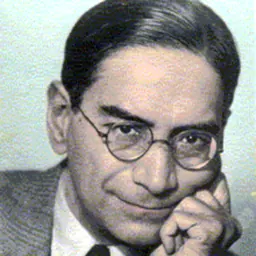
Lived 1900 – 1977 (aged 77). Maksim Saburov was a Russian economist, politician and communist.
Maksim Zakharovich Saburov (; 19 February 1900 – 24 March 1977) was a Soviet engineer, economist and politician, three-time Chairman of Gosplan and later First Deputy Premier of the Soviet Union. He was involved in the Anti-Party Group's attempt to displace Nikita Khrushchev in 1957.
Early life and career
Saburov was born in 1900 in the town of Druzhkivka in the Yekaterinoslav Governorate of the Russian Empire (present-day Ukraine) in a working-class family of Russian ethnicity. He joined the Communist Party in 1920, serving in a detachment with the aim of suppressing resistance to the Communist regime. He attended the Sverdlov Communist University between 1923 and 1926, then studied to become an engineer at the Bauman Moscow State Technical University in Moscow.
Between 1921 and 1926, Saburov was Secretary of the Bakhmut Komsomol Committee, and then that of the Kostiantynivka raion. Between 1926 and 1928, Saburov was a propagandist working in the Donets region. After five years of studying at the Bauman Institute, Saburov became head of the technological bureau of a factory in Moscow in 1933. Subsequently, he was head of the instrumental division of the Stalin Novokramatorsk Machine Plant until 1937.
Saburov advanced rapidly during the Great Purge, ) and mobilization efforts. He had a brief period in power here until 1942, when he was superseded by his predecessor Nikolai Voznesensky. After being demoted, Saburov moved between various bureaucratic posts in the supreme organs of Soviet government, first becoming a Deputy Chairman of Council of People's Commissars, a position he had also held during his Gosplan chairmanship, and then once more First Deputy Chairman of Gosplan in 1944. He was relegated to a Deputy Chairman of Gosplan in 1946. In 1947 he was made a Deputy Chairman of Council of Ministers.
In 1949 Saburov was made Chairman of Gosplan once again. In this function he helped to formulate and then presided over the fifth five-year plan. Saburov was partly responsible for the reconstruction of the Soviet Union after the Second World War: agricultural production in 1950 was barely above the 1940 level. Milk production was lower by 100,000 tons; meat production was only 12,000 tons higher. The Plan, which Saburov co-ordinated as the Chairman of Gosplan, succeeded in increasing coal production by 12 million tons, oil production by over 30 million tons, and electricity production by nearly 80 billion kW.
Saburov was temporarily displaced from his position as chairman in 1953, shortly after the death of Stalin, by Grigory Kosyachenko for a period of three months; however, many sources, such as Utechin, leave out this brief interlude in favour of Saburov having two terms. He was responsible for helping to plan the Sixth Five-Year Plan, which would last from 1956 to 1961. However, in 1956 - after he had moved from being Chairman of Gosplan - Saburov, with the other planners, was criticized for having been unrealistic in planning.
Saburov was removed as chairman in 1955, becoming First Deputy Chairman of the Council of Ministers, and so the Deputy Premier of the Soviet Union. He was also made Chairman of the State Economic Commission for Short-Term Planning until 1956, when he was criticized for the Sixth Five-Year Plan, which was unprecedently sent back to the planners for revision. Saburov was also responsible for using hard figures rather than percentages in the Five-Year Plan for the first time, giving the plan more meaning for experts.
Saburov, however, belonged more to the faction headed by Georgy Malenkov
Anti-Party Group
In 1957, a failed attempt to depose Khrushchev was run by Malenkov, Kaganovich and Molotov, known as the Anti-Party Group. Saburov, being a friend of Malenkov, was implicated in the coup attempt and removed from his position as First Deputy Premier. Malenkov, in this period was condemned as "loathsome", thus also bringing Saburov into the purge.
Saburov recanted, saying that "It is well known, comrades, that I made a mistake in June 1957 by displaying political instability in the struggle of the Central Committee of the Soviet CP against the anti-Party group." Saburov worked as Deputy Chairman of Comecon for a short period of time afterwards, before moving to a factory in Syzran, which he managed until his retirement in 1966.
Decorations and awards Three Orders of Lenin Order of the Red Banner of Labour
Notes and references
Don’t just read it —
keep it.
Full-length biographies made to live with: read them, listen on the way to work, watch them tonight.
- E-book
- Audio
- Video
Instant download · yours to keep · every purchase keeps this site free
Important facts
People in Maksim Saburov's life
Named in this biography and alive at the same time
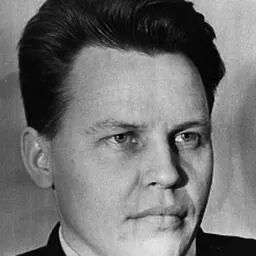
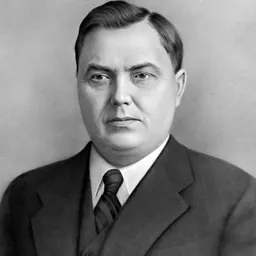

Related people
Same field, nearest in time



Contemporaries
People whose lives overlapped Maksim Saburov's




Frequently asked questions
Who was Maksim Saburov?
First Deputy Premier of the Soviet Union (1900-1977)
When was Maksim Saburov born?
Maksim Saburov was born on 7 February 1900 in Druzhkivka.
When did Maksim Saburov die?
Maksim Saburov died on 24 March 1977 in Moscow.
What was Maksim Saburov's occupation?
Maksim Saburov was an economist, politician and communist.
What nationality was Maksim Saburov?
Maksim Saburov was Russian.
Sources & further reading
Cite this page
APA: Biography.guide. (2026). Maksim Saburov. https://biography.guide/maksim-saburov/
MLA: "Maksim Saburov." Biography.guide, https://biography.guide/maksim-saburov/.
Chicago: "Maksim Saburov." Biography.guide. https://biography.guide/maksim-saburov/.
Data last updated: 2026-09-27 · Spot an error? Report a correction.
Page generated 2026-09-27 05:16 UTC