
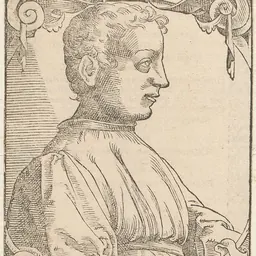
About Mahmud Begada
Lived 1458 – 1511 (aged 52–53). Mahmud Begada was a monarch.
Early life On the death of Qutb-ud-din Ahmad Shah II, the nobles raised to the throne his uncle Daud Khan, son of Ahmad Shah I. Daud appointed "low-born men", Hindus and recent converts to Islam, to high offices and committed improper acts, hence within a short period of seven or twenty-seven days, he was deposed. In 1459 his half-brother Fateh Khan, the son of Muhammad Shah II by Bibi Mughali, a daughter of Jam Nizamuddin II of Samma dynasty ruling from Thatta in Sindh; was seated on the throne at the age of little more than thirteen with the title of Mahmud Shah I.
The close connection of Fateh Khan with the saintly Shah Alam is frequently mentioned by with Gujarat chroniclers. According to the Mirat-i-Sikandari of his two daughters Jam Nizamuddin intended Bibi Mughali the more beautiful for the Saint and Bibi Mirghi the less comely for the Sultan. By bribing the Jam's envoys the king secured the prettier sister. The enraged Saint was consoled by his father who said: My son, to you will come both the cow and the calf. After Muhammad Shah II's death, fear of Qutb-ud-din Ahmad Shah II's designs against the young Fateh Khan forced Bibi Mughali to seek safety with her sister, and on her sister's death she married the Saint. Qutb-ud-din made several attempts to seize Fateh Khan. But by the power of the Saint when Qutb-ud-din attempted to seize him, Fateh Khan in body as well as in dress became a girl. According to one account Qutb-ud-din met his death in an attempt to carry off Fateh Khan. As he rode a mad camel, the king struck at the phantom, and his sword cleaving the air gashed his knee. This was the Saint's sword, which against his will, for he knew it would be the death of the king, Qutb-ud-din forced Shah Alam to bind round him before the battle of Kapadvanj against Mahmud Khalji of Malwa Sultanate.
Reign Early years
On Sunday 18 June 1459, Fateh Khan ascended the throne and assumed the title of Mahmud Shah. The coronation was marked by royal festivities, with titles, robes of honour, Arabian horses, embroidered belts and swords distributed among the nobles. According to Nizamuddin Ahmad, one crore tankas were also given out in charity.
Shortly after certain of the nobles including Saiful Mulk, Kabir-ud-din Sultani surnamed Akd-ul-Mulk, Burhan-ul-Mulk and Hisam-ul-Mulk represented to the Sultan that the minister Shaaban Imad-ul-Mulk contemplated treason and wished to set his son on the throne. Having seized and imprisoned the minister in the Bhadra Fort and set five hundred of their trusted retainers as guards over him, the rebels retired to their homes. At nightfall Abdullah, the chief of the elephant stables, going to the young Sultan represented to him that the nobles who had imprisoned Imad-ul-Mulk were the real traitors and had determined to place Habib Khan, an uncle of the Sultan's, on the throne. The Sultan consulting his mother and some of his faithful friends ordered Abdullah at daybreak to equip all his elephants in full armour and draw them up in the square before the Bhadra. He then seated himself on the throne and in a voice of feigned anger ordered one of the courtiers to bring out Shaaban Imad-ul-Mulk, that he might wreak his vengeance upon him. As these orders were not obeyed the Sultan rose, and walking up the Bhadra called: "Bring out Shaaban!" The guards brought forth Imad-ul-Mulk, and the Sultan ordered his fetters to be broken. Some of the nobles' retainers made their submission to the Sultan, others fled and hid themselves. In the morning, hearing what had happened, the refractory nobles marched against the Sultan. Many advised the Sultan to cross the Sabarmati River by the postern gate and retire from the city, and, after collecting an army, to march against the nobles. Giving no ear to these counsels the young Sultan ordered Abdullah to charge the advancing nobles with his six hundred elephants. The charge dispersed the malcontents who fled and either hid themselves in the city or betook themselves to the country. Some were killed, some were trampled by the Sultan's orders under the elephants' feet, and one was pardoned.
Campaign of Barur
The principality of Barur, near the port of Daman, was a base for local piracy that disrupted maritime trade. Sultan Mahmud Begada sought to secure it to protect merchant shipping, block Portuguese advances, and assert political control. In 1464, Mahmud personally led the siege with large arms crossing the difficult terrain. After a prolonged stalemate marked by fierce resistance and repeated skirmishes, neither side could gain a decisive advantage. The garrison had taken refuge in the hill-fortress utilizing the difficult terrain. Sultan Mahmud then personally led a detachment of soldiers up the steep hills, catching the defenders completely by surprise. His spread panic among the troops, breaking their morale. The Hindu chief of Barur surrendered, sending his mother to present the fort keys. Treating the chief generously, Mahmud declined presents, granted him a khilat and golden belt, restored the fort, and imposed only an annual tribute. He avoided full annexation to prevent alliances among smaller Hindu rulers until major strongholds like Junagadh and Champaner were secured, then returned victorious to his capital.
Conquest of Junagadh
Mahmud Shah next turned his thoughts to the conquest of the mountain citadel, Uparkot, of Girnar hill near Junagadh in Sorath (now in Saurashtra region of Gujarat). In 1467, he attacked the fort of Junagadh, and receiving the submission of Ra Mandalika III, the Chudasama ruler, returned to his capital. In the following year, hearing that the Junagadh chief continued to visit his temple in state with a golden umbrella and other ensigns of royalty, Mahmud despatched an army to Junagadh, and the chief sent the umbrella to the king, accompanied by fitting presents. In 1469, Mahmud once more sent an army to ravage Sorath, with the intention of finally conquering both Junagadh and Girnar. While Mahmud was on the march the Ra Mandalika suddenly joined him, and asking why the Sultan was so bent on his destruction when he had committed no fault, agreed to do whatever Mahmud might command. The king replied there is no fault like infidelity, and ordered the Ra to embrace Islam. The chief, now thoroughly alarmed, fled by night and made his way into Girnar. In 1472–73, after a siege of nearly two years, forced by the failure of his stores, he quit the fort and handed the keys to the king, converted to Islam. Though the Ra's life was spared, Sorath from this date became a crown possession, and was governed by an officer appointed by the king and stationed at Junagadh.
Campaign of Sindh
In 1472, forty thousand Notqul-qawwas tribe rebelled against Mahmud's maternal grandfather Jam Nizamuddin of Sindh. The Notqul-qawwas were independent coastal area tribe who raided Gujarat's borders. Recognizing the threat to trade and regional stability, Mahmud Begada launched a swift punitive expedition across the desert frontier to suppress the rebellion. Mahmud marched with a large army, selecting 1,000 cavalry equipped with spare horses to cross the desert. Informed by the Gujarati army the rebels either fled or hid. When Mahmud arrived, he found their camps empty. His troops killed the remaining hidden, capturing the women and children. He plundered the camp, effectively ending the revolt. Although some officers urged annexation, Mahmud refused out of respect for his family ties with Sindh. He accepted gifts from Jam Nizamuddin and returned to Mustafabad.
Conquest of Dwarka In 1473, pirates from Bet Dwarka attacked the ship of Maulana Mahmud Samarqandi. They seized his wife and belongings, leaving him with his two small children. The Maulana travelled to Mahmud Begada's court and appealed for justice. Moved by his story, the Sultan promised to punish the pirates and arranged for the Maulana and his children to stay in Ahmedabad. On 14 May 1473, Sultan Mahmud marched with a large army against Dwarka. Raja Bhim, caught unprepared, abandoned the city and fled to Bet Dwarka. The Gujarati forces entered Dwarka without any opposition. They plundered it demolishing temples and idols and captured large amounts of treasure. Mahmud stayed four months, ordered a mosque built, and gathered ships to attack the island. He then moved to Amroh, opposite Bet Dwarka. After the naval fleet arrived he began the siege of Bet Dwarka. Raja Bhim's flotilla tried to prevent a landing, but after fierce fighting with arrows and muskets the Rajputs were driven back into the fort. The Gujarati forces launched a sudden assault. Raja Bhim fled by boat with a few followers. The remaining defenders were killed and their women and children put to death. Mahmud entered the fort and recovered the Maulana's wife along with other Muslim prisoners. He then ordered to capture of the fugitive raja. The temples and idols of Bet Dwarka were destroyed and a mosque was built. Malik Toghan Farhat-ul-Mulk was placed in charge of both Dwarka and Bet Dwarka. The Hindu kingdom was annexed to the Gujarat Sultanate, establishing Muslim rule in the region for the first time. Through this conquest the Okhamandal peninsula was also formally annexed. On 6 October 1473 Mahmud returned to Mustafabad with the spoils and the Maulana's family. In the meantime, Raja Bhim was also captured and brought in chains, was handed over to the Maulana. At the latter's insistence the raja was dragged through Ahmedabad and hewn to pieces. The remains of the raja were hung on the city gates.
Conquest of Champaner
In 1479, Mahmud Shah sent an army to ravage Champaner then held by Khichi Chauhan Rajputs which titled themselves as Raval. About this time, hearing that the neighbourhood was infested with robbers, he founded the city of Mehmudabad (now Mahemdavad) on the banks of the Vatrak river, about eighteen miles south of Ahmedabad. The Raval's son, who was entrusted to Saif-ul-Mulk, and converted to Islam, afterwards, in the reign of Muzaffar Shah , was ennobled by the title of Nizam-ul-Mulk. The central dome, the placement of balconies and carved entrance gates with fine stone jalis. Other Champaner structures attributed to the Begada period are the Kevada Masjid, Citadel Jahanpanah, Shahar ki Masjid, Mandvi the customs house, Nagina Masjid, Bava Man's Masjid, Khajuri Masjid, Ek Minar Masjid, and the Lila Gumbaz. Champaner-Pavagadh Archaeological Park is now UNESCO World Heritage Site.
Sack of Kuva
In 1486 Vaghoji Jhala of Jhalavad rebelled against the Sultanate. Mirza Khalil Khan, governor of Sorath, marched against him and was defeated near Saidpur on 21 March 1487. Sultan Mahmud Begada led expedition in person and laid siege to Kuva. Vaghoji resolved to defend the fort. When provisions ran short, Vaghoji came out in open to fight the Gujarati army. He ordered that if his banner fell the Ranis were to immolate themselves. During the fighting the standard-bearer, exhausted, set the banner down. Seeing this, the guards began to carry out their orders. On hearing the news, the Ranis threw themselves into a well and were drowned. Vaghoji returned, learned of their fate, and re-entered the fight. He was killed on 19 April 1487 with most of his officers and six of his sons. The Gujarati army sacked Kuva, which ceased to be the Jhala capital. The event, known as Kuva-no-Kehr (“the catastrophe of Kuva”), remains proverbial among the Jhalas for any great loss.
Sirohi affairs The Rajput state of Sirohi on Gujarat's northern border maintained friendly relations with the Sultans of Gujarat. Muzaffar Shah I and Ahmad Shah I used to pass through its territory unhindered during their respective campaigns. In 1487, merchants from Iraq and Khorasan brought about 400 horses and fabrics destined for the Gujarat government reportedly ordered by the Sultan. While resting at Abu in Sirohi, their goods were taken forcefully likely by local soldiers or the fortress officer. The merchants appealed to Mahmud calling him Khalifa. Sultan Mahmud sent letters demanding back all the goods. Being frightened, the Raja restored 370 horses, paid for the rest that had died, sought forgiveness, and sent tributes.
Battle of Ranpur
Ranpur was held by the Gohil chief Ranji II as a feudatory of the Gujarat Sultans. According to bardic account Ras Mala, Mahmud Begada's queen (a daughter of the Raja of Marwar) took offence after her sister, Ranaji's wife, refused to dine with her for fear of losing caste by eating with a woman married to a Muslim. The queen complained the issue to Sultan Mahmud. He tried to lure the chief and his wife come to Ahmedabad but failed. At the same time Ranji executed son of a Muslim woman who recited the Islamic call to prayer in Ranpur. The boy's mother appealed to the Sultan. Mahmud marched on Ranpur, sending his nephew Bhandari Khan to lead the army. Ranji checked them near Dhandhuka. He was driven back to the fort. The Gohil told his wives to kill themselves if his royal banner fell. In battle the standard-bearer briefly set the emblem down to drink, the Ranis mistook the signal and jumped into a well committing suicide. Ranji and Bhandari Khan were both killed, and the fort fell to the victorious Gujarati forces. Ranpur was annexed into Gujarat Sultanate. Afterwards, Ranaji's nephew Haluji Parmar converted to Islam and received Ranpur. He is the founder of the Ranpur Molesalams. A younger brother of the slain chief also converted, obtained villages around Botad, and established a branch of the Dholka Kasbatis.
Bahadur Khan Gilani's incursion Bahadur Khan Gilani, son of the Bahmani governor of Goa and rebelled after Mahmud Gawan's murder. He seized Dabhol and the Konkan, declaring independence. From 1491 he conducted piracy extending raids along the Gujarat coast. His officer Yaqut attacked and sacked Mahim with 12 ships and captured Gujarati vessels. In 1494 Mahmud ordered a joint campaign. A fleet of 300 ships under Admiral Safdar-ul-Mulk and a land army under Kiwam-ul-Mulk were dispatched. A gale wrecked the fleet off Mahim; most sailors were killed or captured, the admiral taken, and the ships seized. The land force halted at Agashi and Bassein upon learning of the disaster. Kiwam-ul-Mulk sent letters to Sultan Mahmud. Mahmud first sent letters demanding surrender which Gilani refused insultingly. He then asked the Bahmani ruler Mahmood Shah Bahmani II to take action against the incursion. Bahmani forces under Qasim Barid I defeated and killed Gilani near Kolhapur. His head was sent to the Bahmani court. All his possessions were seized and the captured ships and cargoes returned. Safdar-ul-Mulk was freed and sailed home with gifts from the Bahmani ruler as a gesture of goodwill.
Campaign of Khandesh and Daulatabad
The Farooqui dynasty of Khandesh acknowledged Gujarat's suzerainty and paid regular tribute. However, Adil Khan II of Khandesh proud of his conquests refused vassal status to Gujarat. He allied with Ahmadnagar and Berar, and stopped paying tribute to Mahmud Begada. In 1498, Sultan Mahmud marched on Khandesh. He intentioned to capture Daulatabad. Just as Mahmud was advancing on Khandesh, Malik Ashraf the governor of Daulatabad asked Mahmud Begada for help against Ahmad Nizam Shah's expansion. Adil Khan II, Ahmad Nizam Shah, and Fathullah Imad-ul-Mulk united against him, the Deccan allies withdrew. The Gujarati army advanced swiftly before they could reinforce Khandesh. Adil Khan II submitted, paid tribute, and Mahmud reasserted Gujarat’s suzerainty in 1500.
Khandesh war of succession
War with the Portuguese Cambay (now Khambhat) was an important port of the Gujarat Sultanate. It was an essential intermediary in east–west trade, between the Red Sea, Egypt and Malacca. Gujaratis were important middlemen bringing spices from the Maluku Islands as well as silk from China, and then selling them to the Mamluks and Arabs. The Portuguese had entered India and were strengthening their presence in Arabian Sea. Mahmud Begada allied with the Kozhikkodu Samutiri (anglicised to Zamorin of Calicut) to defeat the Portuguese. He then asked his trade partners, the Egyptian Mamluk Sultanate of Cairo, for help. In 1508, near Daman, on his way to Chaul, Mahmud heard of the victory gained in the Battle of Chaul over the Portuguese by the Gujarat squadron under Malik Ayyaz Sultani, in concert with the Egyptian fleet of the Mamluks. In 1509, the Battle of Diu, a naval battle was fought near Diu port between the Portuguese Empire and a joint fleet of the Gujarat Sultanate under Malik Ayyaz, the Mamluk Burji Sultanate of Egypt, the Zamorin of Calicut with support of the Turkish feet of Ottoman Empire, the Republic of Venice and the Republic of Ragusa (Dubrovnik). The Portuguese won the battle, and the event marks the start of European colonialism in Asia. Foreign relations
Delhi Sultanate Since the foundation of Gujarat Sultanate neither the Delhi sultans tried to reestablish its control over Gujarat, nor did the Sultan of Gujarat maintain any connection with Delhi. Sikandar Lodi's reign records the only instance diplomatic exchange. In June 1508, an embassy from Sikandar Lodi arrived at Muhammadabad–Champaner with a pair of rhinoceroses, thirty horses, and other precious commodities for Sultan Mahmud Begada as gift. In return, Mahmud bestowed a rich khilat upon the ambassador and sent parrots, herons, and Arabian horses as presents for Sikandar Lodi. According to Nizamuddin and Ferishta, these exchanges were made as tokens of friendship. the Delhi sultan sent valuable gifts to Sultan Mahmud, but no formal diplomatic relations were established.
Malwa Sultanate Relations between Gujarat and Malwa had always been hostile. After Mahmud Begada accessed the throne, Mahmud Khalji of Malwa halted aggression. In 1500, Mahmud Begada planned to invade Malwa after Nasir-ud-Din poisoned his father Ghiyath Shah. Nasiruddin sought peaceful coexistence. Mahmud decided to maintain friendly terms with Malwa.
Death and succession During the last days of Sultan Mahmud, Sayed Muhammad of Jaunpur, who claimed to be the Mahdi or Messiah, came from Jaunpur and lodged in Tajkhan Salar's mosque near the Jamalpur gate of Ahmedabad. His sermons drew crowds, and were so persuasive that he gained a large body of followers, who believed his eloquence to be due to hal or inspiration. Mahmud's ministers persuaded him not to see the Jaunpur preacher.
Upon the death of Sultan Mahmud, the nobles were divided over the succession. While some favoured the accession of his grandson, Bahadur Khan, arguing that Khalil Khan's religious disposition made him unsuitable for the throne, others maintained that since Sultan Mahmud had personally designated Khalil Khan as his successor during his lifetime and that his decision should therefore be respected. The latter position ultimately prevailed, and Khalil Khan ascended the throne as Muzaffar Shah II.
Administration
His firm policy of never ousting the landholder except for proved oppression or exaction was productive of such prosperity that the revenue increased two, three and in some cases tenfold. The roads were safe from freebooters and trade was secure. A rule forbidding soldiers to borrow money at interest is favourably noticed. A special officer was appointed to make advances to needy soldiers with the power to recover from their pay in fixed instalments. Mahmud also devoted much attention to the culture of fruit trees. In Mahmud's reign an instance is mentioned of the form of compensation. Some merchants bringing horses and other goods for sale from Ira q and Khurasan were plundered in Sirohi limits. The king caused them to give in writing the price of their horses and stuffs and paying them from his own treasury recovered the amount from the Raja of Sirohi.
Art and culture Mahmud Begada patronized of art and literature. He valued the works of contemporary scholars. He built many colleges and mosques for education. The architecture during his period is known as the Begarh style of architecture. Observing Islamic laws statues and sculptures were never patronized. No fragment of Muslim architecture in Gujarat during his period lasted till this day. Muhammad Kala, whose mother was Rani Rupamanjari. Both the Prince and his mother died before the Sultan, and the Rani's tomb is in the Rani no Haziro the Manek Chowk at Ahmedabad. Abu Bakr Khan, or Aba Khan/Apa Khan, the son of Rani Sipari or Sarani. He was caught trespassing in a noble's harem and was ordered by the Sultan to be poisoned. Rani Sipari's Rauza is situated near the Astodiya gate at Ahmedabad. Ahmad Khan Khudawand Khan attempted to place Ahmad on the throne in 1480. His complicity in the plot appears to have cost the Prince the throne, since he was eventually passed over for the succession. Khalil Khan born in 1475 was the youngest of all. His mother Rani Hirabai was the daughter of Naga Rana, a Rajput chief on the banks of the river Mahi. She died four days after the birth of the prince. Hansabai, Sultan Mahmud's step-mother took care of him. He succeeded his father as Muzaffar Shah II. A daughter, married Hasan Khan, a prince of Khandesh. Their son, Alam Khan, ascended the throne of Khandesh as Adil Khan III, married a daughter of Muzaffar Shah II, and their son, Miran Muhammad I, ascended the throne of Gujarat in 1537.
According to local tradition, Begada allegedly also had a daughter named Gindoli, who was abducted and later married by Rawal Jagmal (son of Rawal Mallinath). Their descendants are referred to as Mahecha Rathores, the oldest among all houses of Rathore clan.
Legacy His religious ardour, his love of justice, his bravery, and his wise measures entitle Mahmud to the highest place among the Gujarat kings.
in battle Mahmud is equal to Bhima; in benevolence he surpasses Karna; in sport he is like Narayana; in mercy he resembles Rama; in wisdom he is greater than Brihaspati; in beauty he excels Manmatha. In culture He was built tall and robust, with a beard that descended to his girdle and heavy moustaches that twisted and curled upwards. Some European travellers circulated popular tales about him. One of these tales said that he was given mild poisons from his childhood which had made him poisonous and immune to poisons and those became the source for the English satirist Samuel Butler's seventeenth-century lines: "The Prince of Cambay's daily food is asp and basilisk and toad". There are various other stories about his good appetite. According to Sikandar, his daily food weighted fifteen Bahluli seers. In addition, five seers of boiled rice were placed in two plates on each side of his couch so that he might take it during the night without the least trouble. According to Portuguese traveller Duarte Barbosa, Mahmud used to eat lot of food during the day and meat patties (Samosas) were kept at his bedside by his servants at night in case he felt hungry. At breakfast he used to take a cup of honey and one hundred and fifty bananas. These accounts are very exaggerated.
Don’t just read it —
keep it.
Full-length biographies made to live with: read them, listen on the way to work, watch them tonight.
- E-book
- Audio
- Video
Instant download · yours to keep · every purchase keeps this site free
Important facts
Family & relationships
People in Mahmud Begada's life
Named in this biography and alive at the same time




Related people
Same field, nearest in time

Contemporaries
People whose lives overlapped Mahmud Begada's

Frequently asked questions
Who was Mahmud Begada?
Sultan of Gujarat
When was Mahmud Begada born?
Mahmud Begada was born in 1458 in Ahmedabad.
When did Mahmud Begada die?
Mahmud Begada died in 1511 in Ahmedabad.
What was Mahmud Begada's occupation?
Mahmud Begada was a monarch.
What nationality was Mahmud Begada?
Mahmud Begada's recorded nationality: Gujarat Sultanate.
Sources & further reading
Cite this page
APA: Biography.guide. (2026). Mahmud Begada. https://biography.guide/mahmud-begada/
MLA: "Mahmud Begada." Biography.guide, https://biography.guide/mahmud-begada/.
Chicago: "Mahmud Begada." Biography.guide. https://biography.guide/mahmud-begada/.
Data last updated: 2026-09-20 · Spot an error? Report a correction.
Page generated 2026-09-27 05:01 UTC