
About Mahmoud Hashemi Shahroudi
Lived 1948 – 2018 (aged 70). Mahmoud Hashemi Shahroudi was an Iraqi and Iranian politician, judge and islamic jurist.
Early life Ayatollah Mahmoud Hashemi Shahroudi was born in Najaf, Iraq, to ethnic Persian parents. His father, Ali Hosseini Shahroudi was a scholar and teacher at the Najaf seminary and Ayatollah Mahmoud Hashemi Shahroudi completed elementary schooling at Najaf's Alaviye school before going to seminary. Ayatollah Khomeini and Muhammad Baqir al-Sadr
Works Selected works include:
Dars-nāma-ye Uṣūl al-Fiqh Kitāb al-Ḥajj al-Ṣirāṭ (Ajwibat al-Istiftāʾāt) Manshūr-e Siyāsat Mobāreze bā Mafāsed Ḥoqūq-e Shahrvandī
Bidārī-ye Islāmī
Political career Before the Iranian Revolution In 1974, Ayatollah Shahroudi was imprisoned by the Ba'ath Party, due to political activities related to the Dawa Party. In July 2011, Shahroudi was appointed by the Supreme Leader Ali Khamenei to head an arbitration body to resolve an ongoing dispute between president Mahmoud Ahmadinejad and the parliament. The five-member body which Shahroudi headed is made up of "hard-liners known for their opposition to any reforms within the ruling system", according to the Associated Press news agency.
Appointment as Chief Justice
Career in juridical power After Ayatollah Khamenei became leader of the Islamic Republic, Ayatollah Yazdi served as the president of the Supreme Court. He remained in the post for many years before being replaced by Ayatollah Shahroudi.
Prosecution of parliament members
In 2001, the judiciary prosecuted several reformist members of parliament for speeches and activities they had carried out in their capacity as MPs. The Iranian constitution grants immunity to members of parliament during their tenure and the courts have no right to put MPs on trial for speeches given in parliament. The incident led to a major conflict between Iranian president Mohammad Khatami and Chief of Judiciary Shahroudi. In a letter, Khatami protested the courts' prosecution of MPs, insisting the act contravened the political immunity which the Iranian Constitution has provided for the deputies. The notice prompted Shahroudi to respond, calling Khatami's letter "a surprise." "Since judges, according to the Constitution and ordinary laws as well as the jurisprudential principles, are independent in their interpretation of the law and issuing verdicts, nobody -- not even the judiciary chief -- has the right to impose its interpretation of the law on judges," Shahroudi said in part of his letter to President Khatami. Shahroudi denounced reformist MPs, stating they weakened parliament by defending "westernized" journalists and other liberals.
Decriminalization Bill
The Decriminalization Bill (Persian: تعيين مجازاتهای جايگزين) refers to a legal bill submitted by the Iranian Judiciary to the parliament. It aims at substituting imprisonment and execution by educational workshops and social penalties. The bill is considered one of the most important legal bills to have been prepared by the Iranian judiciary during Shahroudi's tenure.
According to the bill, for all minor crimes, whose punishment is less than six months of imprisonment, imprisonment will be substituted with social penalties. This category of crimes include crimes related to traffic, environmental, medical, family, cultural and hunting offenses. The bill also demands that criminals undergo an educational or skill training course convened by the judiciary system.
The bill also addresses the crimes conducted by minors in the three age categories 7–12, 12-15 and 15–18 years old. It is reminiscent to the Iranian criminal law of 1925. According to the bill, minors can no longer be executed. The bill is based on several years of continuous discussion with religious scholars at the seminaries.
According to the bill, the crimes conducted by children of 7–12 years old are not punishable. For the 12-15 and 15-18 age ranges, imprisonment is replaced by mandatory training and education programs. For the age category of 15–18, execution is applied for crimes like murders if and only if the judge is confident that the criminals are mentally developed as adults and the crime is intentional and premeditated. However, both teenagers and young adults (older than 18) with low mental development, cannot be sentenced to death.
In 2009, the bill was approved by the judiciary commission of the Iranian parliament. The bill will be ratified after the approval of the parliament and the guardian council.
Shahroudi is most notable in the West for instituting Iran's 2002 moratorium on stoning as a form of capital punishment. The penalty remains on the books however, leaving open the possibility that the moratorium could again be overturned as it was in 2006 and 2007.
2009 Bill on Iran's Bar Association In 2009, Shahroudi offered a bill to the Iranian parliament that targets the independence of Iran's Bar Association. According to this bill, lawyers will be watched by the Iranian ministry of Intelligence and their credentials depend on the approval of the intelligence service.
Restriction of media In 2009, Shahroudi issued an order to restrict people's access to Iranian Satellite TV Channels and to prosecute staff of Satellite TV Channels whose opinion is not in line with that of the Islamic Republic. People who support these channels and Internet users who do not act according to the line of the constitution can be punished with up to five years of imprisonment.
Political and social positions Chairman of the Expediency Council Member of the World Assembly of Ahl al-Bayt Member of the World Assembly for the Rapprochement of Islamic Religions Chairman and founder of the Encyclopedia of Islamic Jurisprudence on the religion of the Ahl al-Bayt Member and Vice President of the Assembly of Leadership Experts Member and Vice President of the Expediency Council Member of Qom Seminary Teachers Association Member of the jurists of the Guardian Council Head of the Judiciary Chairman of the High Board for Dispute Resolution and Regulation of the relations between the three powers
Illness and death
Shahroudi was admitted to a Tehran hospital in May 2017 due to illness. Some other officials, including the Iranian Supreme leader Ali Khamenei, visited him. Shahroudi's physician indicated that his surgery was for a "fairly common digestive disorder". In January 2018, Shahroudi's son announced that he had traveled abroad to continue the treatment but did not refer to the country in which the further treatment was sought. The Hannoversche Allgemeine newspaper reported on 4 January 2018 that Shahroudi was currently in the International Neuroscience Institute in Hannover, Germany.
The news agencies then confirmed the news, a photo of Shahroudi was published along with Majid Samii, who heads the center. Shahroudi's presence draw a lot of criticism in Germany. The mass-circulation Bild daily's front-page headline Monday read: "Death judge in Iran, luxury patient in Germany." At the same time, many Iranians from Germany resorted to the Neurology Clinic. So from these protests and criticisms made to Samii, a physician and surgeon in the Iranian brain, conducted an interview with the BBC Persian Department, claiming that he was not aware of the policy because of his departure. A poster on Instagram wrote that "Any medicine that treats a patient with sex, race, sexual orientation, politics, or any other component". Funeral of Hashemi Shahroudi led by Ali Khamenei With the rise of protests, Volker Beck, a Green Party member and former German MP, reportedly sued Shahroudi on charges of "murder" and "crimes against humanity." However, the complaint did not finally come to a close, and Shahroudi left Germany for two days in the territory two days later. He later announced in an interview that he had been insinuing doctors to Germany, and he himself had opposed it. Bild and Hannoversche Allgemeine newspapers have reported that Shahroudi had a brain tumor.
On 23 December 2018, it was reported by some Iranian media outlets that Shahroudi had died. However, the news was not confirmed by his family. His medicine team announced that Shahroudi was in a coma and that there was no hope for his recovery. On 22:04 IST of the following day, his death was announced. He was 70. A state funeral was held on 26 December in Tehran and he was buried at Fatima Masumeh Mosque in Qom.
Criticism Shahroudi received criticism from a number of Iranian scholars and lawyers. Mostafa Mohaghegh Damad, a well-known Iranian scholar and expert on Islamic law, wrote a letter criticizing Shahroudi in August 2009.
Don’t just read it —
keep it.
Full-length biographies made to live with: read them, listen on the way to work, watch them tonight.
- E-book
- Audio
- Video
Instant download · yours to keep · every purchase keeps this site free
Important facts
People in Mahmoud Hashemi Shahroudi's life
Named in this biography and alive at the same time
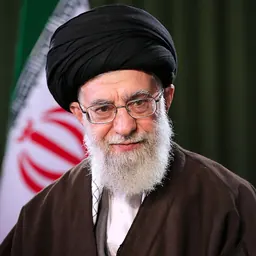

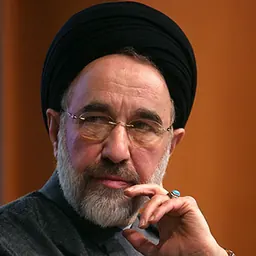
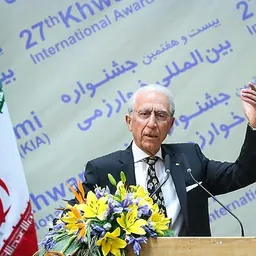



Related people
Same field, nearest in time




Contemporaries
People whose lives overlapped Mahmoud Hashemi Shahroudi's


Frequently asked questions
Who was Mahmoud Hashemi Shahroudi?
Iranian Ayatollah (1948–2018)
When was Mahmoud Hashemi Shahroudi born?
Mahmoud Hashemi Shahroudi was born on 15 August 1948 in Najaf.
When did Mahmoud Hashemi Shahroudi die?
Mahmoud Hashemi Shahroudi died on 24 December 2018 in Tehran.
What was Mahmoud Hashemi Shahroudi's occupation?
Mahmoud Hashemi Shahroudi was a politician, judge and islamic jurist.
What nationality was Mahmoud Hashemi Shahroudi?
Mahmoud Hashemi Shahroudi was Iraqi and Iranian.
Sources & further reading
· Wikipedia: Mahmoud Hashemi Shahroudi
· DBpedia: Mahmoud Hashemi Shahroudi
Cite this page
APA: Biography.guide. (2026). Mahmoud Hashemi Shahroudi. https://biography.guide/mahmoud-hashemi-shahroudi/
MLA: "Mahmoud Hashemi Shahroudi." Biography.guide, https://biography.guide/mahmoud-hashemi-shahroudi/.
Chicago: "Mahmoud Hashemi Shahroudi." Biography.guide. https://biography.guide/mahmoud-hashemi-shahroudi/.
Data last updated: 2026-09-26 · Spot an error? Report a correction.
Page generated 2026-09-27 05:15 UTC