
About Magnus von Levetzow
Lived 1871 – 1939 (aged 67–68). Magnus von Levetzow was a politician, admiral, military officer, police officer and military personnel.
Magnus Otto Bridges von Levetzow (8 January 1871 – 13 March 1939) was a German aristocrat and naval officer who rose to the rank of Konteradmiral. He became a Nazi Party politician and served as the police president of Berlin from 1933 to 1935. He was involved in purging the police of Nazi opponents, in organizing the Gestapo and in establishing the Columbia concentration camp. He was removed from office after being blamed for a failure to maintain public order during the Kurfürstendamm riots of July 1935. Levetzow was a deputy in the Reichstag in 1932–1933, and a member of the Prussian State Council from 1933 until his death.
Early life Levetzow was born to an aristocratic family in Flensburg in 1871, and was taught by private tutors at the family estate in Gravenstein (today, Gråsten, Denmark) until 1880. He then attended the Gymnasium in Roskilde and Copenhagen until 1885, then the Johanneum in Hamburg until 1889.
Imperial German Navy career On 13 April 1889, Levetzow joined the Imperial German Navy as an officer cadet. In 1893, he passed the naval officer examination and embarked upon a long naval career. In the following six years, he was employed as a ship's officer in domestic and overseas waters. From 1899 to 1901, he was the adjutant at the Wilhelmshaven naval base. From 1900 to 1902, he attended the German Imperial Naval Academy at Kiel and, from 1903 to 1906, he served at the Imperial Admiralty in Berlin. From 1906, he was assigned to the High Seas Fleet as a navigation officer and served aboard , and . From 1909 to 1912, Levetzow was a staff officer at the High Seas Fleet command, and then received the command of the light cruiser . At the end of January 1913, he was promoted to Kapitän zur See and appointed commander of the battle cruiser .
In October 1918, Levetzow was involved in the decision to order the High Seas Fleet to attack the British Grand Fleet. Large parts of the crews refused this order, sensing the futility of such an action in view of the impending German defeat. The arrests of the sailors who tried to prevent the fleet from leaving port led to the Kiel Mutiny, which triggered the November Revolution.
Weimar Republic After the end of the war, Levetzow remained in the service at the newly formed Reichsmarine. In January 1920, he was promoted to Konteradmiral and placed in command of the Baltic Sea naval station in Kiel. During the Kapp-Lüttwitz Putsch in March 1920, he supported the putschists and gave orders to immediately arrest Reich President Friedrich Ebert and Reich Minister of Defense Gustav Noske if they arrived in Kiel. After the putsch failed, he was arrested in Lütjenburg, held in custody for a short time and then forced into retirement from the Reichsmarine in October 1920.
From 1924 to 1926, Levetzow worked for the Junkers airline. A committed monarchist, he sought the restoration of the exiled Kaiser Wilhelm II and became politically active in monarchist and conservative causes. As an opponent of the Versailles Treaty and the payment of war reparations, Levetzow took part in organizing the 1929 referendum against the Young Plan. In 1931, Levetzow joined the Nazi Party and, in the 1932 German presidential election, he supported Adolf Hitler over the incumbent Paul von Hindenburg. Levetzow typified the conservative aristocrats who, due to their fierce opposition to the liberal democratic Weimar Republic, joined forces with the Nazis. In the election of July 1932, Levetzow was elected as a deputy to the Reichstag on the Nazi Party electoral list. He would be reelected in November 1932 and March 1933. On 15 November 1933, Göring, now Prussian Minister President, appointed Levetzow to the recently reconstituted Prussian State Council.
Levetzow was an opponent of lawless violence and antisemitism, and often came into conflict with the more radical Berlin Sturmabteilung (SA) leadership, as well as with Berlin Gauleiter Joseph Goebbels who had been trying to have him replaced since from at least November 1934. On 13 July 1935, the Party publicized an incident in which Jewish patrons booed a film with antisemitic themes at a Berlin movie theater. Goebbels' propaganda newspaper, Der Angriff organized a counter-demonstration for 15 July and invited public participation. That evening the so-called "Kurfürstendamm riots" took place, in which 200 Nazis vandalized Jewish-owned businesses and randomly and violently assaulted Jews on the street and in cafes along the fashionable thoroughfare. This attracted much international condemnation and Goebbels, who had helped instigate the outburst of violence, skillfully deflected the responsibility onto Levetzow, whom Der Angriff blamed for a failure to maintain public order. On 19 July 1935, Levetzow was removed from the post of police president and replaced by the police chief of Potsdam, Wolf-Heinrich Graf von Helldorff, who until March had been the commander of the SA in the Berlin-Brandenburg area.
Though Levetzow retained his seat on the Prussian State Council, he played no prominent role in government. He returned to the aircraft industry, managing the Berlin office of the Bremen-based Weser Flugzeugbau aircraft manufacturing company. He died in Berlin in March 1939.
Awards and decorations Pour le Mérite Order of the Red Eagle 3rd class with bow
Don’t just read it —
keep it.
Full-length biographies made to live with: read them, listen on the way to work, watch them tonight.
- E-book
- Audio
- Video
Instant download · yours to keep · every purchase keeps this site free
Important facts
People in Magnus von Levetzow's life
Named in this biography and alive at the same time


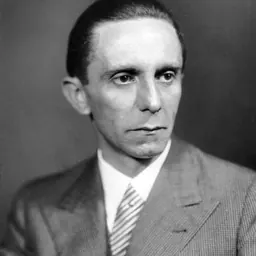
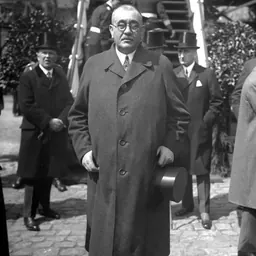

Related people
Same field, nearest in time



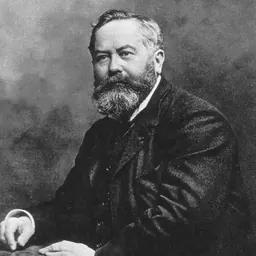

Contemporaries
People whose lives overlapped Magnus von Levetzow's
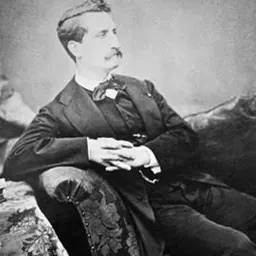



Frequently asked questions
Who was Magnus von Levetzow?
German politician (1871-1939)
When was Magnus von Levetzow born?
Magnus von Levetzow was born in 1871 in Flensburg.
When did Magnus von Levetzow die?
Magnus von Levetzow died in 1939 in Berlin.
What was Magnus von Levetzow's occupation?
Magnus von Levetzow was a politician, admiral, military officer, police officer and military personnel.
What nationality was Magnus von Levetzow?
Magnus von Levetzow's recorded nationality: German Reich.
Sources & further reading
· Wikipedia: Magnus von Levetzow
· DBpedia: Magnus von Levetzow
Cite this page
APA: Biography.guide. (2026). Magnus von Levetzow. https://biography.guide/magnus-von-levetzow/
MLA: "Magnus von Levetzow." Biography.guide, https://biography.guide/magnus-von-levetzow/.
Chicago: "Magnus von Levetzow." Biography.guide. https://biography.guide/magnus-von-levetzow/.
Data last updated: 2026-09-20 · Spot an error? Report a correction.
Page generated 2026-09-27 05:23 UTC