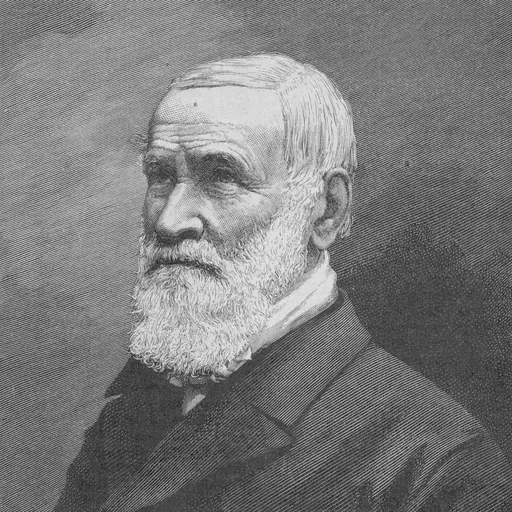
About Magnus Huss
Lived 1807 – 1890 (aged 82). Magnus Huss was a Swedish physician, university teacher and politician.
Magnus Huss (22 October 1807 – 22 April 1890) was a Swedish physician and professor, knighted with his name retained. He is known for coining the term alcoholism in 1849, which he used to refer to the pathological changes in the body due to long-term alcohol intoxication. He has also been described the "forefather of Swedish internal medicine" and the "founder of clinical education in [Sweden]".
Biography
Background, education, and career Magnus Huss was born in Torp, Medelpad, Sweden. He was the son of vicar Johan Huss and Catharina Magdalena Hellzén. The family name was taken from his paternal great-grandmother, whose father was the uncle of .
Huss became a student in Uppsala in 1824, received his bachelor's degree in philosophy in 1829, master's in philosophy in 1830, bachelor's in medicine in 1832, licentiate degree in medicine in 1834, master's in surgery in 1835 and doctor of medicine the same year. The year before, Huss had already been appointed assistant physician at the Serafimerlasarettet in Stockholm and became assistant professor of medicine and surgery at the Karolinska Institute in 1835. After spending 1837–1838 in Germany, Austria and France for his scientific studies, he was appointed assistant chief physician at the Serafimerlasarettet in 1839 with the support of anatomist Anders Retzius and surgeon . On 1 August that year he opened the first real medical clinic in Sweden. At this clinic the methods of physical examination were introduced, including auscultation and percussion, in conjunction with a more careful study of pathological anatomy; and by the extraordinary ability and perseverance which Huss developed during his long service as director of the clinic, the above date may be said to form a turning point in the history of Swedish medicine. In 1845 he published his (Observations on typhoid fever). Huss gained his greatest scientific fame from the 1854 Montyon Prize awarded by the French Academy of Sciences for (Alcoholismus chronicus or chronic alcohol disease; two volumes, 1849–1851), in which the pathological changes in the body caused by chronic alcohol intoxication were first listed as a separate form of disease. Further mention may be made of his monographs (On the statistical conditions and treatment of typhoid fever; 1855, translated into German, French and English) and (On the statistical conditions and treatment of pneumonia; 1860, German translation). For the benefit of the first of these works to American military physicians during the American Civil War, the United States Secretary of War expressed in an official letter his grateful appreciation.
Public health The observation of chronic alcoholism led Huss to fight against drinking with all his conviction. Among his writings in this vein are (On the demand for brännvin and consumption in Sweden, 1853; reprinted from his work , On Sweden's endemic diseases, 1852), (On anemia and consumption in Sweden, 1852) and (On drinking and its consequences for the individual, for the family, for the municipality, for the state, 1882; sold 20,000 copies in the first seven months after its publication). His work played a large role in the passage of the 1855 law banning home distilling. His 1887 (Warning against the use of spirits and drinking) was to be posted in the classrooms of public schools and folk schools, according to a royal decree of 10 February 1888. In 1865, Huss published the popular work (On coffee; its use and abuse).
At the same time he exercised great influence on a variety of other matters of a hygienic and philanthropic nature. Thus it was at his and 's instigation that Crown Princess Louise's Hospital for Sick Children came into being. In association with professors , , and , Huss issued an invitation to apply for the establishment of the nursing home and then took steps to establish it and organize its first administration. Furthermore, he was chairman of the board of the Royal Seminary for female teachers and of the board of the (today the Swedish School of Sport and Health Sciences), and member of several government-appointed committees.
Entrusted and honorary assignments Huss was a member of the Royal Swedish Academy of Sciences (1844), member of the Royal Society of Arts and Sciences in Gothenburg (1846; honorary member 1859), member of the Royal Society of Sciences in Uppsala (1850; honorary member 1885) and of the Royal Physiographic Society in Lund (1878).
Family He married baroness Christina Maria Charlotta Bergenstråhle in 1857.
Don’t just read it —
keep it.
Full-length biographies made to live with: read them, listen on the way to work, watch them tonight.
- E-book
- Audio
- Video
Instant download · yours to keep · every purchase keeps this site free
Important facts
People in Magnus Huss's life
Named in this biography and alive at the same time
Related people
Same field, nearest in time





Contemporaries
People whose lives overlapped Magnus Huss's






Frequently asked questions
Who was Magnus Huss?
Swedish doctor (1807-1890)
When was Magnus Huss born?
Magnus Huss was born on 22 October 1807 in Torps församling, Härnösand diocese.
When did Magnus Huss die?
Magnus Huss died on 22 April 1890 in Stockholm, Hedvig Eleonora parish.
What was Magnus Huss's occupation?
Magnus Huss was a physician, university teacher and politician.
What nationality was Magnus Huss?
Magnus Huss was Swedish.
Sources & further reading
Cite this page
APA: Biography.guide. (2026). Magnus Huss. https://biography.guide/magnus-huss/
MLA: "Magnus Huss." Biography.guide, https://biography.guide/magnus-huss/.
Chicago: "Magnus Huss." Biography.guide. https://biography.guide/magnus-huss/.
Data last updated: 2026-09-23 · Spot an error? Report a correction.
Portrait: Wikimedia Commons · author & licence
Page generated 2026-09-27 05:07 UTC