
About Magín Díaz
Lived 1922 – 2017 (aged 94). Magín Díaz was a Colombian composer and singer.
Magín Díaz García (30 December 1922 – 28 November 2017) was a Colombian musician and composer. He is best known for performing traditional music from the Caribbean coast of Colombia and for composing several popular songs. He is particularly remembered for his chalupa version of the Cuban son "Rosa, qué linda eres", first recorded by the Sexteto Habanero Godínez in 1918, which has become a standard of the Colombian repertoire. Between 2012 and 2017, he released three solo albums, the last of which, El Orisha de la Rosa, was awarded a Grammy Award.
Biography Díaz was born in Mahates, northern Colombia, on 30 December 1922, to Domingo Díaz and Felipa García. Both of his parents were singers; his mother was a well known bullerengue singer in the late 19th century and early 20th century. Born into poverty, he along with other children worked the land, planting rice, beans and yucca to feed the family. As such, he did not go to school, and thus, could not read or write. Early on in his life, it was clear that he was musically talented, and was described as a child prodigy. Aged nine, he sang, wrote, and was able to play all kinds of instruments, including the drums, maracas, and guacharaca.
In his teenage years, he worked on a plantation as a sugar cutter. Plantations on the Caribbean coast of Colombia were for many years the country's entry point for Cuban music, and in the early 20th century, son cubano began to enter the repertoire of Afro-Colombian genres such as bullerengue and mapalé. "Rosa, qué linda eres", first recorded by the Sexteto Habanero Godínez in 1918 for Victor, was one of the early anonymous sones to cross over in this fashion, soon becoming very popular among plantation workers such as Magín Díaz. Nonetheless, he is said to have been enamoured with a Caucasian plantation owner's daughter, Rosa, for whom he would perform the song. Their budding romance was taboo, and could never have happened during that time, so the song was seen as just a melody sung by a humble farmer. Over time, it gained popularity along the coast, and other musicians picked it up.
In Venezuela In the 1940s, Díaz then moved to Venezuela and occasionally performed with the tropical orchestra Billo's Caracas Boys, alongside Cheo García. However, homesickness and caring for his ailing mother meant he moved back to his hometown, Gamero, a small village near San Basilio de Palenque.
Career revival and death Díaz appeared in the 2012 documentary El Tamborero Embrujao, where he performed "Rosa". In 2014, Daniel Bustos, a philosophy graduate from Universidad Javeriana, established No Name Productions, a platform to raise awareness of the "cultural debt" owed to Díaz by his fellow citizens through producing an album and documentary entitled El Orisha de la Rosa.
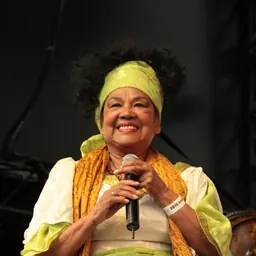
His first solo album El Orisha de la Rosa was released in 2017, with many artists such as Vives, Monsieur Periné, Totó la Momposina and Celso Piña collaborating on the project. The album was produced by Manuel Garcia-Orozco and Christian Castagno.
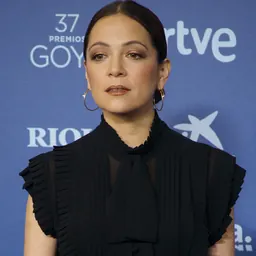
At the 18th Annual Latin Grammy Awards, El Orisha de la Rosa won the Latin Grammy Award for Best Recording Package, but the award went to the art directors; El Orisha de la Rosa had also been nominated for Best Folk Album, but lost out to Natalia Lafourcade. He attended the ceremony, but was hospitalized at Desert Springs Hospital Medical Center on 23 November, and died on 28 November at the age of 94.
Discography Magín y Santiago (2012) Magín Díaz y el Sexteto Gamerano (2015) El Orisha de la Rosa (2017)
Don’t just read it —
keep it.
Full-length biographies made to live with: read them, listen on the way to work, watch them tonight.
- E-book
- Audio
- Video
Instant download · yours to keep · every purchase keeps this site free
Important facts
People in Magín Díaz's life
Named in this biography and alive at the same time



Related people
Same field, nearest in time



Contemporaries
People whose lives overlapped Magín Díaz's





Frequently asked questions
Who was Magín Díaz?
Colombian musician and composer
When was Magín Díaz born?
Magín Díaz was born on 30 December 1922 in Mahates, Bolívar Department.
When did Magín Díaz die?
Magín Díaz died on 28 November 2017 in Las Vegas.
What was Magín Díaz's occupation?
Magín Díaz was a composer and singer.
What nationality was Magín Díaz?
Magín Díaz was Colombian.
Sources & further reading
Cite this page
APA: Biography.guide. (2026). Magín Díaz. https://biography.guide/magin-diaz/
MLA: "Magín Díaz." Biography.guide, https://biography.guide/magin-diaz/.
Chicago: "Magín Díaz." Biography.guide. https://biography.guide/magin-diaz/.
Data last updated: 2026-09-20 · Spot an error? Report a correction.
Page generated 2026-09-27 05:17 UTC