
About Magd Abdel Wahab
Born 1966. Magd Abdel Wahab is a Belgian and Egyptian engineer.
Magd Abdel Wahab is a Belgian academic, professor, and chair of applied mechanics at Ghent University and an honorary professor at Yuan Ze University in Taiwan. He is a researcher, author in computational mechanics, and a Imam of Islam. He is the head of the Applied Mechanics Research Group of Laboratory Soete , Editor-in-Chief of Journal of Sandwich Structures and Materials and Founding Editor (Former Editor-in-Chief) of Journal of Applied Mechanics (MDPI).
Wahab has published over 800 papers and technical reports in Solid Mechanics and Dynamics of Structures. He has been cited over 21000 times. His research interests include fatigue of materials, durability, damage mechanics, dynamics and vibration of structures, and fracture mechanics. He has authored the books Logic and Islam Part I: Faith issues: Answers to current questions; Logic and Islam Part II: Scientific issues; Mechanics of Adhesives in Composite and Metal Joints; Finite Elements In Fracture Mechanics and Dynamics and Vibration: An Introduction and has edited 25 books.
Education Wahab received his BSc in civil engineering in 1988 and his MSc in structural mechanics in 1991 from Cairo University, Egypt. In 1995, he completed his PhD in structural mechanics from KU Leuven, Belgium, and in 2008, he was awarded a Doctor of Science degree from the University of Surrey. In 2009, he joined Ghent University, where he is currently a Full Professor.
Computational mechanics In a paper for nonlinear transient analysis of smart piezoelectric functionally graded material (FGM) plates, Wahab and his team presented a generalized shear deformation theory in combination with isogeometric (IGA) approach. Using the total Lagrange approach based on the von Kármán strains, a nonlinear transient formulation for plates is formed which includes thermo-piezoelectric effects, solved with the Newmark time integration scheme while the electrical potential through the thickness of each piezoelectric layer is assumed to be linear. According to the Mori-Tanaka schemes and the rule of mixture, the material properties vary through the thickness of FGM. To demonstrate the effectiveness of the proposed method, various numerical examples were presented. Using a novel numerical approach based on Isogeometric Analysis (IGA) and Higher order Shear Deformation Theory (HSDT), static, free vibration and dynamic control of piezoelectric composite plates integrated with sensors and actuators was investigated. The formulation fulfilled the high-continuity generalized displacements and the numerical studies showed good performance of the method used. Another study explored a new simple fur-unknown shear and normal deformation theory (sSNDT) for static, dynamic and buckling analyses of functionally graded material (FGM) isotropic and sandwich plates and in the relation between pain and stress, the fully three-dimensional material matrix is used. Through the Galerkin weak form, the discrete system of equations is derived and isogeometirc analysis (IGA) is used to numerically solve it. This required the C1-continuity of the displacement field and the condition is easily satisfied by the NURBS basis functions in IGA. Many examples are shown to illustrate the efficiency of the method used. To study the size dependent analysis of functionally graded carbon nano-reinforced composite (FG-CNTRC) nanoplates, a computational formulation was used based on IGA and generalized higher-order shear deformation theory (GHSDT). When compared to the other available numerical approaches used, the numerical results from this study prove high accuracy and reliability of this particular method. In another paper studying the size-dependent geometrically nonlinear transient analysis of functionally graded material (FGM) nanoplates, IGA integrated with high-order shear deformation theory (HSDT) was used. Wahab and his team investigated the effect of the resulting nonlocal approach on the behaviours of the FGM nanoplates with several volume fracture exponents and performed several numerical results to prove the reliability of the method used.
Fatigue of materials Wahab and co-workers proposed and compared different techniques to derive dynamic bending stiffness of the experimentally determined modal characteristics of a reinforced concrete beam. As a result of the cracking of the reinforced concrete, there is degradation stiffness which provides information the severity and location of the damage that has taken place. They investigated the effect on the fatigue behaviour of CFRP/epoxy lap- strap joints by the test environment and pre-conditioning and it was found that the there was no significant variation observed in the fatigue resistance of the lap-strap until the glass transition temperature, Tg was approached, which is when a significant reduction in the fatigue threshold load could be seen. There is also a considerable reduction in the Tg of the adhesive because of the absorbed moisture and the locus of failure was observed to be highly temperature dependent. Another outcome was that the crack grew along the lap-strap joint, and the resolution of the forces at the crack tip had the tendency to force it into the strap adherend, possibly resulting in complex mixed mode fracture surfaces. In a paper, Wahab presented a literature review of articles published in the Web of Science from 1975 to 2011 on fatigue in adhesively bonded joints. There are about 222 cited articles reviewed and presented and the paper is concluded with highlighting topics important for future research.
Damage assessment Wahab studied the effect of temperature variations on modal parameters recorded at two different times in a prestressed concrete highway bridge. To excite the bridge, a drop weight and ambient vibration were used and to support and verify the dynamic measurements, a finite element model was developed. The effect of the resulting changes in temperature were analysed and interpreted on the structure's natural frequencies. In an investigation of the long-term durability of adhesively bonded aluminium, composite and dissimilar substrate joints exposed to humid environments, the failure of the joints was modelled with a cohesive zone model (CZM) approach. In the dissimilar substrate joints, large residual stresses were induced because of the mismatch of coefficients of expansion of the substrates. The residual strength of the double lap joints was overestimated due to the predicted degradation which was possibly because of residual stress-enhanced degradation mechanism.
Islamic studies Besides Wahab's research in engineering, he has conducted research in the Islamic religion. Over the past 20 years, he has been an Associate Imam and has also delivered Friday Ceremony speeches and Islamic talks in many mosques in the UK and Belgium. Wahab also authored the book Logic and Islam Part I: Faith issues: Answers to current questions. He authored a second book in this area Logic and Islam Part II: Scientific issues in 2020.
Awards/honors 2025 – National Ranking #2 - AD Scientific Index Metallurgical & Materials Engineering 2025 – Leader Award – Research.com Mechanical and Aerospace Engineering 2025 – National Ranking #3 – Research.com Mechanical and Aerospace Engineering 2025 – World Ranking 229 – Research.com Mechanical and Aerospace Engineering 2024 – Listed among the top 2% of scientists worldwide by Stanford University and Elsevier 2024 – National Ranking #2 - ScholarGPS Engineering and Computer Science 2024 – Highly Ranked Scholars – ScholarGPS Engineering and Computer Science 2024 – Leader Award - Research.com Mechanical and Aerospace Engineering 2024 – National Ranking #3 - Research.com Mechanical and Aerospace Engineering 2024 – World Ranking 319 - Research.com Mechanical and Aerospace Engineering 2023 – Listed among the top 2% of scientists worldwide by Stanford University and Elsevier 2023 – Highly Ranked Scholars – ScholarGPS Engineering and Computer Science 2023 – Leader Award - Research.com Mechanical and Aerospace Engineering 2023 – National Ranking #3 - Research.com Mechanical and Aerospace Engineering 2023 – World Ranking 491 - Research.com Mechanical and Aerospace Engineering 2022 – Listed among the top 2% of scientists worldwide by Stanford University and Elsevier 2022 – Highly Ranked Scholars 2022 – ScholarGPS Engineering and Computer Science 2022 – High Level Foreign Talent in China 2021 – Listed among the top 2% of scientists worldwide by Stanford University and Elsevier 2015 – Medal of honour, national (Belgium) orders award in recognition of outstanding teaching and professional activities 2008 – Egyptian Society & Student Union award, University of Surrey, Guildford, Surrey, UK 2007 – SCEPTrE Fellowship award, The Surrey Centre for Excellence in Professional Training and Education 2005 – Teaching and Learning Prize, University of Surrey, UK
Don’t just read it —
keep it.
Full-length biographies made to live with: read them, listen on the way to work, watch them tonight.
- E-book
- Audio
- Video
Instant download · yours to keep · every purchase keeps this site free
Important facts
People in Magd Abdel Wahab's life
Named in this biography and alive at the same time

Related people
Same field, nearest in time





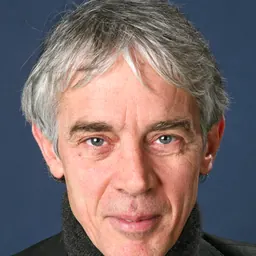
Contemporaries
People whose lives overlapped Magd Abdel Wahab's



Frequently asked questions
Who is Magd Abdel Wahab?
Belgian academic and Imam
When was Magd Abdel Wahab born?
Magd Abdel Wahab was born in 1966.
What is Magd Abdel Wahab's occupation?
Magd Abdel Wahab is an engineer.
What nationality is Magd Abdel Wahab?
Magd Abdel Wahab is Belgian and Egyptian.
Sources & further reading
Cite this page
APA: Biography.guide. (2026). Magd Abdel Wahab. https://biography.guide/magd-abdel-wahab/
MLA: "Magd Abdel Wahab." Biography.guide, https://biography.guide/magd-abdel-wahab/.
Chicago: "Magd Abdel Wahab." Biography.guide. https://biography.guide/magd-abdel-wahab/.
Data last updated: 2026-09-20 · Spot an error? Report a correction.
Page generated 2026-09-27 05:31 UTC