
About Madhavrao Scindia
Lived 1945 – 2001 (aged 56). Madhavrao Scindia was an Indian politician.
Madhavrao Jiwajirao Scindia or Madhavrao II (10 March 1945 – 30 September 2001) was an Indian politician, minister in the Government of India. (1945–2001) and scion of the former ruling Scindia dynasty of Gwalior. He was popularly and affectionately referred to as the "Prince Charming of Indian politics" and the "People's Maharaja" due to his aristocratic lineage, charismatic demeanor, youthful image, and immense mass appeal. He was viewed as a potential future prime ministerial candidate before the 1999 Lok Sabha elections in the aftermath of the controversy over Sonia Gandhi's foreign origin.
During his tenure the Indian Railways saw its golden period. He computarized the railway system in late 1980s and introduced first Shatabdi Express between New Delhi to Gwalior which run at 160 km/h for the first time.
Scindia was the son of Jiwajirao Scindia, the last ruling Maharaja of the erstwhile Gwalior State. Upon the death of his father in 1961, and under terms agreed to during the political integration of India, Scindia succeeded to a privy purse, certain privileges, and the use of the title "Maharaja of Gwalior," which lasted until 1971, whereupon all were abolished by the 26th Amendment to the Constitution of India.
Early life Scindia was born to the last ruling Maharaja of Gwalior, Jiwajirao Scindia and his mother was Rajmata Vijay Raje Scindia. He married Madhavi Raje Scindia, a daughter of army general of Madhesh Province, Nepal, and a great-granddaughter of Prime Minister of Nepal and Maharaja of Kaski and Lamjung, Juddha Shamsher Jang Bahadur Rana, a patrilineal descendant of Sardar Ramakrishna Kunwar of Gorkha. They had two children, a daughter, Chitrangada Singh (born 1967), a son Jyotiraditya Scindia (born 1971).
Scindia underwent his schooling in Scindia School, Gwalior and thereafter went for higher studies in Winchester College and at New College, Oxford.
On his return from the UK, Scindia followed the political tradition set by his mother Vijaya Raje Scindia by joining politics. He was elected to the Lok Sabha in 1971 from the Guna constituency on a Bharatiya Jana Sangh ticket.
In the 1980 election, he switched allegiance to the Indian National Congress and won from Guna a third time. In 1984, he was nominated as the Congress party's candidate from Gwalior in a last-minute manoeuvre to defeat the Bharatiya Janta Party's Atal Bihari Vajpayee, and won by a massive margin. After that Scindia contested from either Gwalior or Guna and won on each occasion.
Ministerial appointments Scindia (left) with Manmohan Singh (right) and headmaster Shomie Das at the Doon School, Dehradun, India. The 1984 election brought Scindia his first experience as a minister. He made his mark as an excellent administrator during his stint as Railways Minister (22 October 1986 – 1 December 1989) in the Rajiv Gandhi Ministry that period is remembered as the golden period of Railways.
Prime Minister P. V. Narasimha Rao made him Minister for Civil Aviation. He faced a turbulent period of agitation by the staff of the domestic carrier, Indian Airlines, and as part of a strategy of disciplining the workforce, he leased a number of aircraft from Russia. Early in 1992 one of these aircraft crashed, though without any loss of life, and Scindia promptly submitted his resignation. Although not known to be too finicky about such notions as ministerial accountability, the prime minister accepted his resignation. Scindia was later reinducted into the Cabinet in 1995 as Minister for Human Resource Development. Scindia is also credited with setting up the Indian Institute of Information Technology and Management (IIITM) at Gwalior as an institution of repute, which got renamed after Atal Bihari Vajpayee as ABV-IIITM.
Opposition years After the defeat of the Indian National Congress in the 1989 Indian general election, Scindia became a prominent member of the opposition. In 1990, after the fall of the V. P. Singh government, the Congress provided external support to the Samajwadi Janata Party (Rashtriya) government of Chandra Shekhar. Scindia was appointed president of the Board of Control for Cricket in India (BCCI), a post he held until his 3-year term expired in 1993.
Rebellion and return In 1996, he left the Congress party after being accused of bribery by prime minister PV Narasimha Rao. He founded the Madhya Pradesh Vikas Congress (MPVC), and along with Arjun Singh and other Congress dissidents formed the United Front government at the Centre. Scindia himself opted to stay out of the cabinet. In 1998, just before the Lok Sabha elections he merged the MPVC into the Congress party. He won the 1998 Lok Sabha election from Guna. Being viewed as a future prime ministerial candidate before the 1999 Lok Sabha elections in the aftermath of the controversy over Sonia Gandhi's foreign origin, he was on his way to address a rally in Kanpur.
All eight people on board the private plane (Beechcraft King Air C90) died in the crash. This included his personal secretary Rupinder Singh, journalists Sanjeev Sinha (The Indian Express), Anju Sharma (The Hindustan Times), Gopal Bisht, Ranjan Jha (Aaj Tak), pilot Ray Gautam and co-pilot Ritu Malik. The bodies were charred beyond recognition and taken by road to Agra, from where a special Indian Air Force aircraft, sent by Prime Minister Atal Bihari Vajpayee, brought the remains to New Delhi. The remains of Madhavrao Scindia were identified by his family, with the Goddess Durga locket that he always used to wear.
The autopsies and other legal formalities were conducted and completed respectively at the All India Institute of Medical Sciences, New Delhi by Professor T. D. Dogra. His son Jyotiraditya M. Scindia was symbolically appointed the head of the family.
Ancestry Reference :
Don’t just read it —
keep it.
Full-length biographies made to live with: read them, listen on the way to work, watch them tonight.
- E-book
- Audio
- Video
Instant download · yours to keep · every purchase keeps this site free
Important facts
People in Madhavrao Scindia's life
Named in this biography and alive at the same time

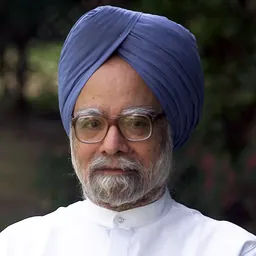
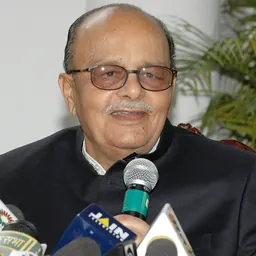

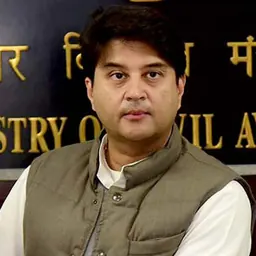


Related people
Same field, nearest in time



Contemporaries
People whose lives overlapped Madhavrao Scindia's


Frequently asked questions
Who was Madhavrao Scindia?
Indian politician (1945-2001)
When was Madhavrao Scindia born?
Madhavrao Scindia was born on 10 March 1945 in Mumbai.
When did Madhavrao Scindia die?
Madhavrao Scindia died on 30 September 2001 in Mainpuri district.
What was Madhavrao Scindia's occupation?
Madhavrao Scindia was a politician.
What nationality was Madhavrao Scindia?
Madhavrao Scindia was Indian.
Sources & further reading
· Wikipedia: Madhavrao Scindia
Cite this page
APA: Biography.guide. (2026). Madhavrao Scindia. https://biography.guide/madhavrao-scindia/
MLA: "Madhavrao Scindia." Biography.guide, https://biography.guide/madhavrao-scindia/.
Chicago: "Madhavrao Scindia." Biography.guide. https://biography.guide/madhavrao-scindia/.
Data last updated: 2026-09-20 · Spot an error? Report a correction.
Page generated 2026-09-27 05:25 UTC